Showing posts with label shrimp. Show all posts

Saturday, September 12, 2026

LUNCH WITH A VIEW

 
On a bright but hazy day, small boats and a kite-surfer are lost in the mist. (Benalmádena Costa)

Restaurant Parador Playa perches above a small cove with wooden steps leading down to a strip of beach. On this afternoon the sun filters through a haze that almost obscures the horizon. The view is so stunning that, for a few minutes, I forget about lunch. But, then I catch a whiff of sardines grilling and I am hungry.  


We have been invited by friends to the soft opening (actually, a re-opening, after remodelling) of the beach restaurant, Parador Playa, in Benalmadena Costa (Málaga province). Francis Muñoz, chef and owner of the family restaurant, proudly shows off his gleaming new kitchen, and wine cellar. Beautifully laid tables are open to sea breezes, but the space has sliding glass enclosures for less perfect weather.  

Fresh fish and shellfish, straight off the boats at local ports.

Our host, Chris Gil, a regular at Parador Playa, orders a sampling of dishes—all seafood—for guests at the table to share. I had been craving boquerones fritos, a platter of fried fresh anchovies, so typical of Málaga. “Sorry, the new deep fryer requires a high-voltage cable and they’re still waiting for the installation,” said Chris. There were a few other pre-opening kinks. The staff, always gracious, was getting used to new electronic devices for taking orders, which led to our enjoying two versions of tuna tartar. 

Nadia Gil and friends, pre-lunch nibbles.


The menu, which changes seasonally, depends on absolutely fresh seafood—straight off the fishing boats in local ports. Chef Francis has elaborated a menu based on the traditional Málaga kitchen to which he has added a flair for Japanese influences. This is particularly noticeable in the section of the menu labelled crudo, or raw entrees, which includes several versions of tartar and sashimi. 


These are quisquillas served raw, bodies peeled, with their intensely deep blue roe, lightly dressed with extra virgin olive oil. I spent hours searching for the exact name for quisquillas (Plesionika edwardsii). Let's just call them "small shrimp" or "blue-bellies." Their flavor is delicate, redolent of the sea, an exquisite bite.


Clams on the half-shell.


I adore these conchas finas which were ordered especially for me! Served raw, they are firm, somewhat chewy, flavorful. Although these clams are a Málaga trademark, experts say they are disappearing from local waters, not from over-fishing but due to climate change and coastal dredging for beach restoration.

Ensaladilla rusa--potato salad with octopus.


 This is a stunning version of a tapas bar classic,  ensaladilla rusa or Russian salad. The flavorful potatoes are bound with a mayonnaise-like sauce, very rich and light at the same time, and topped with pulpo a la gallega, tender chunks of cooked octopus in Galician pimentón sauce. 


Although Parador Playa is many steps above the sandy beach, these sardines are prepared as traditional espetones, skewered and grilled on coals. I eat them with my fingers but some guests used knife and fork. 


We sampled two versions of tuna ventresca, rich belly meat, the first (above) with tuna in unctuous ajo blanco (white gazpacho) and topped with caviar and the second with diced tomatoes and house-made potato chips (below).  I preferred the version with tomato and those crispy chips. 


Two ways with small cuttlefish: Plancha-grilled (top) and (below) with mayonnaise swirled with cuttlefish ink. Small cuttlefish are called chocos, chopitos, or puntillitas (although small squid also are called puntillitas). 


Sobremesa--a Spanish custom--that delicious post-prandial time for conversation or just enjoying the beauty of a Mediterranean afternoon on the terrace of Parador Playa. The restaurant has an amazing list of desserts with a variety of unusual chocolates. The coffee is excellent. Some might enjoy a Pacheran, a sloe-berry and anis inflected liqueur served over ice.

The Parador Playa menu features eight different rice dishes (arroces--not called paella, although they are served in a paella pan), including the "daily surprise." (I once described it as the best paella rice I've ever eaten.)They must be ordered 24 hours in advance. There are a couple of meat dishes (retinto steak, baby lamb chops), but the point of view, literally and gastronomically, is the sea.  

Parador Playa is now open for regular service, noon to 8 pm, Wednesday through Sunday, until the end of October. (Check with Reservations about later dates.)
Reservations: https://paradorplaya.com/   +34 951 264 931


This cookbook explores the fascinating story of the deep and lasting influences that Islamic culture has left on modern Spanish cooking. 

Author and Spanish cooking expert Janet Mendel tells the story of the Moorish influence on Spanish cooking through 120 recipes and photographs for modern-day dishes, from salads and vegetables to fish, poultry and meat to sweets and pastries, that trace their heritage to foods served in medieval times.  (Hippocrene Books)    

 Order on IndiePubs (USA) 

Use PROMO CODE HIPPOCRENE40 for 40% off on all Hippocrene titles at IndiePubs online bookstore.


Saturday, February 15, 2025

LIGHT-UP THE DAY WITH A GRAPEFRUIT SALAD


On an overcast winter day, citrus fruits are like rays of sunshine. Winter and citrus season are nearly finished. In another month the orange trees on Andalusian streets will bloom. Meanwhile I’ve got a cache of tangy-sweet pink grapefruits to light up the day. 


This grapefruit salad is all about contrasts, in texture, color, and flavors. Juicy grapefruit segments meet crunchy red cabbage and buttery avocados. Adding shrimp makes a salad substantial enough for a main dish. 


Grapefruit Salad with Avocado and Cabbage
Ensalada de Pomelo, Aguacate y Col Lombarda

A bright salad with grapefruit segments, red cabbage, avocado, spinach leaves, and shrimp.


Serve the salad on individual plates or

Two ways to serve the salad: 

Either combine the grapefruit, cabbage, avocado, and shrimp in a bowl, dress with extra virgin olive oil, and serve atop salad greens on individual salad plates 

scoop from a serving platter.


or arrange greens on a platter, top with layers of cabbage, grapefruit, avocado, and shrimp, and drizzle oil over all. 

Serves 4.

1 ½ cups finely shredded red cabbage
½ teaspoon salt
1 tablespoon Sherry vinegar
3 pink grapefruits (approx. 10 ounces each)
2 medium firm-ripe avocados
1 cup small shelled and cooked shrimp
Extra virgin olive oil
Spinach leaves or other salad greens
Flaky salt
Garnish, as desired (pumpkin seeds, fresh herbs, black olives, hazelnuts, thinly sliced red onions)

Place the shredded cabbage in a bowl and sprinkle with salt and vinegar.
Use your hands to mix and massage the cabbage. Let it stand 30 minutes (or up to 1 hour) before combining with other ingredients.

Cut off peel and pith.
Use a thin knife to peel the grapefruits. Following the curve of the fruit, cut off skin and white pith. Working over a small bowl to collect the juice, cut segments free from membranes and place them in a bowl. Peel and remove pits from avocados. Slice the avocados crosswise. Place the slices in a bowl and spoon 1 tablespoon of grapefruit juice over them. (Save remaining grapefruit juice for another use.)

Serve the salad, dressed generously with olive oil, either mixed in a bowl or layered on a platter. Sprinkle flaky salt over all and garnish the salad as desired.


More citrus salads:


Saturday, February 12, 2022

SUNSET IN A GLASS (AND STUFFED SQUID)


“Picture yourself on Bajo de Guía beach at the western edge of Sanlúcar de Barrameda right at sunset”. You’ve got a half-bottle of chilled Manzanilla and a plate of grilled langostinos, fresh tiger shrimp. As the sun slowly sinks, it reflects and refracts through your Sherry glass. 

The sea breeze, the color-streaked sky, the taste of those shrimp and the cool wine.  That´s the evocative opening of Sunset in a Glass, a book by Gerry Dawes, self-described “food and wine road warrior in Spain.” (Sunset in a Glass, enhanced photography edition, is available here.)


Sunset in a Glass is not quite a memoir, definitely not a guidebook. It´s a collection of very personal stories about life, food, wine and people in Spain. Gerry easily switches from evocative (that sunset on the beach, ravishing landscapes) to provocative (would he pay $180 for a bottle of Vega Sicilia wine?), but always with good humor.

I first knew Gerry Dawes early in his adventures in Spain when he and his then-wife, Diana, lived in Mijas, the village in southern Spain where I still live. Our paths have crossed a number of times in the subsequent years—stomping around olive groves on press tours in Spain sponsored by the International Olive Oil Council (on one of those jaunts, in Gerry´s company, I first tasted the famed Vega Sicilia wine at a restaurant in Córdoba); tagging along as he made the rounds at Madrid Fusión, the grand annual food fest (Gerry knows absolutely everybody in Spain’s food world); fellow moderators at symposiums about Spanish food at the Culinary Institute of America in St. Helena, CA., and the San Antonio, TX., Culinaria Week;  
 
Although he tells how he first came to Spain (1968, stationed at Rota Naval Base) and his early forays into Sevilla and its barrios and flamenco, Gerry follows no real chronology in the book, but backs and forths between regions and characters at will. As Chef José Andrés writes in the book's foreword, “I am amazed at his reach.” Gerry promises more to come, with three more volumes of Sunset in a Glass to follow.

Quim Márquez (Photo by Gerry Dawes)
My favorite tales are the ones about amazing cooks and memorable meals. A visit to Barcelona´s vibrant La Boquería market includes a “second breakfast” at the stall of Quím (Márquez) de la Boquería—steaming cockles, grilled asparagus, fried artichoke hearts, sizzling shrimp, small white beans with butifarra sausage and alioli, foie gras with crispy leeks—all prepared in a miniscule kitchen at the market stall. A meal washed down with Cava rosat—pink sparkling wine.

In Castile, Gerry meets up with an old friend, Ambrosio Molinos, a cheesemaker and a  trencherman like himself, for an extraordinary meal at De Galo in Covarrubias, (Burgos)   The meal begins with a cold dish, sea bream escabeche, served with coarse Castilian bread for mopping up the sauce. This is followed by a local specialty, red Ibeas beans, cooked with chorizo, served with grilled morcilla and guindillas (piquant peppers), “a must with bean dishes.” The main course is baby lamb chops (with their kidneys) grilled over vine cuttings, roasted potatoes, and pimientos de piquillo, the slightly spicy little red peppers that are one of the great delicacies of Spain. 

Gerry relates a different sort of meal that´s as much a delight for the setting and the group of friends, all taking a break from the frenzy of the San Fermines festival in Pamplona, as for the simple, rustic food. Following in the footsteps of James Michener, as related in Iberia, each year “we, too, made the pilgrimage to this historic little valley in the pass that is haunted by the ghost of brave Roland and by the spirits of generations of pilgrims who passed this way…on… the Camino de Santiago.”

It´s a hard-to-find spot on a steep road that climbs up to a pilgrim’s sanctuary at the top of the pass. “We unloaded the luncheon bounty from our cars. The men helped Alicia down the steep grassy slope to the green mossy banks of the stream… Diana, who had recruited some of the women to collect the food at the Pamplona Mercado Municipal that morning, laid out our splendid repast: salty anchovies cured in oil; roasted red pimientos; streaky pink slices of jamón; garlicky red-orange chorizo; white Parmesan-like Roncal from the Pyrenees east of Roncesvalles and smoky Idiazábal ewes’ milk cheeses from a town south of San Sebastián; olives cured with rosemary, thyme and garlic; crusty, country bread; and fruits—blushing ripe peaches, big black picota cherries,and honeydew melons. I put a dozen bottles of Las Campanas Navarra Rosado (the same rosé wine Hemingway carried in his car around Spain following the bullfights) and the melons in the cold rushing little rivulet to cool, then dispatched a detail of volunteers for dry firewood to build a small fire.”

Chef Ferran Adrià (left) with Gerry Dawes. (Photo by Soler)

From the rustic to the sublime—Gerry recounts several meals he sampled at elBullí, the restaurant of Ferran Adrià in Roses (Catalonia) which, for awhile, was billed as the best restaurant in the world (the restaurant has since closed its doors). According to him, his story about elBullí that appeared in Food Arts magazine in 1997 was the first and seminal article published in America about rising star Ferran Adrià and his elBulli restaurant. 

I can´t resist quoting from the book as Gerry relates what he ate at that first meal at elBulli (menus evolved over the years, with fewer of the “foams” that once seemed so far-out). The meal began with “snacks” in the kitchen. “Nothing too weird so far,” Gerry opined. Then, to the table.

“Served by very serious young wait people dressed in funereal black Nehruesque jackets and pants, began the parade of unbelievably inventive, undoubtedly weird, and sometimes downright delicious Adrià concoctions, complete with verbal instructions on how and when to eat it.” 

There were Parmesan-flavored ice cream sandwiches between Parmesan wafers; guacamole mousse with crunchy toasted corn; a “caramelized” quail’s egg yolk; and then the first espuma, a smoked meat-flavored wisp of foam. Next came a biscuit glacé (very salty ice cream with hazelnuts”); a tepid, exotic eggplant “soup with Fisherman” that included yogurt-filled raviolis, pine nuts and  little chips of minty, balsamic-flavored Fisherman's Friend throat lozenges. 

A cold dish followed, mejillones de roca con frambuesa (little rock mussels with a dot of raspberry puree on top, surrounded by a gelatin of mussel juices flavored with julienned ginger. Zamburiñas a la gallega were traditionally flavored tiny sea scallops in their shells with paprika, thin quick-fried scallion rings, and crunchy bits of sautéed garlic. 

“I headed into the home stretch, where Ferran Adrià really hit his stride. The espuma de bacalao con cebollitas was followed by a tortilla de alcachofas, a spoonful of two pieces of crunchy, deep-fried artichoke leaves in a creamy, egg yolk sauce; Paquetitos de sepia y coco al jengibre (ravioli-type packets made from sepia squid bodies and filled with a ginger-soy sauce (‘Don’t break the packets, put them in your mouth and let them explode,’ instructed my waiter.)"

 Next, chop suey de almejas, cold clams in a warm sauce with corn, diced zucchini, button mushrooms, and braised endive. The next to the last dish was merluza con calabaza y tomate al perifollo, grilled hake served with spaghetti squash and gelatinous, seed-studded tomato “hearts,” topped by a shard of caramelized pumpkin and chervil. The finale, lamb brains with sea cucumbers, mushrooms, and grilled meat-flavored oil. 

Javier Hidalgo, Sanlúcar (Photo Dawes)
But, back to that sunset on the beach at Sanlúcar. After the sun has gone down and the bottle or two of Manzanilla has been finished, it´s time to head to one of the famed beach restaurants, such as Casa Bigote, a taberna marinera, for local specialties such as delicias de pescado frito, mixed fried fish with small whole hake, cazón en adobo (marinated  dogfish shark); boquerones (fresh anchovies), acedias  (baby sole) and calamares (squid). There’s Bigote’s superb arroz marinero (seafood rice), cazuela marinera con huevo (monkfish and shrimp with an egg poached in a bubbling Manzanilla sauce. 

Gerry writes movingly about meals shared with his good friend, Javier Hidalgo, of Bodegas Hidalgo in Sanlúcar, where manzanilla comes from. One lunch, at a rustic place in the Marismas near Doñana, begins with tortillitas de camarones, fritters of tiny shrimp, and, of course copitas of manzanilla.

Although he´s included no recipes in the book (with the exception of José Andrés’s gin-tonic), Gerry relates ingredients and methods for a number of dishes as told to him by his culinary fellow-travellers. One, from Sanlúcar de Barrameda, for calamares rellenos con huevas de merluza (squid stuffed with hake roe), Gerry says is an example of great folk dishes of southern Spain—originally simple fishermen´s fare—that is “a delicacy worthy of the most exalted gourmet.”  I was inspired to re-create the dish in my kitchen. Without the beach and the sunset, but absolutely with a copa of manzanilla. 
(The photos above are from the book Sunset in a Glass by Gerry Dawes and are used with permission. The photos below are taken by me in my kitchen.)

Whole squid is stuffed with shrimp and fish roe. After poaching, the squid are sliced and served with a parsley vinaigrette and seasoned mayonnaise. 

Stuffed squid makes an elegant starter with copitas of manzanilla.


Accompany the squid with two sauces, a parsley-spring onion vinaigrette and a pimentón-spiked mayonnaise.


Squid Stuffed with Hake Roe, Sanlúcar Style
Calamares Rellenos con Huevas de Merluza a la Sanluqueña

Lobes of hake roe.

Early spring is the season for fresh hake roe (fish eggs, huevas). The “packets” or lobes of fresh roe can be poached, sliced and served with vinaigrette. In this recipe from Sanlúcar de Barrameda, as described in Sunset in a Glass, roe is used along with shrimp and, if available, huevos de choco, milt from cuttlefish, as a stuffing for squid. Sliced and served cold with a piquant parsley-onion sauce and seasoned mayonnaise, the squid makes quite an elegant starter. 

The delicate packets of roe are easier to handle if they are first blanched. Add them to simmering, salted water for 5 seconds, skim out and drain well. Then use scissors to cut away any dark-colored veins, but don´t remove the thin membrane that encloses the tiny eggs. Cut the lobes into three or four pieces. Handle them very gently, so as not to break up the delicate roe. 

If available, use real langostinos, tiger shrimp, from Sanlúcar. Otherwise, use any small shrimp. Eight ounces of shrimp with heads and shells will make about 4 ounces peeled. Use the heads and shells to make stock (6 cups water, salt, bay leaf and onion, cooked 40 minutes) in which to poach the stuffed squid. 

After poaching, chill the squid at least 2 hours or overnight to allow the stuffing to firm-up. Use a very sharp knife to slice them crosswise about ½ inch thick. 
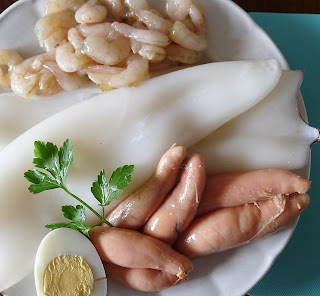
Squid pouches, shrimp (top) and roe.

Serves 6 as a starter.

1-2 medium-large squid (about 1 ¾ pounds)
6 ounces fresh hake roe 
Salt
4 ounces peeled shrimp
¼ cup fresh bread crumbs
¼ cup fino manzanilla or Sherry
1 egg white, lightly beaten
½ of a hard-boiled egg, chopped
6 cups shrimp stock, fish broth or water
Shredded lettuce, to serve
Sliced cooked potatoes, to serve
Pimentón (paprika)
Sauces to accompany the squid (recipes follow)

Clean the squid by pulling the head and tentacles free from the body. Leave the body pouch whole. Pull off and discard the discolored outer membrane and remove the cartilage on the inside. Pull off the fins and separate the tentacles from the head. (Save the fins and tentacles for another use.) Discard the mouth and ink sac. Keep the squid bodies covered and refrigerated until ready to stuff them.

Cut roe into chunks.
Bring salted water to a boil. Reduce the heat to a simmer and blanch the whole lobes of roe for 5 seconds. Skim them out and drain well. Trim off dark veins. Cut the lobes into ¾-inch chunks. Keep refrigerated until ready to use.

Chop the shrimp into ½-inch pieces and reserve, refrigerated.

Place the bread crumbs in a mixing bowl. Add the manzanilla and egg white. Stir in the chopped cooked egg. Add the pieces of roe and the chopped shrimp. Season with ¾ teaspoon salt. Use a wooden paddle to very gently fold the roe and shrimp into the breadcrumb mixture. 

Fill squid with stuffing.
Place squid pouch upright in a cup. Spoon the stuffing mixture into the squid Use the handle of a wooden spoon to push the stuffing down. Don´t fill the pouch more than ¾ full. Close the top opening with a toothpick or small skewer. Use remaining stuffing mixture to fill the second squid in the same manner.

Place the shrimp stock in a pan just large enough to hold the squid in one layer. (If using water instead of stock, add salt and a bay leaf.) Bring the stock to a boil, reduce the heat to a simmer and place the stuffed squid in the pan. There should be enough liquid to just cover them. Place a heatproof plate on top to keep the squid submerged. 

After the squid have cooked 3 minutes, use a skewer to pierce the skin in two or three places in order to eliminate air pockets in the stuffing. Cook the squid 15 minutes. Very gently, turn them over. Replace plate on top. Cook until squid are very tender when tested with a skewer, about 15 minutes longer. Remove the pan from the heat and allow the squid to cool 30 minutes in the cooking liquid. 

Remove the squid from the pan (stock can be strained and saved for another use). Place the squid in a container and tuck a sheet of plastic wrap around them. Cover the container and refrigerate at least 2 hours and up to 8 hours.

Slice the squid crosswise. Serve on a platter or on individual plates with shredded lettuce and sliced cooked potatoes. Sprinkle with pimentón. Accompany with sauces.

Parsley-Spring Onion Vinaigrette
Vinagreta de Perejil y Cebolleta

Use spring onions (also known as green onions, cebolletas) or scallions for this sauce.


1 cup chopped spring onions
½ cup chopped flat-leaf parsley
¼ cup finely chopped red bell pepper
1 clove garlic, minced
½ teaspoon salt
2 tablespoons extra virgin olive oil
1 tablespoon Sherry vinegar

Combine the onions, parsley, pepper and garlic in a small bowl. Add salt and dress with oil and vinegar. Mix gently. Serve in a sauce bowl alongside the squid or spoon some of it over the sliced squid.


Pimentón Mayonnaise
Mayonesa con Pimentón


This sauce is best if home-made with extra virgin olive oil. If using bottled mayo, beat a tablespoon of olive oil into it.

½ cup mayonnaise
1 tablespoon fresh lemon juice
½ teaspoon pimentón (paprika, not smoked)
Pinch of pimentón picante (hot paprika) or cayenne
Salt to taste
1 teaspoon capers

Combine the mayonnaise, lemon juice, two kinds of pimentón, salt and capers. Serve in a sauce bowl alongside the sliced squid or spoon some of it over the squid.


Saturday, July 27, 2019

SHRIMP AND SHRIMP AGAIN

I bought a pound of small shrimp to use as garnish for a dish I was going to photograph. In the end, I didn’t use them. So I cooked the whole, unpeeled shrimp (1 minute in boiling salted water) and put them out for a family meal for whoever was willing to peel them. My grandson Lucas and I devoured those little crustaceans. They were so sweet, so fresh.


These were the variety of shrimp known as gamba arrocera, a small, wild-caught shrimp especially esteemed on the Atlantic coast of Huelva (Andalusia), although they are also caught in the Mediterranean. They are the shrimp I remember eating in local tapa bars years ago. Always simply boiled, they were served plain and unadorned. You peeled them yourself and, in those days, dropped the shells on the floor!

Whole, raw shrimp.

Same shrimp after cooking.

Cooked, peeled and marinated in fresh lemon juice, the small shrimp go into a seafood cocktail called ceviche.

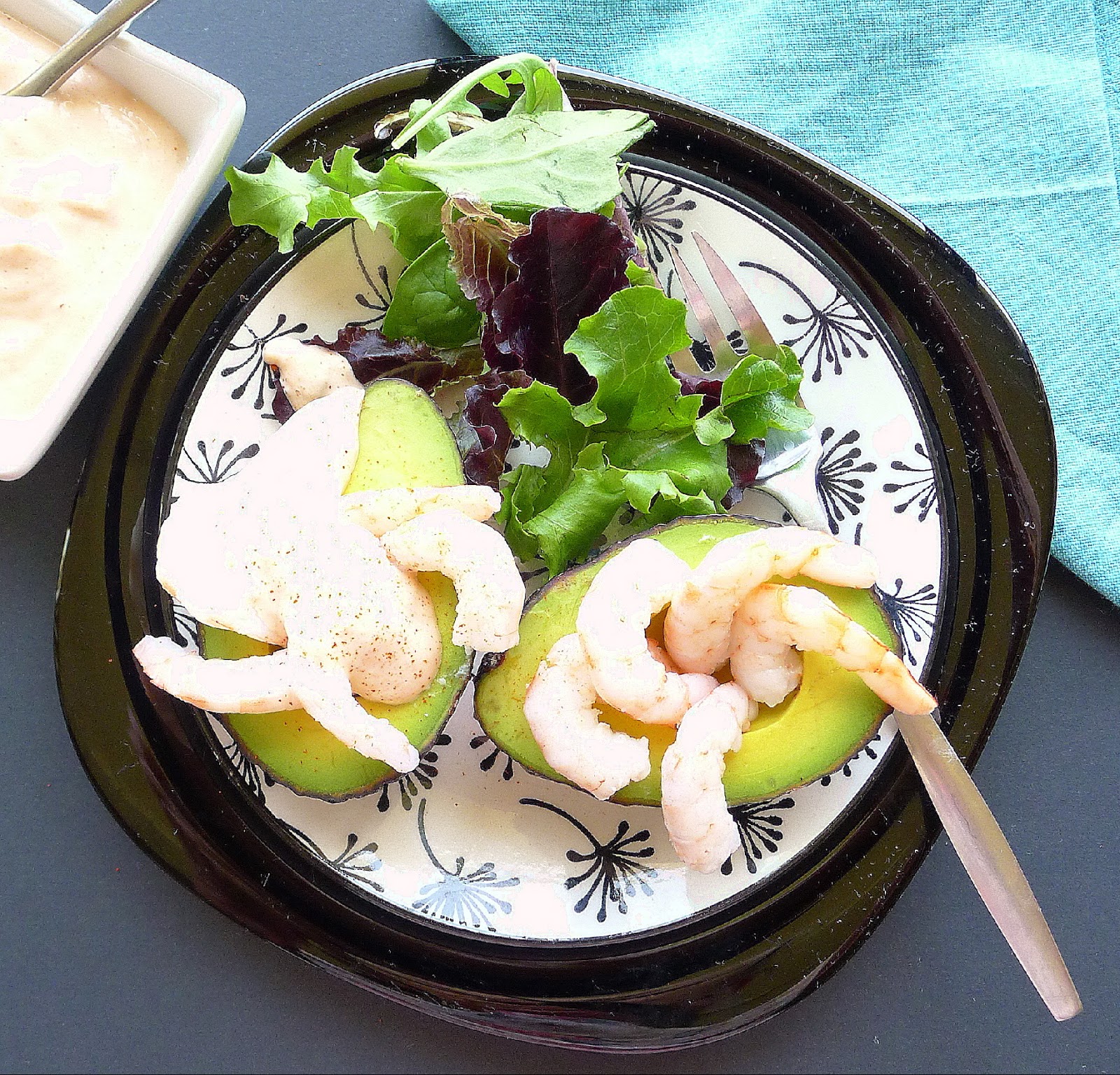
A favorite in Spanish restaurants, avocado halves with shrimp and a dollop of salsa rosa, pink cocktail sauce. This one eschews the usual ketchup. 

They are also the shrimp added to paella and other rice dishes—thus their nomenclature “arrocera.”  Cooked and peeled, they turn up in soups and in a favorite tapa bar salad, salpicón.  The small shrimp—peeled raw—were used as well in tapa bars for gambas al ajillo, or, as it was called in Málaga region, gambas al pil pil. Nowadays it’s common to use the larger langostinos. (More about varieties of shrimp/prawns here.)

Size varies. Mine were 54 shrimp (unpeeled with heads on) to the pound. The variety is also known as gamba blanca (Parapenaeus longirostris) or “white” shrimp, although it’s really a pale pink-beige color. It turns a darker rosy hue after cooking.


These fresh shrimp are best cooked immediately, then stored refrigerated. If kept raw more than a couple days, they begin to show a deepening violet/black color inside the shell of the heads. They are not spoiled!

It’s not necessary to devein the shrimp before eating them. The “vein” is perfectly edible. In larger varieties of shrimp, it can be very unsightly, so is generally removed. But, with these small ones, it’s not an issue.

I enjoyed those shrimp so much that I've bought them again. Some to serve plain--no dipping sauce, no lemon. Just shrimp. The rest I've peeled--pretty easy after they're cooked--to use in a refreshing cocktail called ceviche and with avocado and a piquant sauce.


Gambas Cocidas
Cooked Shrimp

Cooked and ready to peel and eat.


1 pound whole small shrimp
10 cups water
¼ cup salt
Bay leaf (optional)
Lemon slice (optional)
Ice water

Rinse and drain the shrimp. Bring water to a boil with the salt in a deep pot. Add bay leaf and lemon slice, if using. Have a large bowl of ice and water ready.


Add all of the shrimp to the boiling water. Return the water to a boil and remove the pot from the heat. Use a slotted spoon to remove shrimp and drop them into the bowl of ice water. Allow the shrimp to cool completely. Drain.

Either serve the shrimp immediately or store them, covered and refrigerated for up to 24 hours.

To peel cooked shrimp: break off the head (suck out the delicious juices if you like). Pinch off the tail and the "legs." Unwrap the shell from the body.

Shrimp Ceviche
Cebiche de Gambas

Crunchy peppers and onions, buttery avocado, sweet shrimp and tart lemon.


Unlike some ceviche recipes, this one calls for cooked, not raw, shrimp. The shrimp need only 10 minutes in the lemon marinade.

Serves 4 as a starter.

1 cup (5 ounces) cooked and peeled small shrimp
½ cup fresh lemon juice
¼ small red onion, cut in thin julienne
Salt
¼ cup diced yellow bell pepper
1 tablespoon minced fresh green chile, such as jalapeño
1 avocado, diced
¼ cup peeled and chopped tomato
1 tablespoon extra virgin olive oil
2 tablespoons chopped cilantro

Shrimp in lemon juice.


Place the shrimp in a small glass bowl. Pour over the lemon juice. Let the shrimp marinate, refrigerated, for 10 minutes.

Place the thinly sliced onion in a small bowl. Add ½ teaspoon salt and cover with water. Allow the onion to soak for 10 minutes.

In a bowl combine the diced yellow pepper, green chile, avocado and olive oil. Season with salt. Drain the soaked onions and add them to the bowl. Add the shrimp and lemon juice. Add the cilantro. Mix gently. Divide the ceviche between 4 cocktail cups.


Avocado with Shrimp
Aguacate con Gambas

Serve the pink cocktail sauce on the side or---


--dollop it right on the shrimp and avocado.

Avocados
Lemon juice
Cooked and peeled shrimp
Pink Cocktail Sauce

Cut avocados in half and remove pits. Sprinkle them with lemon juice. Fill the cavities with shrimp. Place a dollop of pink cocktail sauce on top of the shrimp.


Pink Cocktail Sauce
Salsa Rosa

1 plum tomato, peeled and chopped
1 tablespoon chopped onion
½ tablespoon chopped green chile, such as jalapeño
1/8 teaspoon hot pimentón (paprika) or a pinch of cayenne
½ cup mayonnaise
1 tablespoon extra virgin olive oil
½ tablespoon lemon juice
Salt

Place the tomato, onion and chile in a mini processor and grind them finely. Add the pimentón, mayonnaise, olive oil, lemon juice and about ½ teaspoon salt. Process to make a smooth sauce.
Sauce keeps, covered and refrigerated, up to 2 days.

****

At the Feria de la Gamba (Shrimp Fair) in Cartaya (Huelva, Andalusia), 8-11 of August, two tons of shellfish will be served up. Other shrimp fairs in Punta Umbría and Isla Cristina take place at other times of the year.
****


More recipes with shrimp:
Chickpeas with Shrimp and Fish Sausage.
Baked Shrimp with Sherry.
Zucchini Tubs with Shrimp Stuffing.
Piquillo Peppers Stuffed with Shrimp.
Flamenco Salad with Shrimp and Fruit.
Sizzling Garlic Shrimp with Chorizo.
Batter-Fried Shrimp.
Shrimp Boil a la Costa del Sol.
Classic Shrimp al Ajillo.
Shrimp and Fideo Noodle Salad.
Eggplant and Shrimp Rollups.
Shellfish Cocktail with Shrimp.
Rice with Shrimp and Mango.
Shrimp Cocktail with Avocado (Salpicón).
Pasta with Garlic Shrimp and Zucchini.

Saturday, July 28, 2018

NOODLE SALAD IS SO COOL!

I love Asian cold noodle salads—gingery, chile-flecked tofu with rice noodles or fish in peanut-coconut milk sauce and udon (wheat) noodles. They seem to cut through hot-weather stickiness.

While forking (or chopsticking) a cool noodle salad, I thought, why not try a Spanish-style noodle salad? Thus was invented cold Ensalada de Fideuá con Gambas—noodle-shrimp salad.


Big bowl of fideo noodle salad, with shrimp, squid (and a few mussels--I ate most of them the minute they were steamed).

Fideuá, or fideos, are vermicelli noodles. They come in various thicknesses, from fine angel’s hair to  those about the same thickness as spaghetti. They may be long strands, bundled into “nests,” or more usually, cut into short lengths, ready for adding to a pot of noodle soup. One variety has a pinhole through the pasta. They are perfect for making fideuá, a pasta-paella well-known in Catalonia and Valencia regions. That’s the inspiration for this salad. If you can’t get real fideos, use spaghetti broken into short lengths.

The Spanish technique for cooking pasta is to fry it first, then add sofrito and flavorful stock to finish the cooking.  That’s pretty much how I made the noodles for the salad, only, instead of making a sofrito, I added raw tomatoes and chopped peppers to the cooked noodles.

The shrimp stock is essential for flavoring the pasta. If you can’t get shrimp with heads and shells, try substituting other crustacean shells—lobster or crab, for example. Otherwise, use fish stock or clam broth. The recipe for shrimp stock (below) makes more than you need for the noodle salad, so, once cooled, freeze the remainder for another use (or, the next pasta salad).

The salad can be prepared in several easy stages—first the stock, then the cooking of shrimp and squid and, finally, finishing the salad.

Noodles cooked in shrimp stock are packed with flavor. 

Serve the noodle salad as a starter or main.

Garnish with olives and cherry tomatoes.

Shrimp and Fideo Noodle Salad
Ensalada de Fideuá con Gambas

Serves 4.

For the shrimp stock:

1 ½ pounds raw shrimp with heads and shells
3 tablespoons olive oil
1 clove garlic
1 tablespoon pimentón (paprika), not smoked
1 cayenne chile (optional)
8 cups water
1 slice lemon
2 teaspoons salt
2 tablespoons vinegar
Bay leaf
Parsley stems


Shell the shrimp, reserving the bodies, refrigerated, for the salad. Heat the oil in a soup pot and add the heads and shells. Fry them 4 minutes. Lightly crush the garlic and add it, unpeeled to the pot. Stir in the pimentón and chile and immediately add the water. Add lemon slice, salt, vinegar, bay and parsley. Bring to a boil, reduce heat and cook, partially covered, 20 minutes.

Let stock cool 5 minutes, then pour it through a strainer. Discard shrimp shells, chile, bay and parsley. Reserve the stock for cooking the fideo noodles

For the fideo noodle salad:

Water or shrimp stock
Ice
12 ounces peeled raw shrimp
1 medium squid, cleaned and body cut in rings
2 tablespoons olive oil
3 cups (1 pound) fideo noodles (not fine angel’s hair)
¼ cup finely chopped onions
Pinch of crushed saffron, optional
4 cups shrimp stock
2 tablespoons fresh lemon juice
¼ cup brine from canned olives (optional)
Salt
½ cup grated raw tomato pulp
1 cup chopped green and red pepper
Pitted or stuffed olives, sliced, to garnish
Cherry tomatoes, to garnish
Sliced lemon, to serve
Salad greens, as desired


Bring a small pan of salted water or stock to a boil. (Use enough to just cover the shrimp.) Have ready a bowl of ice water. Add the shrimp to the boiling water and cook them until they turn pink and curl slightly, 2 to 4 minutes. Drain the shrimp and plunge them into the ice water.

Add the pieces of squid to the boiling water just until they turn opaque, 20 seconds. Drain and add them to the ice water. Drain the shrimp and squid and refrigerate them, covered, until ready to incorporate in the noodle salad.

Toast the noodles with a little olive oil until golden-brown.
In a deep skillet, heat 2 tablespoons of the oil. Add the fideo noodles and chopped onion and toast them, stirring, until the noodles begin to turn golden, about 4 minutes. Add the saffron, if using. Add 3 cups of the shrimp stock and cook the noodles on a medium-high heat until they begin to stick, 5 minutes.

Add remaining 1 cup of stock, lower the heat and cook, stirring occasionally, until noodles are al dente, about 5 minutes more. Remove the skillet from the heat. Noodles will still be juicy, but not soupy. Cover and let them set 10 minutes.

Transfer the noodles to a bowl. Add lemon juice and olive brine, if using. Season with salt to taste. Stir in the tomato pulp. Add the chopped peppers and olives. (Save a few olives to garnish the salad.)

Immediately before serving, add the shrimp and squid to the noodles. Garnish the salad with olives, cherry tomatoes and sliced lemon. Serve with salad greens, if desired.


A recipe for fideuá is here.