Showing posts with label spinach. Show all posts

Saturday, June 11, 2022

TORTILLA TECHNIQUE—THE RIGHT SKILLET

 
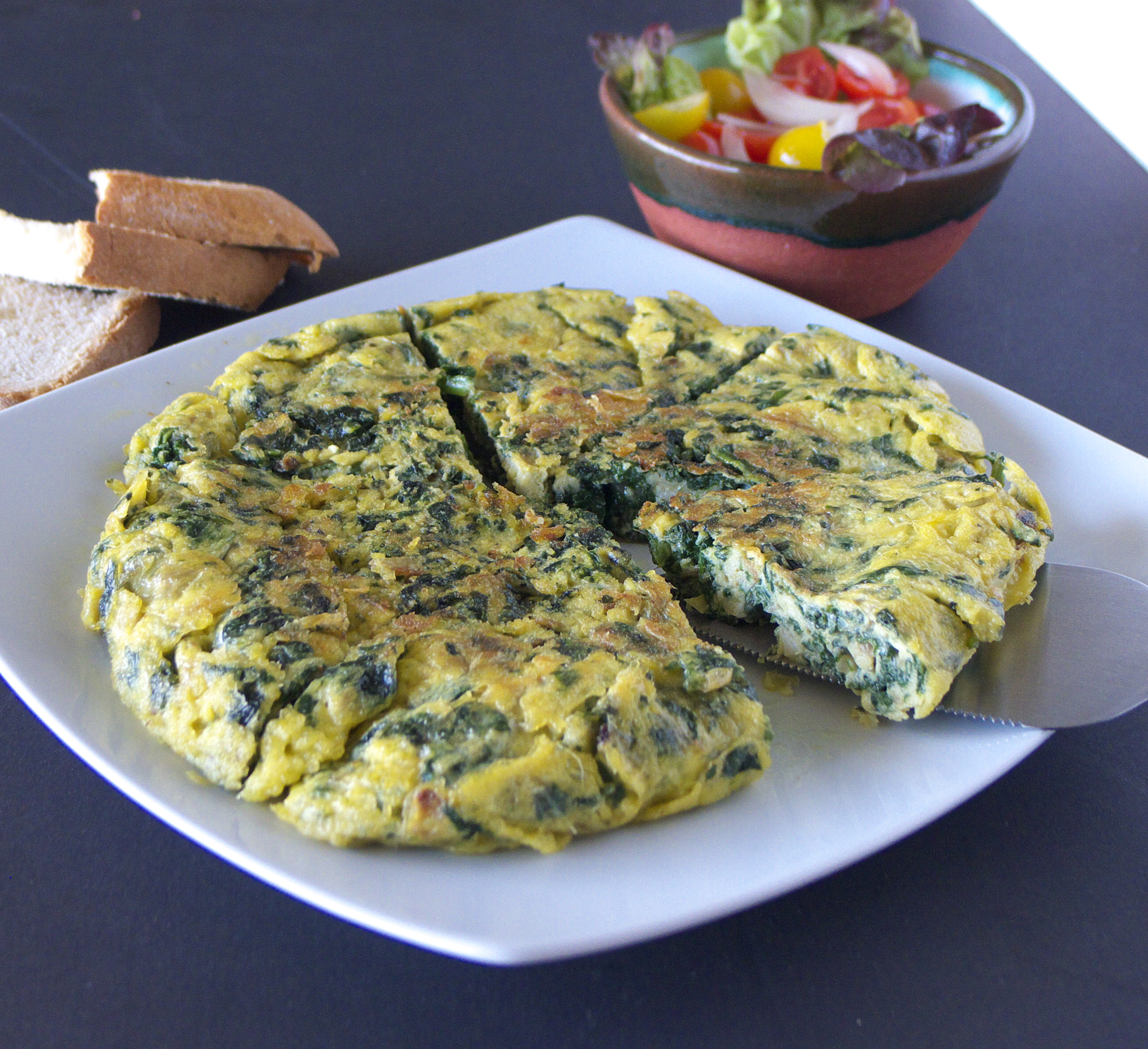
Not a classic potato tortilla, this one is with spinach and cheese.


On Tuesday, the TV chefs were making three kinds of tortilla, in honor of the Día Mundial de la Tortilla Española. (The one with potatoes, truffles and ibérico ham looked sensational.) That was the inspiration I needed for a vegetarian meal for guests that day. World Tortilla Day seemed the perfect excuse.


My efforts—a spinach tortilla—were a learning experience (more about that later). As it turns out, World Tortilla Day was actually way back on March 9. The cooking show was a summer re-run. Never mind. Tortilla is perfect any day, any season, hot or cold.

I’ve written about the “secret” to making a good tortilla many times before: use lots of good olive oil to cook the potatoes before incorporating them in the beaten eggs. My editor once asked, “Why do you need so much oil if you’re using a non-stick skillet?” The answer is that the deep oil, which is later drained off and saved for another use, allows the potatoes to “poach,” not fry, cooking them uniformly on a medium heat without browning and without clumping together. 

Years ago, when I learned tortilla-making skills in tapa bar kitchens, tortillas were made in deep, slope-sided skillets of rolled steel. The pans were thin and lightweight, making it possible to turn the pan upside down, and, with continued use, they gradually became seasoned, making them, in effect, non-stick. And, no, a cast-iron skillet can’t be substituted because it’s too heavy for the tricky maneuver of flipping the tortilla.  

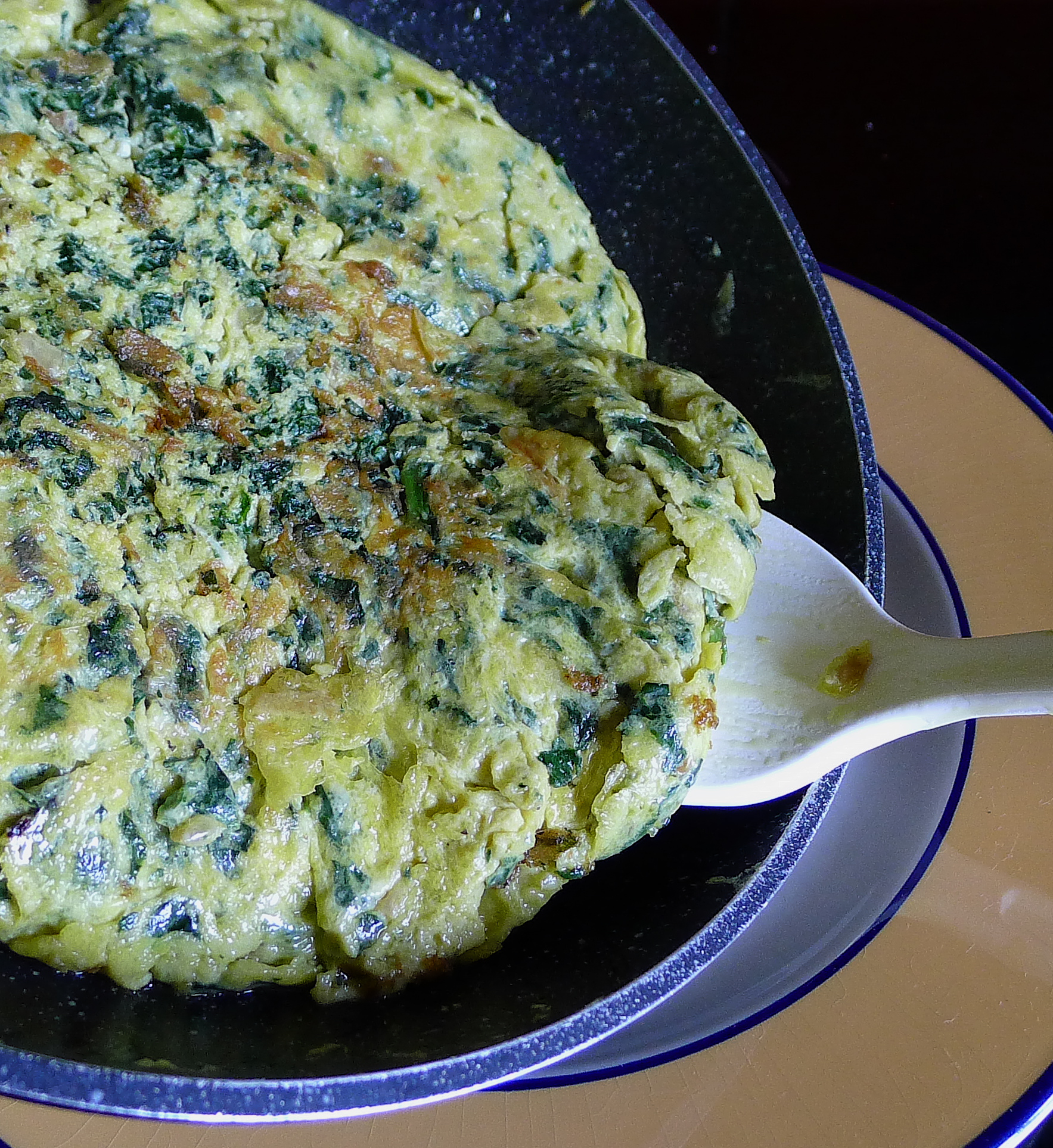
For this spinach tortilla, which has no potatoes, the advice to use plenty of oil is not so essential. But, those instructions to use a “non-stick skillet,” are critical. What did I learn with my spinach tortilla? That I need a new non-stick skillet! This tortilla did not shake loose from the center of the pan, so turning it over caused it to fold in on itself. Not pretty.

A non-stick skillet should be dedicated to tortilla making and egg scrambling and nothing else. It should never be used on high temperatures. For searing chops, get out the cast iron or carbon steel skillet.  

And size matters. For this tortilla with five eggs, which serves two, three, four or more, I used a 10-inch skillet. It came out about two inches thick. If you want a thicker tortilla, use a smaller skillet. I cooked the bulky spinach (bagged spinach leaves lista para cocinar, washed and ready to cook) in a deep pan.

Spinach tortilla is terrific as part of a vegetarian meal. Serve it at a brunch buffet or as a  lunch dish. I like it topped, Ottolenghi style, with a dollop of Greek yogurt. A tomato salad and good bread are the perfect sides. 

Serve tortilla as a tapa, for breakfast, brunch, lunch or supper. This one is vegetarian.


Serve tortilla with bread and a salad. This one is cherry tomatoes.


Spinach Tortilla
Tortilla de Espinacas


Serves 2 to 4.

10 ounces fresh spinach
5 tablespoons olive oil (divided)
¾ cup chopped onion
1 clove garlic, chopped
Salt
Freshly ground black pepper
5 large eggs
½ teaspoon pimentón de la Vera (smoked paprika)
¼ teaspoon cumin
2 ounces grated cheese (1 cup)

Chop the spinach and set it aside. Heat 2 tablespoons of the oil in a deep skillet. Sauté the onions and garlic on moderate heat, stirring, until beginning to turn golden, 5 minutes. Add the spinach. Mix it with the onions and sauté for a minute until spinach begins to wilt. Season with ½ teaspoon salt and pepper. Turn the heat down and cover the pan. Cook just until spinach is completely wilted, about 4 minutes. Don’t add water unless necessary to keep the spinach from scorching.

Drain spinach well.

Place the spinach and onions in a sieve and drain well, pressing out as much liquid as possible. (If desired, save the liquid for another use.) 

Combine eggs, spinach.
Beat the eggs in a bowl with ½ teaspoon salt, pepper, pimentón and cumin. Stir in the cheese. Stir the drained spinach into the eggs and combine well.


Firm edges. Shake pan to keep tortilla loose.


Heat remaining 3 tablespoons of oil in a 10-inch non-stick skillet. Pour in the egg-spinach mixture. Use a heat-proof rubber spatula or wooden paddle to “scramble” the eggs and spinach as they begin to set. Use the spatula to firm the sides. Without stirring, allow the tortilla to set on the bottom and edges. Shake the pan to keep the tortilla loose and sliding on the bottom.

Working over a bowl to catch any drips, place a flat dinner plate on top of the skillet. Using a hot pad if necessary, hold the plate on tightly and invert the skillet so that the tortilla is turned upside down, onto the plate. Slide the tortilla back into the skillet to cook the underside, another 1 to 2 minutes.

Not pretty! The tortilla stuck to the pan in the center, so didn't properly release when the skillet was inverted. I need a new non-stick skillet!

Lift the edge with a spatula and slide the tortilla out onto a plate.

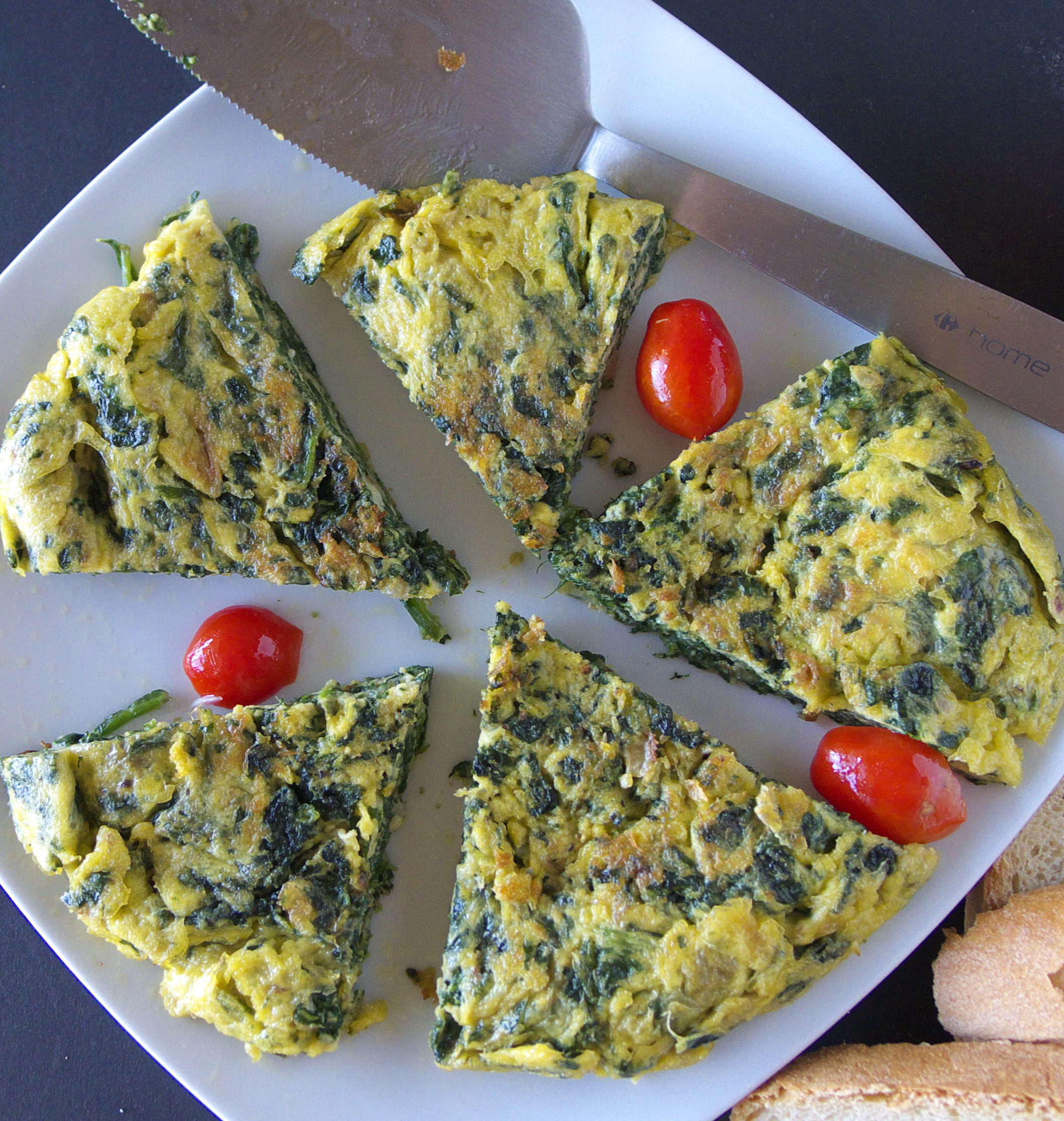
Use a spatula to lift an edge of the tortilla and slide it out onto a serving plate.

Serve the tortilla hot, room temperature or cold. 


More tortilla recipes:


Saturday, April 6, 2019

BEST-EVER VEGETARIAN TAPA!

Succulent ibérico ham. Sizzling, garlicky shrimp. Potato salad with chunks of tuna. Rings of crisp-fried calamares (squid). The possibilities at a typical tapas bar are enough to make a vegetarian weep in frustration. What to eat that doesn’t have meat, poultry or seafood? There’s always the fabulous tortilla de patatas made with eggs and potatoes (unless you are vegan and don’t eat eggs). Maybe a few salads and not much else. 


In Sevilla tapa bars you’ll find a traditional tapa that’s vegetarian—vegan even—and truly satisfying. Espinacas con garbanzos, or garbanzos con espinacas—spinach with chickpeas or chickpeas with spinach. While it’s popular year-round, the dish really comes into its own at this time of year, during Lent, when observant Catholics don’t eat meat on Fridays. Then it’s served as a starter or main dish for a comida de vigilia or fasting day meal.

A vegetarian dish of chickpeas and spinach, typical of Sevilla tapa bars.

Tapa-size servings in small cazuelitas with fried bread to accompany.

A main dish serving might be topped with hard-cooked egg.

Olive oil, plenty of garlic, pimentón (paprika) and cumin flavor the combo of vegetable and legumes. If you don’t like the assertive flavor of cumin (it will remind you of Moroccan and Mexican food), reduce the quantity. If you want the dish even spicier, try using especia para pinchitos, a spice blend for brochettes that includes cumin as well as coriander, ginger and cayenne.

I cooked a big pot of chickpeas (1 pound) and used some in this recipe and put the rest in the freezer. You’ll need about 10 ounces dry chickpeas to make 4 cups drained, cooked chickpeas. Soak the chickpeas in water overnight (8 hours). Drain and cover them with hot water. Add salt, sliced onion, bay leaf and a whole tomato. Cook until the chickpeas are tender, about 90 minutes. Save the cooking liquid to use in the recipe. Add the cooked and skinned tomato to the bread and garlic in place of chopped tomato.

In an attempt to keep the fresh spinach bright green, I cooked it very briefly then plunged it in ice water before draining. I added the spinach to the chickpeas at the very end of cooking. This made for an attractive dish. However, when I reheated leftovers the next day, the spinach turned dark. Though, it was just as delicious!

As served at bar El Rinconcillo in Sevilla, the dish has more spinach than chickpeas. Spinach slow-simmered with the spices loses its fresh green color.

In Sevilla tapa bars, the dish is usually made with lots of spinach and few chickpeas. But it is just as authentic the other way around, which is how I decided to make it. It’s not a soup. Add enough liquid to the chickpeas to keep everything juicy, but not soupy. If you’re cooking chickpeas from scratch, use the cooking liquid. If you’re using canned chickpeas, use water.

The pimentón (paprika) is ordinary sweet pimentón, but a smidgin of smoked pimentón in addition adds a nice background flavor. Hot pimentón or cayenne is optional.

Fried bread for thickening the sauce and to serve as an accompaniment to the finished dish.
A few slices of fried bread go into the blender to thicken the chickpea liquid. If you want to serve fried bread with the dish, fry more slices at the same time.

This is the lechoso variety of chickpea, generally used in Andalusia. It is plumper than the castellano varieties.

Spinach with Chickpeas
Espinacas con Garbanzos


Serves 4.

6 cups packed fresh spinach (about ½ pound, to make 1 ½ cups cooked, drained and chopped)
Ice water
5 tablespoons olive oil
3 slices baguette, crusts removed
4 cloves garlic
Chickpea cooking liquid or water
1 tablespoon Sherry vinegar
1 tablespoon pimentón (paprika)
1/8 teaspoon hot pimentón (optional)
1 teaspoon cumin
1 plum tomato, peeled and chopped, or cooked tomato from chickpeas
4 cups cooked and drained chickpeas.
Salt to taste
Freshly ground black pepper
Hard-cooked egg, quartered (optional)
Fried bread to serve (optional)


Chop spinach after blanching in boiling water.


Bring a large pot of water to a boil. Have ready a bowl with ice and water. Add the spinach to the boiling water and cook 1 minute. Skim it out and into the ice water. When spinach is cooled, drain it well and squeeze out excess water. Chop the spinach and reserve.

Heat the oil in a deep skillet or pan. Fry the slices of bread until golden-brown on both sides. Remove. Add the peeled garlic to the pan and fry until golden. Remove. 

Break up the fried bread into a blender container. Add the garlic and ¼ cup of cooking liquid or water. Add the vinegar, pimentón, hot pimentón, if using, cumin and tomato. Blend to make a smooth paste. 

Stir the bread-garlic paste into the oil remaining in the pan and fry it for a minute. Add the chickpeas and about 1 ½ cups of the chickpea cooking water. Add salt and pepper to taste. Bring to a boil, reduce heat and simmer 15 minutes. 

Immediately before serving, stir in the chopped spinach. Heat thoroughly. Serve the chickpeas and spinach in bowls with quartered egg, if desired.

Chickpeas and spinach are saucy, not soupy.

Leftovers the next day: I added more liquid to make a soup and garnished with a dollop of Greek yogurt, chopped green onions and chopped cilantro. 


More vegetarian dishes:

Another recipe with chickpeas and spinach: Chickpeas and Spinach with Cod Dumplings.

Saturday, October 6, 2018

PACK A LUNCH!

¿Llevas el táper al trabajo? was the headline of a story in my local newspaper. It took me a minute—and a glance at the accompanying photo—to figure out what the article was talking about. The photo showed a pretty chica with a stack of covered plastic containers filled with food. 


The article was not asking if you take your tapir to work, but “do you take your lunch to work?" Those covered plastic containers are "tápers." “Táper” is Spanish phonetic spelling for “tupper,” as in Tupperware®. It's the generic name for all plastic storage containers with lids. 


While it’s been years since I´ve carried my lunch to work or packed school lunchboxes, I do pack a lunch when I’m travelling. That way I can avoid carb-heavy airport and in-flight meals. I've quite enjoyed meals eaten out of a "tupper" while waiting for boarding.

A spinach timbale for a working lunch.

My favorite packed lunch is usually some variation on a vegetable timbale. Timbale is sort of like a quiche without a crust or a tortilla/frittata that is baked instead of cooked in a skillet.  Cut into small squares, it can be eaten with the fingers (be sure to pack some paper towels!) or, with plastic spoon or fork, directly from the container.

Timbale with spinach, mushrooms, cheese and eggs is baked, then sliced.

Packed to go--timbale with bread roll makes a complete lunch.

An insulated cold-bag is useful for keeping packed foods safe in transit. However, the timbale keeps a few hours at room temperature and needs no reheating. If you’ve got access to a microwave, warm it slightly.

Timbale is also good plated as a starter, perhaps with a dollop of Greek yogurt, or as a side dish with a main of grilled fish or chicken.


Spinach Timbale
Pastel de Espinacas

I used two (10-ounce) bags of fresh spinach leaves for this recipe, making about 10 cups of lightly packed, chopped spinach. If substituting frozen spinach, use about 15 ounces frozen spinach (from two 10-ounce packages). Thaw before adding to the skillet with onions and mushrooms.

I baked the timbale in a rectangular glass oven dish. Alternatively, it can be baked in a round deep-dish pie pan, a cake pan or a loaf pan, although the baking times will vary.

If you’re carbohydrate shy, make this without the bread crumbs. If you want a vegetarian version, omit the diced ham. Add pine nuts or chopped walnuts instead. Substitute dill for parsley for a Turkish inflection. Use a semi-cured (sheeps’ milk) Manchego or any other grated cheese. The Sephardic version of the timbale, called cuajado de espinacas, uses cottage cheese plus Romano. 


6-8 servings.

1/3 cup olive oil
½ cup chopped onion
1 clove garlic, chopped (optional)
6 ounces mushrooms, sliced (about 2 cups)
¼ cup (o ounce) diced serrano ham or lean bacon (optional)
10 cups (lightly packed) washed and chopped fresh spinach
1 teaspoon salt
Freshly ground black pepper
Dash of ground cloves
Freshly grated nutmeg
¼ cup chopped parsley
1 cup (lightly packed) stale bread crumbs
½ cup milk
6 eggs
4 ounces grated cheese (about 1 ½ cups)

Heap of fresh spinach reduces in cooking.

Use 1 tablespoon of the oil to generously grease a rectangular baking dish (11 ½ X 8 inches). Heat the rest in a deep pan. Sauté the onions and garlic until softened, 3 minutes. Add the mushrooms and ham and sauté 4 minutes. Add the chopped spinach. Cover the pan and cook until spinach begins to wilt and reduce in volume. Season with salt, pepper, cloves and nutmeg. Uncover the pan and cook until most of liquid has cooked away. Cool the spinach 15 minutes. Stir in the parsley.

Preheat oven to 375ºF.

While spinach is cooling, place the breadcrumbs in a mixing bowl and add the milk. Let the bread soften 5 minutes. Mash it with a fork. Beat in the eggs. Stir in the grated cheese.

Combine the spinach and the egg-cheese mixture. Pour into baking dish. Cover with foil. Bake until a skewer inserted in the center of the timbale comes out clean, about 45 minutes. Remove foil and bake the timbale 5-10 minutes longer until lightly browned on top.

Serve the timbale warm or room temperature.

After timbale cools, store it, covered and refrigerated. This shallow container in Spain is known as a "tortilla keeper," as it's the perfect size for storing a potato tortilla.

My jumbled collection of plastic storage containers and lids-- not Tupperware®.

An authentic Tupperware container from 1976, still in use. I acquired it at a Tupperware party given by a neighbor in rural Spain. In those days, village women still carried a hot meal placed in three-tiered aluminum pans to their menfolk working in the fields. Plastic had only begun to appear in local kitchens.

The newspaper article about packing a lunch in the "táper" suggests options such as salads of pasta, rice or quinoa, with or without meat or fish; all kinds of vegetable dishes; cold or warm cream soups, and lentils. (“Who says that lentils are only to be eaten hot?”) Here are links to recipes that might work nicely for the lunchbox.


Saturday, March 10, 2018

SPINACH--A BREATH OF SPRING

Where I live in southern Spain, spinach grows through mild winter months and is harvested in early spring. So I’m enjoying it in many different ways (see links to recipes at the end of this post). Today it’s eggs baked in “nests” of spinach.


So green and fresh, spinach is a delight in early spring.

Spinach is so deceptive. It looks like lots and lots, then cooks down to nothing. Even knowing this, I miscalculated. I figured a pound of spinach leaves—a heap—would be enough for four half-cup servings. It made only enough for three servings. I’ve adjusted the recipe to serve four.

The “nesting eggs” are best prepared in individual ramekins, but they can also be baked in a single oven pan, then scooped out to serve at table. If using earthenware cazuelitas, remember that clay holds the heat, so the eggs will continue to cook after you remove them from the oven.

Ready for the oven. Cooked spinach makes a nest. Egg is dropped in the center. Grated cheese on top. The white ramekin is enameled metal; the other two are earthenware.

Strips of fried bread are a favorite accompaniment, but toast or fried potatoes are good too. Serve the eggs and spinach for brunch, as a starter for a spring dinner or as a light supper dish.

You can use bunches of fresh spinach or bags of washed, ready to use leaves. Spinach you wash will cook with the water clinging to it, but dry, bagged leaves will need a little extra water to cook. If you choose to use the optional chopped ham, you may not need additional salt. Taste before seasoning. Use regular or smoked pimentón (paprika) for the dash of finishing color on top of the eggs. I like smoked picante—spicy-hot—pimentón on the eggs. 

Ready to bake. Remember that clay ramekins hold the heat, so the egg will continue to cook after removing it from the oven.

After baking, white is set, yolk still runny, cheese is melted.

Serve the baked egg and spinach for brunch, as a starter or a light meal. Tirangles of bread fried in olive oil are a good accompaniment.

Just right--yolk is still runny. Will you dip the fried bread in the egg? Or mix it all up with the spinach?

Eggs Baked in Spinach Nests
Huevos al Nido con Espinacas

Serves 4.

1 ½ pounds spinach (to make 16 cups chopped)
¼ cup olive oil plus additional for oiling and drizzling
¼ cup chopped green onion
¼ cup (1 ounce) chopped serrano ham (optional)
Water, as needed
Salt, to taste
Freshly ground black pepper
Grated fresh nutmeg
4 large eggs
¼ cup grated cheese
Pimentón (paprika), smoked or plain
Fried bread, toast or fried potatoes, to serve

To chop: roll spinach and slice it.

Wash the spinach, if necessary, and trim away stems. Chop or shred the spinach.

Heat the oil in a deep pan. Sauté the chopped onion on medium heat until softened, but not browned, 4 minutes. Add the ham, if using, and sautée 1 minute. Add all of the chopped spinach. Stir to mix with the onion. Add a little water, if necessary. Cook the spinach until wilted and tender, about 10 minutes. Season with salt, pepper and nutmeg. If there is liquid remaining in the pan, raise the heat to cook it off. 

Spinach fills a deep pan, but will cook down a lot.

Preheat oven to 400ºF/ 200ºC. Lightly oil 4 oven-safe ramekins or custard cups. Place them on an oven tray.

Divide the spinach into four portions. Press each into a lightly oiled cup. Invert it into the ramekin. Push open a hole in the center of the mound of spinach, widening it enough to contain a whole egg. Make sure there are no breaks in the rims of the spinach ring, so egg white cannot seep out. 

Break an egg into a cup and carefully slip it into the hole in the center of the spinach ring. Drizzle a little olive oil over eggs and spinach. Spread grated cheese on the tops and sprinkle them with pimentón.

Bake until the whites are set, but yolks still runny, about 10 minutes. Serve immediately with fried bread.


A breath of spring--eggs, spinach and freesias.

More recipes with spinach: