Showing posts with label eggs. Show all posts

Saturday, June 11, 2022

TORTILLA TECHNIQUE—THE RIGHT SKILLET

 
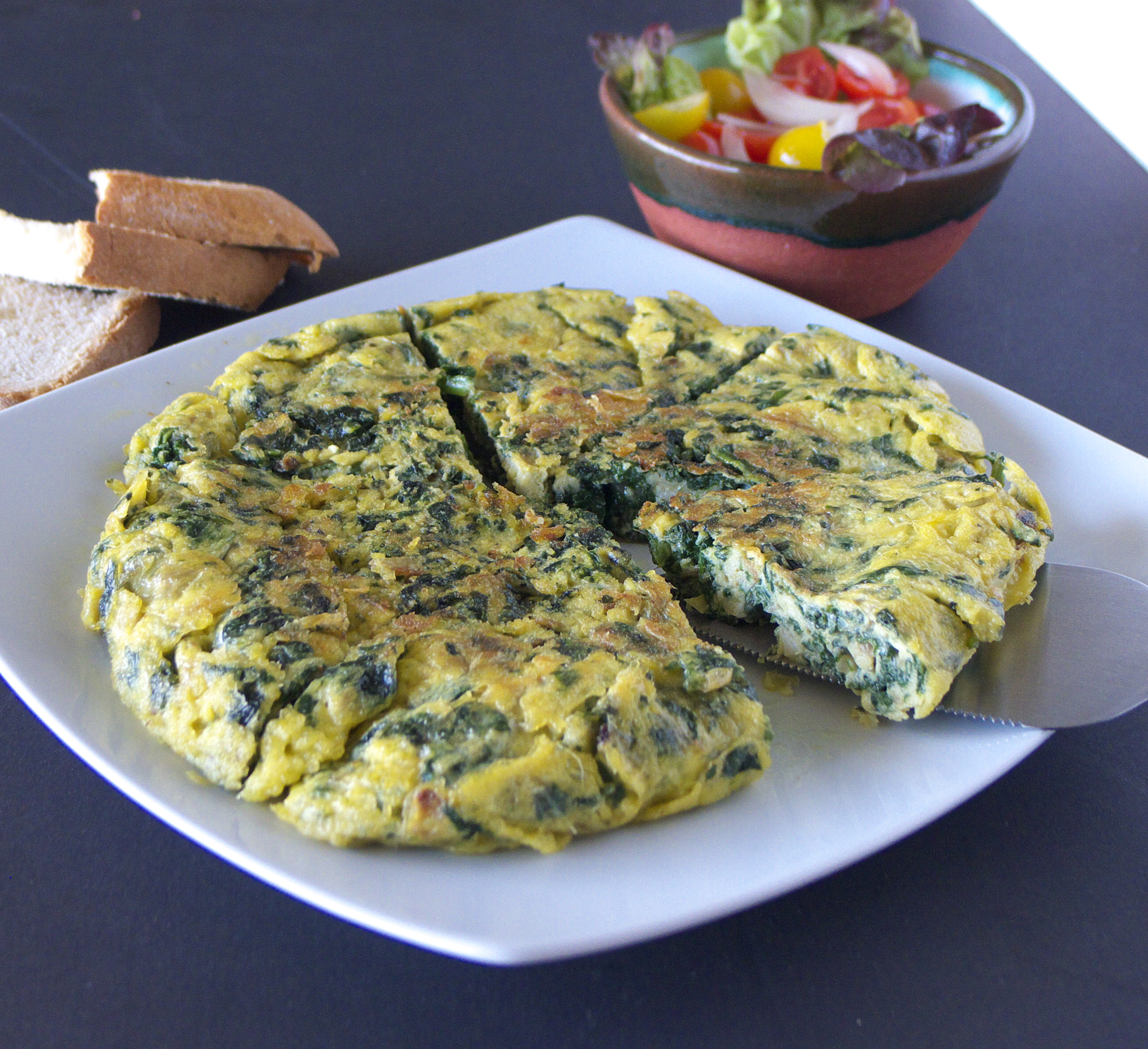
Not a classic potato tortilla, this one is with spinach and cheese.


On Tuesday, the TV chefs were making three kinds of tortilla, in honor of the Día Mundial de la Tortilla Española. (The one with potatoes, truffles and ibérico ham looked sensational.) That was the inspiration I needed for a vegetarian meal for guests that day. World Tortilla Day seemed the perfect excuse.


My efforts—a spinach tortilla—were a learning experience (more about that later). As it turns out, World Tortilla Day was actually way back on March 9. The cooking show was a summer re-run. Never mind. Tortilla is perfect any day, any season, hot or cold.

I’ve written about the “secret” to making a good tortilla many times before: use lots of good olive oil to cook the potatoes before incorporating them in the beaten eggs. My editor once asked, “Why do you need so much oil if you’re using a non-stick skillet?” The answer is that the deep oil, which is later drained off and saved for another use, allows the potatoes to “poach,” not fry, cooking them uniformly on a medium heat without browning and without clumping together. 

Years ago, when I learned tortilla-making skills in tapa bar kitchens, tortillas were made in deep, slope-sided skillets of rolled steel. The pans were thin and lightweight, making it possible to turn the pan upside down, and, with continued use, they gradually became seasoned, making them, in effect, non-stick. And, no, a cast-iron skillet can’t be substituted because it’s too heavy for the tricky maneuver of flipping the tortilla.  

For this spinach tortilla, which has no potatoes, the advice to use plenty of oil is not so essential. But, those instructions to use a “non-stick skillet,” are critical. What did I learn with my spinach tortilla? That I need a new non-stick skillet! This tortilla did not shake loose from the center of the pan, so turning it over caused it to fold in on itself. Not pretty.

A non-stick skillet should be dedicated to tortilla making and egg scrambling and nothing else. It should never be used on high temperatures. For searing chops, get out the cast iron or carbon steel skillet.  

And size matters. For this tortilla with five eggs, which serves two, three, four or more, I used a 10-inch skillet. It came out about two inches thick. If you want a thicker tortilla, use a smaller skillet. I cooked the bulky spinach (bagged spinach leaves lista para cocinar, washed and ready to cook) in a deep pan.

Spinach tortilla is terrific as part of a vegetarian meal. Serve it at a brunch buffet or as a  lunch dish. I like it topped, Ottolenghi style, with a dollop of Greek yogurt. A tomato salad and good bread are the perfect sides. 

Serve tortilla as a tapa, for breakfast, brunch, lunch or supper. This one is vegetarian.


Serve tortilla with bread and a salad. This one is cherry tomatoes.


Spinach Tortilla
Tortilla de Espinacas


Serves 2 to 4.

10 ounces fresh spinach
5 tablespoons olive oil (divided)
¾ cup chopped onion
1 clove garlic, chopped
Salt
Freshly ground black pepper
5 large eggs
½ teaspoon pimentón de la Vera (smoked paprika)
¼ teaspoon cumin
2 ounces grated cheese (1 cup)

Chop the spinach and set it aside. Heat 2 tablespoons of the oil in a deep skillet. Sauté the onions and garlic on moderate heat, stirring, until beginning to turn golden, 5 minutes. Add the spinach. Mix it with the onions and sauté for a minute until spinach begins to wilt. Season with ½ teaspoon salt and pepper. Turn the heat down and cover the pan. Cook just until spinach is completely wilted, about 4 minutes. Don’t add water unless necessary to keep the spinach from scorching.

Drain spinach well.

Place the spinach and onions in a sieve and drain well, pressing out as much liquid as possible. (If desired, save the liquid for another use.) 

Combine eggs, spinach.
Beat the eggs in a bowl with ½ teaspoon salt, pepper, pimentón and cumin. Stir in the cheese. Stir the drained spinach into the eggs and combine well.


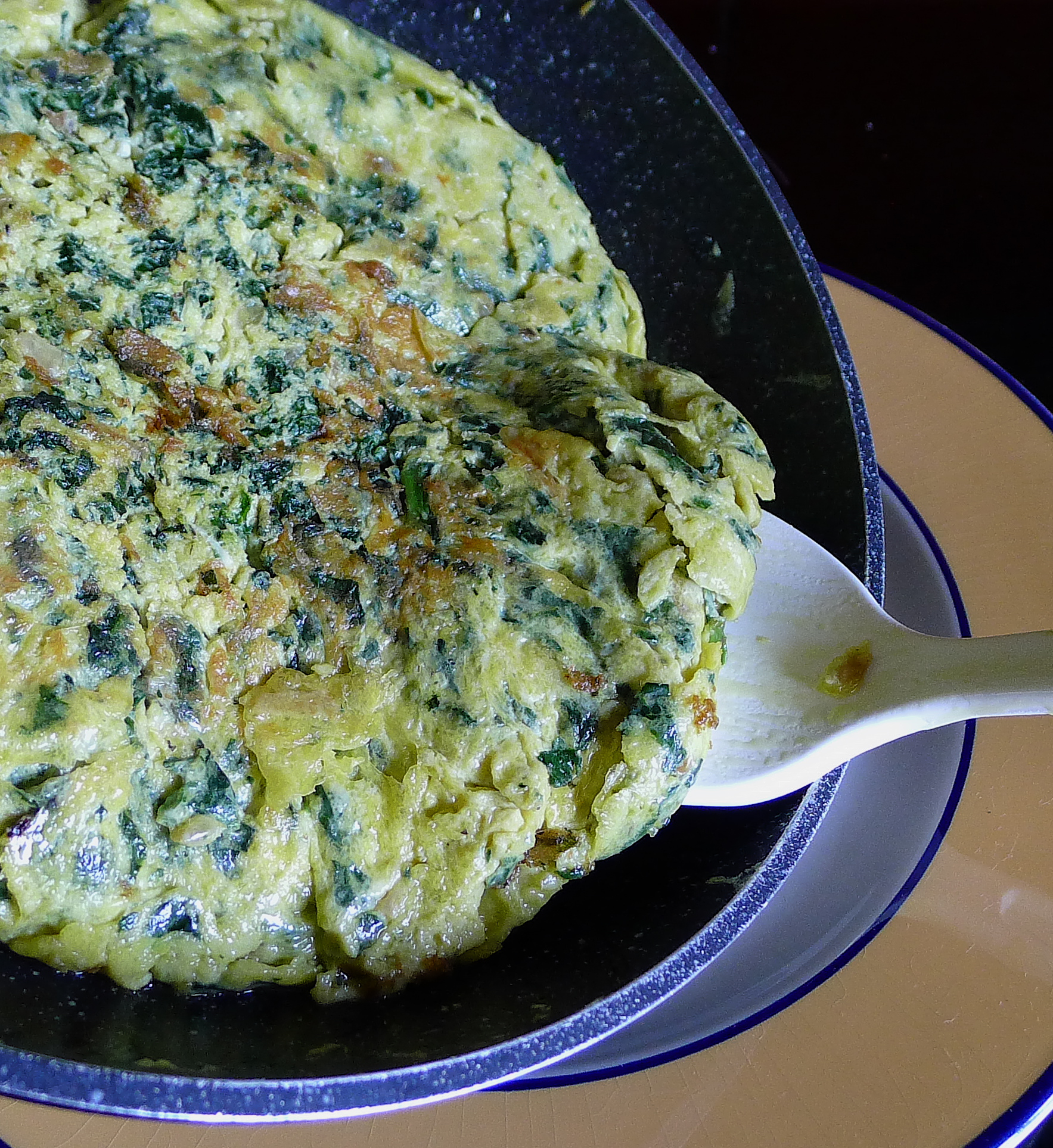
Firm edges. Shake pan to keep tortilla loose.


Heat remaining 3 tablespoons of oil in a 10-inch non-stick skillet. Pour in the egg-spinach mixture. Use a heat-proof rubber spatula or wooden paddle to “scramble” the eggs and spinach as they begin to set. Use the spatula to firm the sides. Without stirring, allow the tortilla to set on the bottom and edges. Shake the pan to keep the tortilla loose and sliding on the bottom.

Working over a bowl to catch any drips, place a flat dinner plate on top of the skillet. Using a hot pad if necessary, hold the plate on tightly and invert the skillet so that the tortilla is turned upside down, onto the plate. Slide the tortilla back into the skillet to cook the underside, another 1 to 2 minutes.

Not pretty! The tortilla stuck to the pan in the center, so didn't properly release when the skillet was inverted. I need a new non-stick skillet!

Lift the edge with a spatula and slide the tortilla out onto a plate.

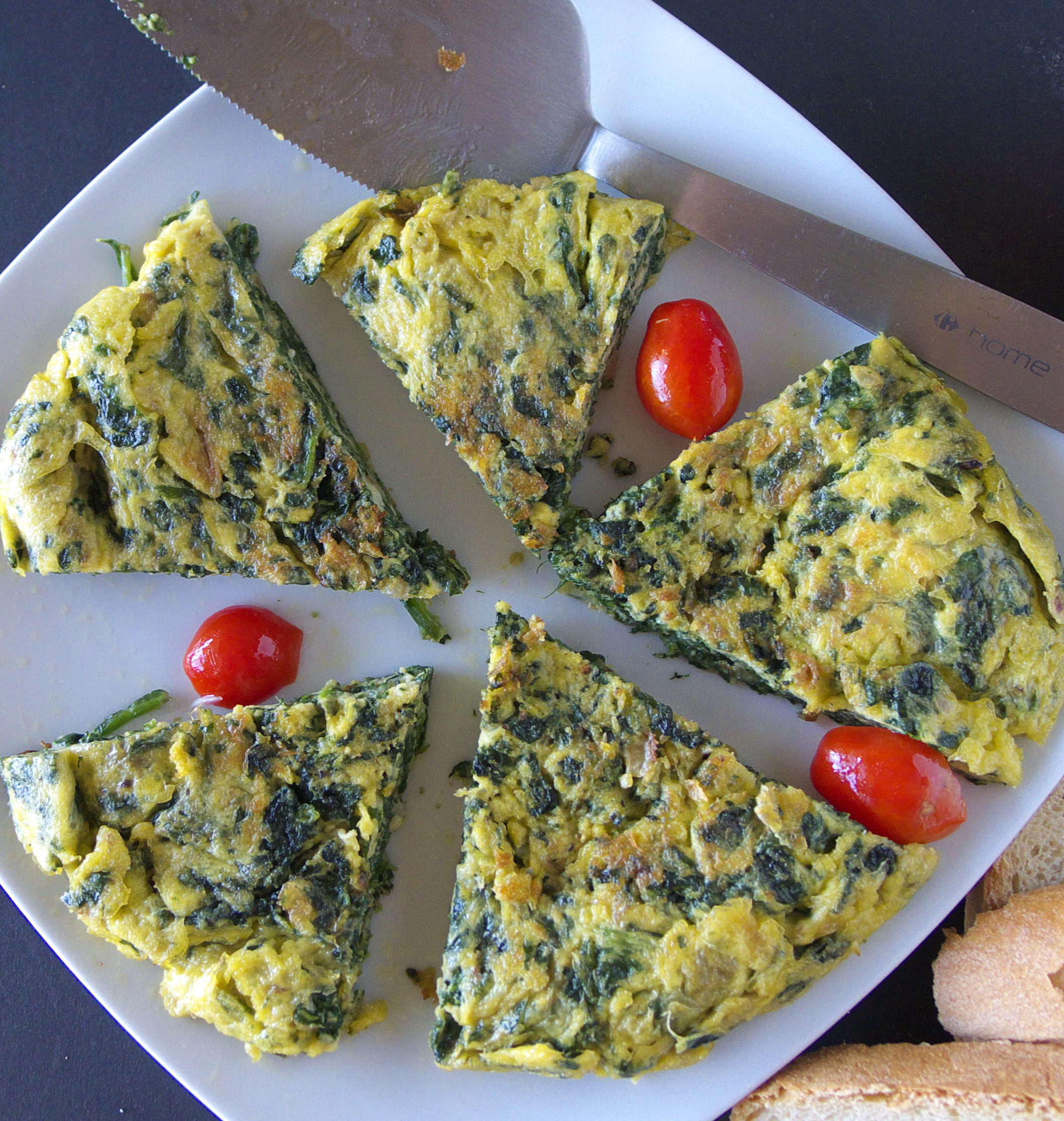
Use a spatula to lift an edge of the tortilla and slide it out onto a serving plate.

Serve the tortilla hot, room temperature or cold. 


More tortilla recipes:


Saturday, April 7, 2018

DOUBLE-DEVILED EGGS

Have you finally used up all the colored Easter eggs? At my house, I set out to make an old favorite recipe for using hard-boiled eggs—huevos dobles, “double” eggs, so-called because they have eggs on the inside and eggs on the outside. They are stuffed, napped in croquette batter, dipped in beaten egg then coated in crumbs and fried.


Something went wrong. I think the coating batter (béchamel) was too thick, because it just didn’t adhere to the eggs. Believe me, I tried various remedies before I walked away from that fiasco, leaving lumps of stuffed eggs and congealed béchamel in the fridge overnight.

Next day, I didn’t even try to start over, but turned my ingredients into a completely different dish. I put the deviled eggs in an oven dish and spooned thinned-down béchamel sauce over them. A little grated cheese and under the broiler for a few minutes.

Eggs are stuffed with ham and spinach, deviled with hot pimentón. Coated with béchamel, they are browned under the broiler.

Those eggs were delicious! Definitely worth cooking up some eggs just to make them. I served them as a starter with salad greens. A day later, I reheated remaining eggs on a bed of spinach with a thinned-out blob of béchamel and called it lunch.

“Deviled” is the terminology for spicy flavorings, such as mustard and/or cayenne. These stuffed eggs have, not cayenne, but spicy-hot pimentón (paprika). You can use either smoked or unsmoked pimentón. Caraway seeds are a brilliant addition to the egg stuffing. Use either serrano or cooked ham in the mix. For a vegetarian version, omit the ham and increase the chopped onion and spinach.

Serve these stuffed eggs bubbling hot or room temperature.

Serve eggs as a starter. Or, maybe, brunch?


Stuffing has chopped spinach and ham.

Stuffed Eggs Gratin
Gratinado de Huevos Rellenos

6 hard-boiled eggs
1 tablespoon olive oil
2 tablespoons finely chopped onion or scallions
2 tablespoons finely chopped ham
½ cup chopped spinach
¼ teaspoon salt
1 teaspoon Dijon mustard
¼ teaspoon hot pimentón (paprika) or pinch cayenne
Pinch of caraway seeds, coarsely crushed
1 tablespoon milk
Bechamel sauce (recipe follows)
2 tablespoons fine dry bread crumbs
2 tablespoons grated cheese
Additional pimentón to finish
Additional olive oil to drizzle on top of eggs


Peel the eggs and cut them in half. Remove yolks and place them in a small bowl. 

Stuffed eggs.
Heat the oil in a small skillet and sauté the onions 2 minutes, until softened, but not browned. Add the ham and spinach. Cook, stirring, until spinach is wilted and any liquid is cooked off. Scrape the mixture into the bowl with the yolks. Add the salt, mustard, pimentón, caraway and milk. Mash the yolks until fairly smooth. Press the mixture into the hollows of the egg whites, mounding it slightly.

Preheat broiler. Lightly oil a shallow oven dish.

Place the eggs in the dish, separating them slightly. Spoon béchamel sauce over the eggs. Sprinkle the tops with bread crumbs and grated cheese. Sprinkle with a little pimentón and drizzle oil on top of eggs.

 Minutes under the broiler to gratin the eggs.
Place the eggs under the broiler until the sauce is bubbling and browned on top, about 4 minutes. Serve the eggs hot or room temperature.

For the béchamel sauce:
2 tablespoons olive oil
2 tablespoons flour
1 ¼ cups milk
Salt
Freshly ground black pepper
Pinch of hot pimentón


Combine the oil and flour in a small saucepan. Cook it, stirring, for 2 minutes. Remove the pan from the heat and whisk in the milk until mixture is smooth. Return to the heat and cook, stirring, until the sauce is smooth and thickened. Season with salt, pepper and pimentón. Cook the sauce, stirring, 4 minutes. 


Here are the "double eggs," that didn't work out this time.

More recipes for stuffed eggs:

Saturday, May 9, 2015

TORTILLA TO GO!

Some foods, especially eggs, really should be served hot out of the pan. Others taste just as good after setting a few hours. The Spanish tortilla is the perfect example of a cooked dish that can wait. 


Tortilla with peas, favas and potatoes. Lunch or tapa.

Cooked in advance, the tortilla sets on the bar at room temperature, ready to be cut into tapa portions. Or, it’s packed in a hamper for a picnic or road trip. In the days before high-speed rail travel, anybody going on a long train journey surely packed a tortilla for an afternoon merienda.

Tortilla with eggplant, zucchini and roasted peppers--ready to roll.

The classic tortilla—I don’t call it an omelette—is just eggs, potatoes, sometimes onion and, of course, olive oil. (recipe is here). But all sorts of vegetables can be incorporated in the egg mix. The tortilla can be served for lunch, snack (kids love it), tapa, supper or, hey, even breakfast.

A tortilla that’s going to be eaten immediately is usually cooked so it’s still a little juicy in the center. But tortilla that’s going to be packed to go should be thoroughly cooked through. You can make tortilla a day before it’s going to be eaten and refrigerate overnight. Allow it to come to room temperature before serving.

Tortilla with fava beans and a dollop of alioli garlic sauce.
Traditionalists don’t serve tortilla with anything but bread. But, you might enjoy it with a sauce, such as alioli, garlic mayonnaise. I like a few drops of Tabasco. My kids always liked ketchup.

Tortilla with Fava Beans, Peas and Potatoes
Tortilla con Habas, Guisantes y Patatas


Fava beans and peas from my garden were the inspiration for this tortilla that also includes potatoes. The potatoes should be tender before incorporating them into the eggs and they take a while to cook. Use lots of olive oil—the potatoes absorb very little oil, but it helps them cook quickly without browning. You don’t want crisp potatoes for tortilla.


1 pound potatoes
½ cup olive oil
1 cup shelled fava beans
1 cup shelled peas
¼ cup diced Serrano ham (1 ounce)
¼ cup chopped spring onion or scallions
1 clove garlic, chopped
6 eggs
1 teaspoon salt


Cut the potatoes into ½-inch dice. Heat the oil in a 10-inch skillet. Add the potatoes. Lower the heat to medium and fry the potatoes, turning them in the oil so they cook evenly. Cook potatoes, without letting them brown, until they are tender, about 15 minutes.

Drain off the cooking oil.
Place a heatproof strainer over a heatproof bowl. Carefully pour the oil and potatoes into the strainer, letting the oil drain into the bowl. Reserve the oil.

While potatoes are frying, blanch the fava beans in boiling water and drain. Blanch the peas in boiling water and drain.

Add 1 tablespoon of the reserved oil to the skillet. Sauté the ham, onion and garlic for 1 minute. Add the fava beans and sauté for 3 minutes. Add the peas and sauté for 2 minutes more.

Mix vegetables into beaten eggs.
Beat the eggs in a bowl with the salt. Stir the fried potatoes into the eggs. Stir  the favas and peas into the eggs.

Heat 1 tablespoon of oil in the skillet. Pour in the eggs and vegetables. Lower heat to medium and let the tortilla set on the bottom without browning. Don’t stir the eggs. Use a heatproof spatula to firm the edges of the tortilla. 

When the egg is almost set, remove the skillet from the heat. Place a flat plate or pan lid on top of the tortilla and, working over a bowl to catch any drips, very carefully reverse the tortilla on to the plate.

Slide tortilla back into the skillet.
Then, slide the tortilla back into the skillet to cook on the reverse side.

Lift the edge of the tortilla with a spatula and carefully slide it out of the skillet onto a serving dish.

Strain the remaining cooking oil and use it another time.


Eggplant Tortilla
Tortilla de Berenjena

Packed for a picnic. Beach or sierra?

This tortilla is typical of Murcia, which is known for its market gardens. With no potatoes, it’s quicker to prepare than a classic tortilla. Make it with any combination of eggplant, zucchini and roasted peppers. To save time, I used  roasted peppers from the grocery store. Canned ones could be used too.

Unlike potatoes, which absorb very little olive oil while cooking, eggplant absorbs a lot. A smaller quantity of oil is needed for this recipe.

Serves 4-6.

4 cups eggplant cut in ½-inch dice (1 medium eggplant)
1 ½ cups zucchini cut in ¼-inch dice (½  zucchini)
¼ cup olive oil
½ cup chopped onion
½ cups grated tomatoes (1 small tomato
1 ½ cups roasted red peppers, cut in strips (about 3 peppers)
1 ½ teaspoon salt
Pinch of oregano
Red pepper flakes (optional)
6 eggs


On a high heat, heat 2 tablespoons of the oil in a skillet. Add the onion and eggplant and fry, turning, until eggplant is lightly browned, about 4 minutes. Lower heat and add the zucchini. Sauté 3 minutes more. Add the tomato pulp and strips of red pepper. Season with 1 teaspoon salt, oregano and red pepper flakes, if using. Cook until vegetables are soft and most of the liquid has cooked away, about 10 minutes.

Carefully ladle the vegetables into a strainer and allow to drain for 5 minutes. (Save the liquid for another use.) Wipe out the skillet.

Beat the eggs and ½ teaspoon salt in a bowl. Mix the fried eggplant mixture into the eggs. 

Cook eggs and vegetables until eggs are set.
Heat 1 tablespoon of the remaining oil and pour in the egg and vegetable  mixture. Turn the heat down to medium and let the tortilla cook until set, about 10 minutes. Use the back of a spatula to firm the sides. Shake the skillet occasionally to make sure the tortilla is not sticking on the bottom.

Working over a bowl to catch any drips, place a flat plate or pan lid on top of the tortilla and, very carefully, reverse the skillet to turn the tortilla onto the plate.

Add remaining 1 tablespoon of oil to the skillet and slide the tortilla back into the pan to cook the reverse side, about 3 minutes.

Use the spatula to lift the edge of the tortilla and slide it out of the pan onto a serving plate.

Pack a picnic basket and we're off!


Saturday, February 7, 2015

FLAMENCO EGGS—THE SPANISH CHAKCHOUKA

Huevos a la flamenca--flamenco eggs.
The world’s favorite egg dish these days seems to be chakchouka, a North African way of cooking eggs in a spicy tomato sauce. It reminds me a lot of a Spanish dish—huevos a la flamenca—flamenco eggs, eggs baked in tomato sauce.

Flamenco eggs, a Sevilla specialty, is a flouncy variation of huevos al plato—eggs on the plate with fried potatoes, chorizo and ham. Flamenco eggs used to appear on restaurant menus and at tapa bars everywhere in Andalusia. It was usually served as a starter or else a light lunch or supper dish. Never for breakfast!

A dear friend of mine, Annie, a tiny slip of a woman, used to amaze the waiters at our favorite venta (rustic country restaurant). She would start her meal with a plate of fried boquerones (fresh anchovies), move on to a starter of huevos a la flamenca, then go through a whole leg of baby lamb and, usually, finish with the house-made flan! That was to last her until her next trip to Spain.

I’m not sure why huevos a la flamenca have mostly disappeared from restaurant menus. Perhaps they are too ordinary, old-fashioned, in this day of chef-inspired creative cuisine. But they make a comforting, satisfying family meal.


Ready for the oven--eggs on top of tomato sauce.
The usual preparation is one or two eggs per person, baked in individual cazuelitas, earthenware ramekins, with tomato sauce, peas, chorizo, ham and strips of roasted red pepper. Some variations call for diced fried potatoes as well, mixed with the tomato sauce. Should you prefer a vegetarian version, just omit the chorizo and ham and substitute sliced sauteed mushrooms and quartered artichoke hearts.

Like a kick of chile heat? Use a little cayenne in the tomato sauce or just sprinkle hot pimentón on top of the eggs.

If preferred, the eggs can all be baked in one pan, such as a heavy, oven-proof skillet. It’s even possible to cook them on top of the stove, covering the pan until whites are set.

Serve the eggs with chunks of bread, fried bread or toast that’s been drizzled with good olive oil. No reason you can't serve them for Sunday brunch!

You need a thick tomato sauce for the bottom of the cazuelita. Make it with fresh or canned tomatoes (recipes here or here)  or use canned tomate frito or even a jar of your favorite marinera sauce.

Flamenco eggs with ham, chorizo, peas, asparagus.

Baked Eggs Flamenco
Huevos a la Flamenca

Serves 4.

Olive oil
1 cup thick tomato sauce (canned or freshly made)
4-8 eggs
4 slices chorizo sausage, cut in half
1 ounce sliced serrano ham
¼ cup cooked peas
8 cooked asparagus tips
Salt and pepper
Pimentón (paprika)
1 tablespoon chopped parsley
8 strips roasted red pepper


Preheat oven to 375ºF/190ºC.

Drizzle oil in four 6-inch cazuelas or ovenproof ramekins. Divide the tomato sauce between them. Make indentations in the sauce.

Break 1 or 2 eggs into each cazuela. Put 2 halves of chorizo on either side of the eggs. Tuck slices of ham into the sauce. Sprinkle with peas. Arrange 2 asparagus tips in each cazuela. Sprinkle each with salt and pepper, a pinch of pimentón and parsley. Cross 2 strips of pimiento on top of each. Drizzle a little oil over the tops of the eggs.

Bake until whites are set, but yolks still runny. This takes about 12 minutes in an earthenware cazuela. The eggs will continue to cook after removing from oven, so take them out when whites are just barely set.


Saturday, April 7, 2012

CELEBRATE EGGS


Prettily tinted or lavishly decorated, Easter eggs nestling in a straw basket are a happy feature of the season. Since antiquity, the egg has symbolized new life, thus its appearance at the springtime festival celebrating the Resurrection.

Hornazos are eggs baked in bread for Easter.
The traditional Easter egg in Spain is not necessarily colored, but is baked in a basket of bread dough—hornazos—or sweet dough—monas de Pascua. These can be found in bakeries at Easter.

Jewish custom also includes the egg in the springtime holiday of Passover, when it is one of the symbolic foods served at the seder dinner, representing the temple sacrifice of old.

The egg is a highly-valued food in Spain, where many will pay premium prices for fresh, free-range eggs. Many years ago when I lived in the village, I would exchange vegetable scraps with a neighbor (for feeding her pig) for a few fresh eggs. Such a delight.

Huevos solos, mil manjares y para todos.
With only eggs, a thousand dishes and enough for everybody.

Mas vale un buen dia con huevo que un mal mes con un cerdo.

Better a good day with only an egg than a bad month with a whole pig.


For years, I could never find white eggs and the brown ones just weren’t suitable for coloring. But this year, there they were, just in time for my grandson Leo to help with the tinting.


What to do with a surfeit of hard-cooked eggs after the Easter egg hunt? In Spain, sliced eggs in a fresh tomato sauce with patatas fritas, Spanish fries, on the side make an easy and satisfying supper dish. Stuffed eggs are a terrific lunch dish. The Spanish version uses tuna or shrimp in the stuffing (see that recipe here). Or, if you want something a little fancier, try these “double” eggs—they are stuffed, coated with bechamel, then dipped in crumbs and fried. These are fun to prepare (though time-consuming) and fun to eat.

"Double" eggs are stuffed, then breaded and fried.

“Double” Eggs (Croquettes with Deviled Eggs)
Huevos Dobles


The coating is thicker and crisper if the eggs are dipped twice in flour, egg, and crumbs.

The recipe makes more stuffing mixture than needed for the 6 egg whites. The leftover makes a fine sandwich spread.

 The eggs can be stuffed and fried up to 24 hours in advance and refrigerated. Bring them to room temperature. Place in an oven pan and heat in a preheated 400ºF oven 8 to10 minutes.

Serve the eggs, one per person, as a starter. Tomato sauce makes a good accompaniment.

Serves 6.

6 hard-cooked eggs
1 tablespoon olive oil plus 2 cups additional for frying
¼ cup finely chopped onion
¼ cup minced serrano or cooked ham
¼  plus ½ teaspoon salt
Pinch of caraway seed
½ teaspoon Dijon mustard
Pinch of hot pimentón or cayenne
1 tablespoon plus 1 ½ cups milk
2 tablespoons butter
5 tablespoons flour plus additional ½ cup for dredging
1 to 2 eggs
1 cup fine dry bread crumbs
Tomato sauce to serve (optional)


Peel the cooked eggs. Pat them dry. Cut in half lengthwise. Remove yolks to a small bowl.

Heat 1 tablespoon oil in a small skillet. Sauté the onion and ham until softened, 5 minutes. Add the contents of the skillet to the yolks. Add ¼ teaspoon salt, caraway seed, mustard, pimentón, and 1 tablespoon of milk. Mash the yolks smooth. Press the yolk mixture into the hollows of the egg whites.

Cover a tray with a layer of plastic wrap. Place the egg halves, stuffed side down, 2-inches apart in a single layer. Refrigerate.

In a saucepan melt the butter. Stir in 5 tablespoons of flour and stir until smooth over a low heat. Remove the pan from the heat and stir in 1 ½ cups milk very gradually, until the mixture is smooth. Return to a medium heat. Cook, stirring, until the sauce is thick and smooth, 5 minutes.

Spoon the hot sauce over the egg halves, napping them smoothly with the sauce. Refrigerate the eggs until coating is chilled and solidified, at least 3 hours and up to 24 hours.

Roll one egg half over, stuffing side up. Pick up another egg and place it on top, so the stuffing is enclosed. Repeat with the remaining eggs. Return the tray to the refrigerator.

Place flour for dredging in a shallow pan. Beat 1 or 2 eggs and place in a shallow dish. Place half the breadcrumbs in another shallow pan.

Dredge each egg in flour. Pat off excess and gently press the two halves together. Roll the eggs in beaten egg. Place them in the tray of breadcrumbs. Sprinkle remaining half of crumbs over the eggs. Roll or pat the eggs so they are completely covered with crumbs. Allow to dry on a tray for 15 minutes.

If desired, repeat the breading, dredging the eggs first in flour, then eggs, then crumbs.

Heat oil in a deep skillet to a depth of ¾ inch. Fry the eggs, turning to brown all sides, 4 to 5 minutes. Remove with a slotted spoon and drain on paper towels. Serve hot or warm accompanied by tomato sauce, if desired.

Leo helped to color Easter eggs.