Showing posts with label Jaén. Show all posts

Saturday, May 13, 2023

JAZZ UP THE SPINACH


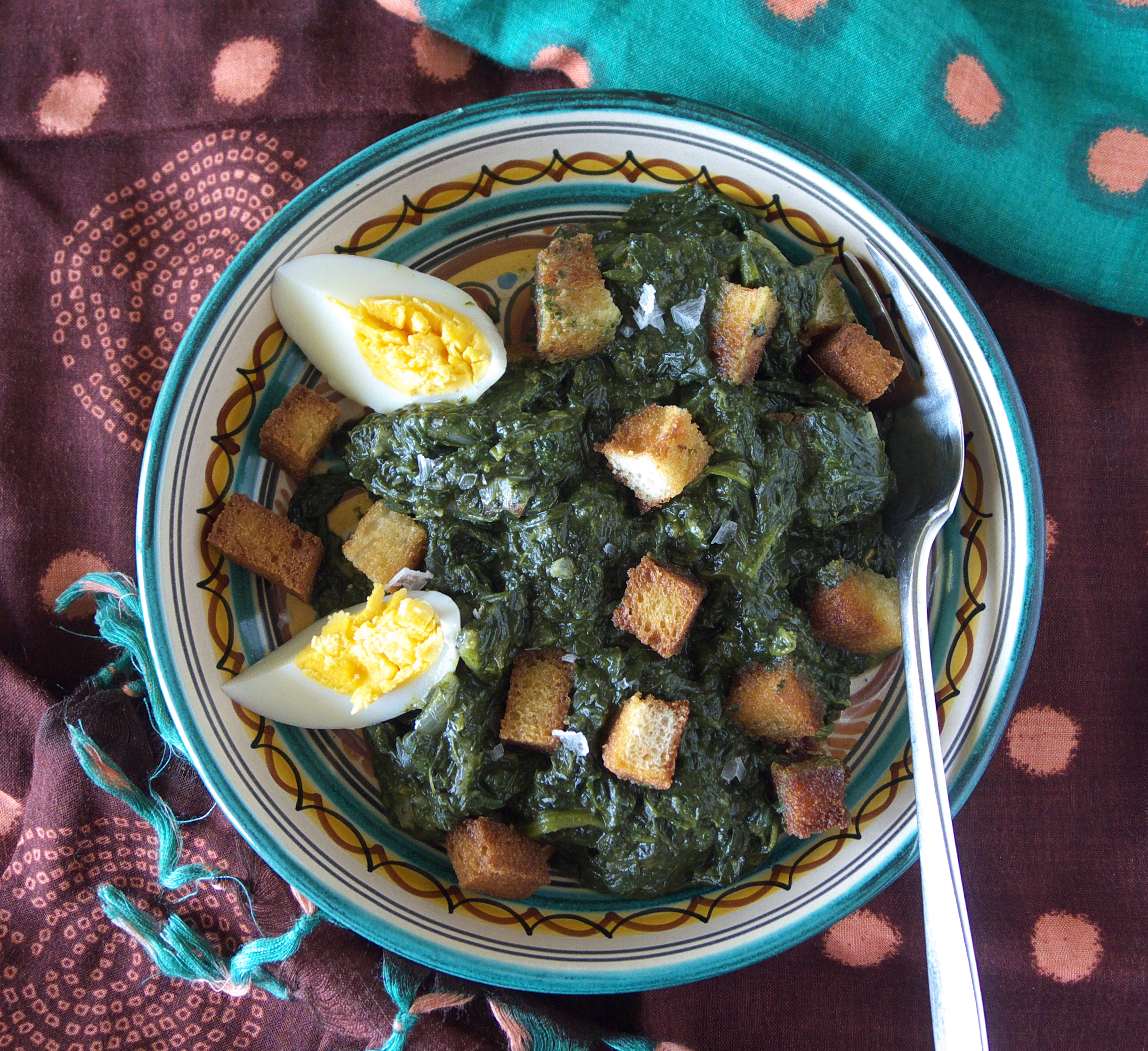
Garlicky spinach is dressed up with crispy croutons and quartered egg.

Sure, steamed spinach is good, tossed with a little butter or olive oil, maybe a few drops of vinegar. But, it’s even better dressed up with sauce or extra flavorings. Here’s a version of “creamed” spinach that’s especially good.


In this recipe for spinach, typical of Jaén (interior Andalusia) and La Mancha, the “cream” sauce isn’t a bechamel, but is made with bread and garlic. Caraway seeds are typical and are unusually good with spinach. Croutons of fried bread add texture. 

If served as a side dish, quartered, hard-boiled eggs make a good garnish for the spinach. Or serve a good-sized portion topped with a fried egg for a terrific (vegetarian) lunch or supper dish. Alternatively, stir one or two beaten eggs into the spinach immediately before removing from the heat.

Serve this spinach dish as a side or add eggs and serve it as the main dish for lunch or supper.

Add a fried or poached egg per person to the spinach.


Spinach is creamy from mashed up bread.

Spinach with Crispy Croutons
Espinacas con Picatostes


Serves 6 as a side or 4 as a light main dish. 

3 slices bread, crusts removed (about 5 ounces)
3 cloves garlic
½ cup olive oil
1 tablespoon white wine vinegar
Pinch of ground cloves
½ teaspoon pimentón (paprika)
Water
1 ½ pounds fresh spinach, washed and trimmed, or 1 (14-ounce) package frozen spinach, thawed
2 tablespoons chopped onions
Salt
Freshly ground black pepper
1/8 teaspoon caraway seeds
Eggs

Fry croutons, garlic.

Cut 2 slices of the bread into ¾-inch croutons. Lightly crush 2 cloves of the garlic. Heat the oil in a small skillet with the 2 cloves of garlic. When garlic begins to sizzle, add the diced bread in a single layer. Fry until bread is browned on one side. Turn the croutons so they brown on all sides. Skim croutons and garlic out of the oil and reserve them.

Add the remaining slice of bread to the skillet and brown it on both sides. Remove the bread. Remove the skillet from the heat and reserve the oil.

Scissors to cut up spinach.
If using fresh spinach, place it in a pan large enough to hold it. Cook over medium heat until the spinach is wilted. Add water if necessary. Drain the spinach. Use scissors to cut the spinach up. (If using thawed frozen spinach, chop it if necessary.)

Remove skins from the 2 cloves of fried garlic and one uncooked garlic. Place them in a mortar or blender with the slice of fried bread, broken into pieces. Add the vinegar, cloves, pimentón and 2 tablespoons of water. Allow a few minutes for the fried bread to soften, then crush or blend to make a smooth paste.

Heat 2 tablespoons of the reserved oil in the large pan. (Remaining oil can be strained and used for another purpose.) Sauté the onions until they are softened, 3 minutes.

Add the spinach to the pan and stir it in the oil for 1 minute. Add the bread-garlic paste, ½ teaspoon salt (or, to taste), pepper and ½ cup of water. Cook 10 minutes. Stir in the caraway seeds and cook 1 minute. (If using beaten eggs, stir them in at this point.)

Fry one egg per person.

Place the spinach in a bowl or platter and scatter the fried croutons on top. Serve garnished with quartered hard-boiled eggs or 1 fried egg per person.


Saturday, April 24, 2021

FAREWELL TO FAVAS

The last of the fava beans.


Only a handful of fava beans remains to be picked in my garden patch. I’m usually inundated with them, but this year I only planted a few. There’s never enough maturing at the same time to make a satisfying serving. 


On a TV food show I watched a segment filmed in a tapas bar in Jamilena, a town in Jaén province (Andalusia). The cook was making a variation of pipirrana, a chopped “salad,” called “machacao,” that was finished with a scattering of raw fava beans. Machacao is Andaluz for “machacado,” meaning "crushed." The dressing is prepared by crushing egg yolks, garlic, green pepper, bread and olive oil in a mortar or in a wooden bowl called a dornillo.

The pipirrana of Jaén is more of a mojete or remojón—what I call “dunking salad,” meant to be served with lots of bread for sopping up the juices. Pipirrana is usually a summer dish, a relative of gazpacho, served chilled for a light supper. In the springtime, before tomatoes are in season, some of the tomatoes are replaced with oranges. The favas are another springtime touch.

Chopped salad is topped with chunks of tuna and fava beans. 


A "dunking salad," meant to be served with chunks of bread for soaking up the garlicky dressing and tomato juices.


With tuna and egg as well as bread, the salad makes a complete meal.


Blanch and peel favas.
Freshly-picked fava beans can be eaten raw with just a sprinkling of salt. However, they’re best if, after shelling, they are briefly blanched in boiling water and the outer skins of the beans are removed. No favas? Use fresh peas instead, raw, if they are freshly picked, or blanched if they’ve been waiting in a grocery store bin. 

Add the juices from chopping tomatoes and oranges to the salad. Allow the salad to stand 30 minutes to further draw out the juices. If desired, add a little cold water to make it even soupier. Serve the salad with a spoon and chunks of bread for dunking. 

The “mashed” dressing is really garlicky! You could decrease the quantity of garlic or blanch several cloves of garlic to make them less intrusive.

Use as much canned tuna as you like to top the salad. For this quantity of tomatoes and mashed dressing I used two 70-gram cans. 

For an authentic Jaén pipirrana, you would use a good Picual extra virgin olive oil, a fruity oil with a piquant finish.

Chopped Salad with Fava Beans
Machacao con Habas

Orange as well as tomatoes in this springtime salad.

1 cup shelled fava beans
1 slice bread
2 cloves garlic, coarsely chopped
1 teaspoon coarse salt 
2 hard-boiled eggs
1 green pepper
1/3 cup extra virgin olive oil
2 cups peeled and chopped tomatoes
1 cup chopped orange (optional)
½ cup diced cucumber (optional)
3 tablespoons chopped scallions 
Salt to taste
Water (optional)
Canned tuna
Bread, to serve

Blanch the fava beans in boiling water for 15 seconds. Drain them and refresh under cold water. Slit the outer skins and gently squeeze out the beans. Discard skins. Reserve the beans.

Soak the bread in water to cover until it is softened. Squeeze out the water and discard the crusts. Reserve ¼ cup of mashed bread pulp. 

Mash garlic, bread and egg yolks in mortar. 


Place the garlic in a mortar or wooden bowl with the coarse salt. Grind and crush the garlic until smooth. Peel the eggs and separate the yolks and whites. Add the yolks to the mortar and reserve the whites. 

Use a vegetable peeler to peel some of the green pepper. Cut a 2-inch piece of pepper, chop it, and add to the mortar. Reserve the remaining pepper. Add the pulped bread to the mortar. 

Mash the bread, egg yolks and green pepper with the garlic to make a paste. Using the pestle, stir a spoonful of oil into the paste until it is absorbed. Add another spoonful. Continue adding oil and stirring until the sauce is thickened and emulsified. 


Chopped tomato, orange, pepper and egg whites.


Chop the reserved egg whites. Chop enough reserved green pepper to make 2/3 cup. Place whites and pepper in a bowl. Add the tomatoes, orange and cucumber, if using. Add the scallions. Gently stir in the garlic sauce. Taste and add salt if needed.

Chill the salad, if desired. Otherwise, allow to stand 30 minutes. To serve, place the salad in a bowl and top with chunks of drained tuna. Scatter reserved fava beans on top. Serve the salad accompanied by bread. 


More recipes with fava beans here.

More versions of pipirrana:

More "dunking" salads (mojeteshere.

Saturday, May 4, 2019

POTATOES, RAMPANT

A stew of potatoes in all their glory.  I used both cloves of "old" garlic (top right) and, for garnish, chopped stems of green garlic (pictured on the left of the bowl).


If I asked you to name the single most important ingredient in Spanish cooking—after olive oil—what would you choose? Rice, as in paella? Tomatoes, peppers or garlic, as in sofrito? Pork/ham/sausage? Fish? 


The answer, by my count, is potatoes. In my first collection of Spanish recipes, COOKING IN SPAIN, there are 12 recipes for potatoes in the Vegetable chapter, plus another 16 to 20 recipes that include potatoes. While the Fish and Shellfish chapter is considerably longer than Vegetables, no single variety of seafood matches potatoes.

In the (almost) 10 years I’ve been blogging about the food of Spain, I have managed to feature potatoes month after month as either main ingredient or garnish. (Links to some of those recipes are below.) Here’s another traditional recipe from that first cookbook, Ajoharina.

Thickened with flour, sauce is the consistency of gravy. 


New potatoes plus asparagus and chopped green garlic give this dish a springtime flavor.


Serve, like soup, as a starter or main lunch dish.

“Ajoharina” means “garlic-flour.” It consists of potatoes stewed in a garlicky sauce that is thickened with flour. The dish traditionally is served, in place of soup, as a primer plato, first course. In poor households, it makes a sturdy, filling meal when nothing else is to follow. Ajoharina is typical of the Andalusian province of Jaén and of parts of La Mancha.  It can have scraps of pork fat added or, for Lent, salt cod. In the fall, wild mushrooms called níscalos (Lactarius deliciosus or saffron milk cap) might be cooked with the potatoes; in spring, spears of wild asparagus.

From my huerta--freshly-dug potatoes.


Onions, too, are ready to harvest. 

I’m using freshly-dug spring potatoes for this dish. Cut into 1-inch pieces, they needed hardly 10 minutes cooking time. Mature potatoes or red-skinned varieties will need longer cooking. Cook the potatoes until tender before stirring in the flour. Once thickened, the sauce should be the consistency of smooth gravy.

This recipe is usually completely vegan, but, if you like, add scraps of ham or bacon to punch up the flavor. The color and flavor come from pimentón (paprika). Normally, this is ordinary unsmoked pimentón, but, if you like, use some smoked pimentón de la Vera as well. Hot pimentón is completely optional; it does perk up potato stew quite a lot.

Garlicky Potato Stew
Ajoharina

Serves 6. 

2 pounds potatoes (about 8 medium), peeled
1/3 cup olive oil
½ cup chopped onions
½ cup chopped green peppers
½ cup chopped red bell pepper
1 ounce diced serrano ham, pancetta or bacon (optional)
4 (or more) cloves garlic, peeled
1 tablespoon pimentón (paprika)
Pinch of hot pimentón or cayenne (optional)
½ cup grated tomato pulp
1/8 teaspoon cumin
1 bay leaf
4 cups water
1 teaspoon salt
Freshly ground black pepper
12 asparagus spears, cut in pieces and blanched (optional)
4 tablespoons flour
Chopped green garlic, chives or scallions to garnish

Cut the potatoes in 1-inch chunks. Heat the oil in a cazuela or deep skillet. Add the potatoes and sauté them 1 minute. Add the onions, green and red peppers and ham, if using. Sauté them 4 minutes.

Flatten the garlic cloves with the side of a knife and chop them finely. Add them to the sauté. Stir in the pimentón. Add the tomato pulp, cumin, bay leaf and 3 cups of the water. Season with salt and pepper. Cook until potatoes are just tender, 10-15 minutes. Add the blanched asparagus, if using, during the last few minutes.

Shake flour and water.

Place the flour in a jar and add the remaining 1 cup of water. Close the jar tightly and shake it until flour is completely mixed with the water.  Pour the flour mixture into the pan with the potatoes and stir to mix well. Let cook 2-3 minutes longer until the liquid thickens. 

Thicken cooking liquid with flour. Stir to make a smooth gravy.

Serve the potatoes hot, sprinkled with chopped green garlic, chives or scallions to garnish.


The story of potatoes in Spain here.

More recipes with potatoes: