Saturday, May 20, 2023

CAMPAIGNING FOR ARTICHOKES


Municipal elections across Spain are only a week away, but the only campaign slogan I’m signing on with is “Ni un solo día sin alcachofa”. Not a single day without artichokes. I endorse this platform, the promotional campaign of Alcachofa de España. I could eat artichokes every day. 


Although the season for fresh-cut artichokes, which begins before Christmas, is coming to an end, it’s a vegetable readily available in jars and frozen all year round.

The English name, artichoke, comes from the Spanish, alcachofa, which, in turn, derives from the Arabic, al-kharshûf, meaning a thistle. The artichoke plant, a mutation of another thistle, the cardoon (cardo), probably originated in Egypt/North Africa. 

Spain is the second largest producer of artichokes in Europe. Murcia (eastern Mediterranean coast) is the largest growing region for this delectable vegetable.

Discard outer leaves and top half of the artichoke.
Prepping artichokes can be complicated—remove outer leaves, pare the stem, cut the leaves off down to the heart, extract the fuzzy choke. Or, simple—just cook them in boiling water until a leaf pulls off easily and let each person dismantle his/her own. Either way, an artichoke produces a lot of debris, good for the compost bin. 

Don’t worry too much about artichokes’ tendency to oxidize and darken. Definitely don’t soak them in acidulated water, as that takes away their very special flavor. Prep them as close as possible to when you’re ready to cook them. If possible, drop them into the cooking water or oil as they are trimmed. If cutting up the artichokes stains your fingers, rub them with a cut lemon, not the artichokes. 

Here’s a recipe for artichokes as they are prepared in Córdoba. They are first sautéed, then braised in the wine of the region, fino from the Montilla-Moriles wine region of Córdoba. Montilla is a fortified wine much like Sherry, another Andalusian wine that is made in Jerez, for which it can be used interchangeably. The artichokes are even better cooked in amontillado, which is more full-bodied and mellow than fino.  Although artichokes are famously difficult to pair with wine, they go just fine with fino. 

This is a vegetarian version of this dish. However, if you order it in a Córdoba tavern, it will probably include slivers of serrano or ibérico ham (from the Córdoba region of los Pedroches) as a garnish with the finished artichokes. In this case, they may be braised in a ham or chicken stock instead of plain water. 
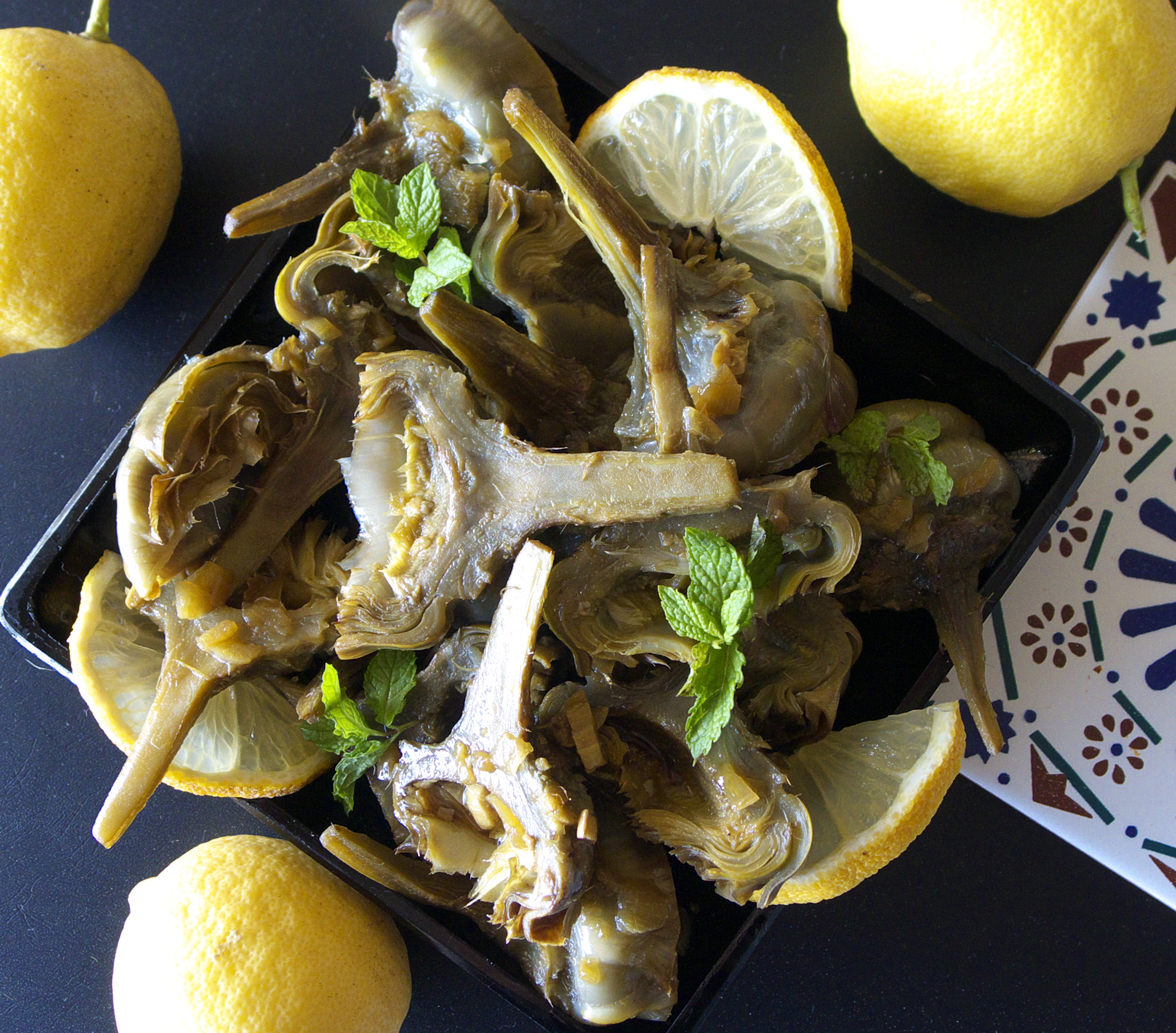
Artichokes braise in a sauce with garlic, saffron and  fino wine from Montilla-Moriles (Córdoba). 


Artichokes, Córdoba Style
Alcachofas a la Cordobesa


Serves 6 as a starter.

8-10 medium artichokes (2 ½ pounds)
Water
Parsley
1 slice lemon
¼ teaspoon saffron threads
3 tablespoons hot water
1/3 cup olive oil
¼ cup chopped onion
4 cloves chopped garlic
1 teaspoon flour
½ cup fino Montilla or Sherry wine
1 cup water
1 teaspoon salt 
Freshly ground black pepper
Sprigs of fresh mint

Scoop out fuzzy choke.

Trim the artichokes. Pare the stem. Remove two or three layers of outer leaves. Cut the artichoke crosswise about a third from the bottom. Discard upper leaves. Use a melon baller to scoop out the fuzzy choke in the center. Drop the artichoke bottom as prepared into a bowl filled with water to which a a few stems of parsley and lemon slice have been added.

Crush the saffron in a mortar. Dissolve in the hot water. Reserve.

Sauté artichokes with garlic, onions.


Heat the oil in a cazuela or wide pan. Sauté the onion and garlic on medium heat until softened, 4 minutes. Drain the artichokes. Cut each one in half (or quarters, if they are very large). Add the artichokes to the pan and turn them in the oil for 1 minute. Sprinkle with the flour. Stir in the wine and allow the alcohol to cook off, 1 minute. Add the saffron water, 1 cup of water, salt, pepper and one sprig of mint. Cover and cook until artichokes are very tender, 20-25 minutes. Add additional water, if needed, so there is always some sauce in the pan. Discard the cooked mint.

Serve the artichokes hot, room temperature or cold with the sauce in which they cooked. Garnish with sprigs of fresh mint.

The white fluff is an artichoke flower bearing seeds.


Optional version of Córdoba-style artichokes is finished with serrano or ibérico ham. 

More recipes with artichokes:


Saturday, May 13, 2023

JAZZ UP THE SPINACH


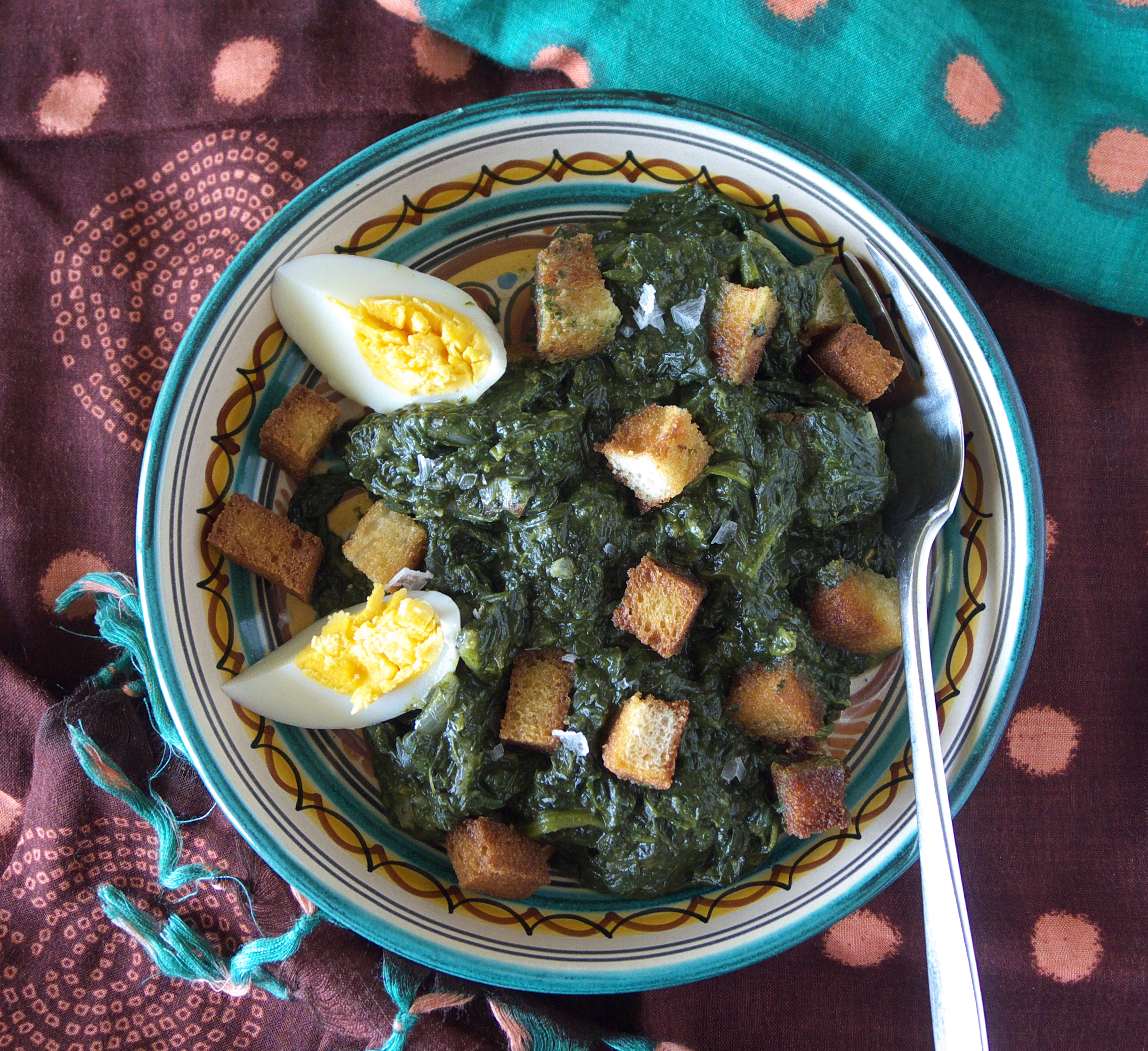
Garlicky spinach is dressed up with crispy croutons and quartered egg.

Sure, steamed spinach is good, tossed with a little butter or olive oil, maybe a few drops of vinegar. But, it’s even better dressed up with sauce or extra flavorings. Here’s a version of “creamed” spinach that’s especially good.


In this recipe for spinach, typical of Jaén (interior Andalusia) and La Mancha, the “cream” sauce isn’t a bechamel, but is made with bread and garlic. Caraway seeds are typical and are unusually good with spinach. Croutons of fried bread add texture. 

If served as a side dish, quartered, hard-boiled eggs make a good garnish for the spinach. Or serve a good-sized portion topped with a fried egg for a terrific (vegetarian) lunch or supper dish. Alternatively, stir one or two beaten eggs into the spinach immediately before removing from the heat.

Serve this spinach dish as a side or add eggs and serve it as the main dish for lunch or supper.

Add a fried or poached egg per person to the spinach.


Spinach is creamy from mashed up bread.

Spinach with Crispy Croutons
Espinacas con Picatostes


Serves 6 as a side or 4 as a light main dish. 

3 slices bread, crusts removed (about 5 ounces)
3 cloves garlic
½ cup olive oil
1 tablespoon white wine vinegar
Pinch of ground cloves
½ teaspoon pimentón (paprika)
Water
1 ½ pounds fresh spinach, washed and trimmed, or 1 (14-ounce) package frozen spinach, thawed
2 tablespoons chopped onions
Salt
Freshly ground black pepper
1/8 teaspoon caraway seeds
Eggs

Fry croutons, garlic.

Cut 2 slices of the bread into ¾-inch croutons. Lightly crush 2 cloves of the garlic. Heat the oil in a small skillet with the 2 cloves of garlic. When garlic begins to sizzle, add the diced bread in a single layer. Fry until bread is browned on one side. Turn the croutons so they brown on all sides. Skim croutons and garlic out of the oil and reserve them.

Add the remaining slice of bread to the skillet and brown it on both sides. Remove the bread. Remove the skillet from the heat and reserve the oil.

Scissors to cut up spinach.
If using fresh spinach, place it in a pan large enough to hold it. Cook over medium heat until the spinach is wilted. Add water if necessary. Drain the spinach. Use scissors to cut the spinach up. (If using thawed frozen spinach, chop it if necessary.)

Remove skins from the 2 cloves of fried garlic and one uncooked garlic. Place them in a mortar or blender with the slice of fried bread, broken into pieces. Add the vinegar, cloves, pimentón and 2 tablespoons of water. Allow a few minutes for the fried bread to soften, then crush or blend to make a smooth paste.

Heat 2 tablespoons of the reserved oil in the large pan. (Remaining oil can be strained and used for another purpose.) Sauté the onions until they are softened, 3 minutes.

Add the spinach to the pan and stir it in the oil for 1 minute. Add the bread-garlic paste, ½ teaspoon salt (or, to taste), pepper and ½ cup of water. Cook 10 minutes. Stir in the caraway seeds and cook 1 minute. (If using beaten eggs, stir them in at this point.)

Fry one egg per person.

Place the spinach in a bowl or platter and scatter the fried croutons on top. Serve garnished with quartered hard-boiled eggs or 1 fried egg per person.


Saturday, May 6, 2023

LIFE BEYOND THE SOLE

 
Skate at the fish vendor in a local market.

I enjoy having pescatarian guests. They cause me to expand my fish cookery a little, moving beyond the standard sole, salmon and sardines. Although last week I never got an eel, this week I’ve landed a handsome skate (also known as ray or rajafish, raya in Spanish). 


Skate, not so common in your fish market, is a fine eating fish. Related to sharks, it doesn’t have true bones, but a cartilage structure with thin “slats” radiating from the center. These are the fins, usually called “wings,” a cartilage flap covered in flesh. 

Skate "wings," cleaned and ready to cook.


The wings can be cooked whole or cut into smaller pieces for frying or for adding to stews, rice or, as in this recipe, noodles. The flesh, once cooked, easily slides off the cartilage in thick shreds. Skate is not a delicate fish, neither in texture nor flavor. The texture is firm, a little chewy, like scallops or shrimp. The taste is also more like squid than like sole. 

It’s best to have a fishmonger skin and cut up the skate, but, if possible, save the trimmings to make a simple fish stock. Skate is prepared, famously, in the French manner with black butter sauce and capers or, Andalusian style, with a pimentón sauce. 

I'm cooking pieces of skate in a savory fideo noodle casserole that starts with a sofrito of onions and peppers and includes spring peas, artichokes and asparagus. 

Fideo noodles cook right in the pan with sofrito, vegetables and pieces of skate.


Saffron gives the noodles a golden hue.


Artichokes, peas and asparagus can be added to the noodles and fish.


Use a table knife to push the flesh off the struts of cartilage. 

Provide guests with a side dish for desperdicios,  the pieces of cartilage that are left after the flesh has been removed. 


Noodle Casserole with Skate
Cazuela de Fideos con Raya


Fideo noodles are short vermicelli that come in varying thickness from thinnest angel hair, #00, to gruesa, thick (#4). Use the thick kind for this recipe. If not available, use spaghetti broken into 2-inch lengths. Adjust cooking time to the time given on the fideo package. For instance, the pieces of fish will take about 10 minutes to cook in the broth. If the noodles take longer, add them before the fish. 

You can add shrimp, squid or clams to this noodle fish with the skate. If skate is not on your radar, make the fideo recipe with monkfish or other firm fish.

Cut skate wings into pieces.

Serves 4.

1  pound skate wings
Salt
¼ cup olive oil
½ cup chopped onion
½ cup peeled and chopped red bell pepper** (see below for how-to)
½ cup chopped green pepper
4 cloves garlic, chopped
½ cup grated or crushed tomatoes
½ teaspoon coarse salt
2 peppercorns
20 fried or toasted almonds
¼ teaspoon saffron threads
1 tablespoon chopped parsley
½ teaspoon cumin
¼ cup white wine
1 medium potato (4 ½ ounces)
1 large artichoke
4 cups fish stock or water
1 bay leaf
1 ½ cups (about 7 ½ ounces) #4 fideo noodles 
1 cup shelled peas
Asparagus spears, cooked (optional)
Chopped parsley or mint to garnish

Use scissors to trim the ragged edges of the wings. With a sharp knife, cut them between the “slats” into about 8 pieces. Salt the fish and allow it to come to room temperature.

Crush almonds in mortar.
Heat the oil in a cazuela or wide pan. Sauté the onion on medium heat until softened, 5 minutes. Add the two kinds of peppers and garlic. Sauté them 3 minutes. Add the grated tomatoes and fry 5 minutes.

Crush the coarse salt in a mortar with the peppercorns and almonds. Add the saffron, chopped parsley and cumin. Grind all of the ingredients as finely as possible. Stir in the wine and mix to a paste. Stir the mortar blend into the sofrito in the pan. 

Add noodles to the pan with vegetables.

Cut the potato into chunks and add to the pan with the stock or water and bay leaf. Taste for salt and add salt if needed (if using stock, salt may not be necessary).

Snap off outer leaves of the artichoke. Cut crosswise leaving the artichoke bottom and discarding the leaf tips. Cut the bottom into quarters, remove fuzzy choke. Add the quarters immediately to the liquid in the pan. Bring the liquid to a boil, reduce heat and simmer until potatoes are partially cooked, 10 minutes. 

Raise the heat to medium-high. Add the fideo noodles to the pan with the peas. Cook 2 minutes. Add the pieces of fish to the pan. Lower the heat to medium. Cook 5 minutes. 

Turn the pieces of fish over. Cook until potatoes, fideos and fish are done, about 5 minutes longer. There should still be some liquid left, so the noodles are juicy. Allow the pan to set 5 minutes. Serve sprinkled with parsley or mint.


**Yes, you can peel a bell pepper, whether to use raw or cooked. Use a vegetable peeler and remove skin. Where the peeler doesn't reach in the crevices, either leave the skin or segment the pepper in the folds and peel most of the inaccessible strips. 


More recipes with fideo noodles: