 |
| Create an autumnal meal with these fruits, nuts and vegetables. |
Roasted chestnuts and sweet potatoes; huesos de santo (saints’ bones, a sweet made of almond paste); pine-nutty panellets from Catalonia, and buñuelos, puffy fritters—all are symbols of the autumn holidays of Todos los Santos (All Saints, Nov. 1) and Fieles Difuntos (Day of the Dead, Nov. 2).
It’s also the season of the saffron harvest in La Mancha and of newly pressed extra virgin olive oil from my local mill. Coming Nov. 4-10 is International Sherry Week. Also in my autumnal basket are pretty pomegranates, knobbly quince and mushrooms. I’m going to put them all in a pot to celebrate the season.
 |
| A slow-cooked stew of pork cheeks with mushrooms and chestnuts in a savory sauce of pomegranate and Sherry with sweet potato fries on the side. |
 |

Pork Cheeks with Chestnuts
Carrilladas de Cerdo con Castañas
Pork cheeks are perfect for slow-cooked stews but you could substitute any stew meat in this recipe.
 |
| Pink pomegranate is sweet. |
Not all pomegranates have ruby-red kernels. You may have ripe fruit with pale pink arils. They are wonderfully sweet but a disappointment to a food stylist looking for that pop of color to finish a dish. Red pomegranate juice, by the way, cooks to a brownish color.
A small pomegranate will yield about ¼ cup of juice. If pomegranate is not available substitute grated tomato pulp.
 |
| Slit chestnuts and microwave. |
A microwave works fine for “roasting” the chestnuts in order to peel them. Cut a slit in the shells across the pointy end of each. Place them, about 6 at a time, on a microwave-safe plate. Microwave on High until the chestnuts begin to hiss as they release steam, 1 to 2 minutes. The slits should open slightly. Wrap the very hot chestnuts in a clean towel. While they are still warm, remove the shells, keeping them whole, if possible. The brown inner skins should come off with the shells. If necessary, scrape off the skins.
By all means use autumn wild mushrooms such as boletus and níscalo (saffron milk cap) if available. Otherwise meaty portobellos or shitakes are a good stand-in.
Chocolate in a meat sauce? Yes, it’s typical in some Galician and Catalan recipes. And, besides, this week is the first international Chocolate and Cacao Week (Guadalcao) which is being celebrated in Sevilla. Add chocolate to the autumnal basket.
Serves 2
8 ounces (12-14) chestnuts (to make 1 cup chestnut meats)
1 small pomegranate
4 pork cheeks (about 4 ounces each)
Salt
Freshly ground black pepper
Flour for dusting the meat
3 tablespoons olive oil + more to fry the sweet potatoes
1 cup chopped onion
1 clove chopped garlic
½ cup diced carrot
3 tablespoons chopped apple or quince
4 large mushrooms, cut in half
3 tablespoons Brandy de Jerez
¼ cup pomegranate juice
1/3 cup fino or oloroso seco Sherry
1 cup water or meat stock + more as needed
Sprig rosemary + more to garnish
Sprig of fennel
Pinch of saffron (optional)
½ ounce dark chocolate, chopped (optional)
2 medium sweet potatoes (14-16 ounces)
Microwave the chestnuts and remove their shells as described above.
Peel the pomegranate and separate the arils (kernels) from the membrane. Set aside a few of the kernels for garnish. Place the rest in a blender and grind them. Sieve the pulp, pressing on the seeds to extract all the juice.
 |
| Trim pork cheeks. |
Use the tip of a knife to remove most of the membrane that covers one side of the pork cheeks. Sprinkle the cheeks with salt and pepper and dust them lightly with flour. Heat the oil in a heavy pan and brown them on both sides. Remove the meat.
Add the onion, garlic, carrot and apple to the oil and sauté them on medium until lightly browned, 5 minutes. Add the mushrooms. Add the brandy and cook off the alcohol, 1 minute. Add the pomegranate juice and Sherry and cook them 1 minute. Add the water. Return the pork cheeks to the pan. Season with salt, pepper, rosemary, fennel and saffron, if desired. When liquid begins to simmer, cover the pan and cook 30 minutes.
Turn the pork cheeks and add the chestnuts to the pan. Cover and cook 30 minutes more.
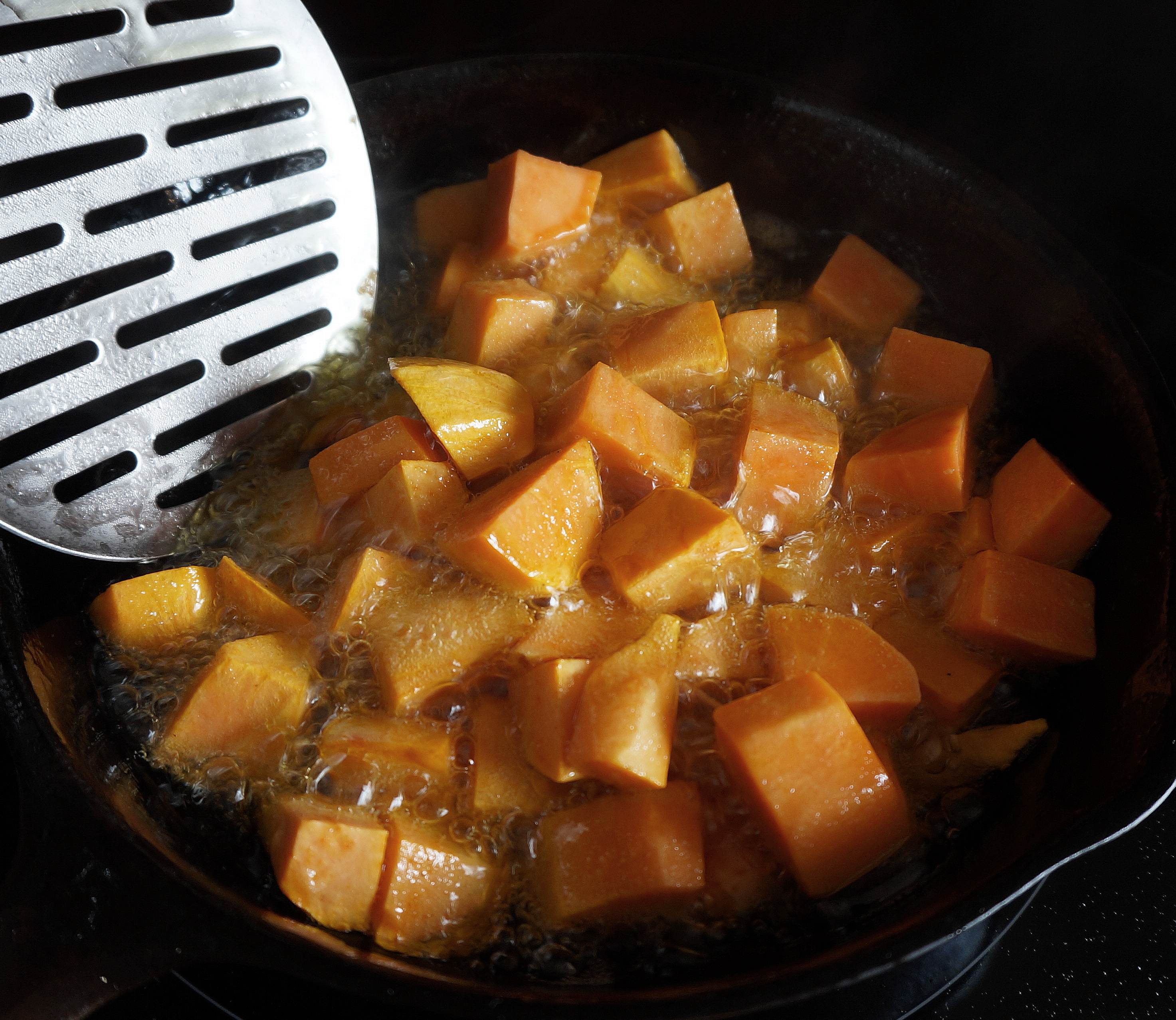 |
| Fry cubed sweet potatoes in olive oil. |
 |
| Sauce after blending. |
Test the meat for doneness. If not completely tender, cook it 30 minutes longer. When it is fork-tender, remove the pan from the heat. Remove the meat, whole chestnuts (leave any crumbled chestnuts in the pan) and mushrooms. Discard the sprigs of herbs. Scrape the cooking liquid and vegetables into a blender container. Add the chocolate, if using. Blend until the sauce is smooth. Return the sauce to the pan with additional water or stock as needed to make a pouring gravy. Return the meat to the pan to reheat.
Serve the pork cheeks, sauce and fried sweet potatoes garnished with sprigs of rosemary and reserved pomegranate kernels.
 |
| A bouquet of fall flowers and a hearty red wine to accompany the autumn flavors. |
More recipes with autumn flavor:


