.JPG) |
| The cocido Maragato is served in reverse order--a platter with all the boiled meats and chicken first, then the chickpeas and vegetables, and the noodle soup last. |
Contundente is a word that means “blunt,” or, when applied to dinner, “robust,” stick-to-the-ribs food. The cocido, a one-pot meal made in every region of Spain, a calorific power-house, fits the bill perfectly.
Cocido reaches its apex in winter months. Supermarkets feature a special section with all the necessary ingredients to make this warming meal. Stewing beef and bones, salt-cured pork fat, chicken, sausages, chickpeas.
Cocido is a meal cooked in an olla, a pot-bellied vessel made to sit in the embers of the hearth. Nowadays, many cooks use an olla expres—a pressure cooker. From the big cooking pot are served a soup course and a main course consisting of platters of meats, sausages, dumplings, chickpeas, and vegetables.
The cocido Maragato is, arguably, the most contundente of them all! The Maragato cocido comes from the Maragatería in the province of León (northwest interior Spain), a region historically famous for its arrieros, muleteers. They were the truckers of yore, transporting bacalao (salt cod), barrels of pickled oysters, bolts of linen cloth, skeins of wool, wine, grains, chickpeas, and even gold and silver between the Atlantic coasts and Madrid in the center.
While the Maragato cocido shares many similarities with the famous Madrid cocido, it has one important distinction—it is served in reverse! A platter of boiled meats, sausages, and chicken precedes the vegetables and chickpeas and the meal finishes with noodle soup. Perhaps this was because famished muledrivers couldn’t wait through a soup course before attacking the meat. Or maybe it was for the convenience of the kitchen. Since the meat has to be strained out of the broth anyway in order to prepare the soup, why not just serve the meat and get it out of the way?
 |
| Ingredients for cocido Maragato. |
Taking the cocido in parts, you will need two or three days to prep and cook. Day 1 to soak the chickpeas and any salted meats and to marinate the ribs. Day 2 to cook the meats and chickpeas. Day 3 to cook the vegetables, finish the soup, and serve the cocido.
Shown in the picture are ingredients for a cocido Maragato, clockwise from bottom left, morcilla (blood sausage), stewing beef, beef bone, marinated ribs, carrots, cabbage, potatoes, chickpeas, pig's ear, pig's foot, chorizo sausage, panceta (bacon), and chicken.
Cooking the meat, chicken, and chickpeas a day before serving allows you to strain the broth and refrigerate it until the following day. Then it’s easy to lift off the congealed fat from the surface, leaving the broth ready for making the soup. If cooking and serving on the same day, allow the strained broth to stand 1 hour and skim off the fat that rises to the top.
The chickpeas (garbanzos) need to be soaked 8 to 12 hours, so start them a day before you intend to cook them. If possible use a variety such as Pico Pardal, Pedrosillana or Fuentesaúco. Be sure to read the cooking directions on the label. Some of these chickpeas need 3 hours cooking time! Put chickpeas to soak in hot (not boiling) water. Drain them and add them to the cook pot after the water has begun to heat. If your tap water is hard, use a pinch of baking soda in the soaking water. You will need about 8 ounces dried chickpeas for 6 to 8 servings. However, I always cook twice that amount and freeze the extra for another meal. Same three hours cooking time, after all.
 |
| Codillo, substitute for lacón. |
The meats. Lacón is pork shoulder that has been salt-cured and smoked. It has to be soaked to de-salt it then cooked slowly. If sold pre-cooked, it can be added to the cocido pot with the chicken at the end of the cooking time. If not available, use smoked ham, gammon or pork hock. (I didn't find lacón in my grocery store, so I substituted pre-cooked smoked codillo, or pork hock.)
Fatty pork spare ribs (costillas) that have been hacked into pieces and marinated go into the cook-pot along with fresh or salt-cured pig’s ear and foot. Whether or not you intend to actually eat the pig’s foot, you should try to include it. The skin and cartilage are rich in collagen that makes a rich, full-bodied soup.
Gallina, boiling fowl or stewing hen, gives the broth a lot of flavor. Cook it for the full 2 hours. If substituting regular chicken, add it during the last 30 minutes of cooking.
In bygone times, salt-beef (cecina), somewhat like beef jerky, was used in cocido. Nowadays, cocido usually contains a piece of stewing beef such as shin, brisket or chuck. Cecina de León IGP has become a very pricey gourmet product. Not for boiling, rather it is served, like ibérico ham, raw and thinly sliced. Add beef marrow bones to the pot too.
Chorizo and morcilla sausages are not always included in the Maragato cocido. If used, they are cooked in a separate pot so as not to color the soup with the red pimentón spices of the sausages. If possible, use smoked chorizo and morcilla. This is easily sourced in Spanish supermarkets as Asturian compango, the smoked sausages and panceta (pork belly) that go into fabada in nearby Asturias.
The Maragato cocido, like the madrileño version, includes relleno, a kind of dumpling. The relleno can contain chopped meat or be made with only breadcrumbs. Unlike most dumplings, they are first fried then simmered in the broth. Serve the relleno with the meats.
Vegetables. Cabbage is essential for this cocido. Potatoes are fairly usual. Carrots are permitted, if not traditional. That’s it. Cook the vegetables in a separate pot from the meats. If you don’t have enough broth in the main pot for making 6 servings of soup, add some of the cabbage cooking water to the broth. After removing the vegetables, use the cooking water to cook the sausages, reheat the chickpeas, and poach the relleno (dumplings). Serve the vegetables with ajoarriero, mule driver’s garlic sauce.
For the soup, it’s only necessary to cook fideo noodles in the strained and de-fatted cooking broth.

3-Course Meal-in-a-Pot, Maragato Style
Cocido Maragato
Day before cooking:
8 ounces (or up to 1 pound) dried chickpeas
Hot water
1 pound pork spare ribs or pork shoulder
2 teaspoons salt
Freshly ground black pepper
1 teaspoon pimentón de la Vera (smoked paprika)
½ teaspoon oregano
2 cloves crushed garlic
¼ cup wine vinegar
 |
| Pig foot and ear add body to soup. |
To cook the cocido:
1 pound boneless beef chuck or shin
Beef marrow bones
1 pig’s ear, blanched in boiling water
1 pig’s trotter, split in half and blanched in boiling water
2-inch piece of fat-back pork (tocino), fresh or salt-cured
8 ounces cured panceta (pork belly) or smoked bacon
12 cups water
¼ of a large, bone-in chicken (about 1 ½ pounds)
12 ounces pre-cooked lacón, gammon, smoked ham or pork hock
1 tablespoon salt + more to taste
 |
| Cook vegetables in another pot. |
For the vegetables:
1 ½ pounds cabbage (½ medium cabbage)
6 medium potatoes, peeled
3 carrots, peeled
2 tablespoons olive oil
Ajoarriero sauce (recipe follows)
Chorizo and morcilla sausages
For the relleno (dumplings):
½ cup fine dry breadcrumbs
2 tablespoons finely chopped parsley
1 clove garlic, minced
2 large eggs
1 tablespoon olive oil plus more for frying
Salt and freshly ground pepper
¼ cup finely-chopped cooked beef, ham, chicken or chorizo (optional)
For the soup:
8 cups strained cocido broth
3 ounces thin fideo noodles (¾ cup)
Chopped parsley to serve
A day before cooking the cocido, place the chickpeas in a bowl and add hot water to completely cover the chickpeas. Let them soak until ready to cook the following day. If you are using salt-cured meats such as uncooked lacón put them in a separate container with water to cover.
Make an adobo marinade for the ribs or pork shoulder. Separate the ribs. Use a cleaver to cut them crosswise into 2-inch pieces. If using shoulder meat, divide it into 6 pieces. Combine 2 teaspoons of salt, 1 teaspoon pimentón, oregano and vinegar. Mix the marinade with the ribs. Cover and refrigerate for 12 to 24 hours.
 |
| Skim the froth that rises. |
Day 2, one day before serving the cocido. Place the piece of beef, bones, ear, trotter, pork fat, panceta and water in a large (6-quart or larger) soup pot. Place the pot on high heat. Keep skimming off the foam that rises to the top as the water heats. Drain the soaked chickpeas. If desired, place them in a net bag. Add the chickpeas to the pot. Continue skimming. Lower heat so the water bubbles gently. Add 1 tablespoon of salt. Cover the pot and cook 1 hour.
Taste the broth and add salt if necessary. Add the marinated ribs to the pot. Cook 30 minutes. Add the chicken and lacón or ham to the pot. Cook 30 minutes or until all the meats are fork tender (2 hours total). Use a large slotted spoon to remove all the meats, pieces of fat, and chicken. Test the chickpeas for doneness. If they are not completely tender, continue to cook the chickpeas 45 to 60 minutes longer.
Pour the broth through a strainer into a clean pan or container. Once cool, refrigerate until the following day. Refrigerate the meats and chicken in a separate container. Cover and reserve the chickpeas.
Day 3, cooking the vegetables, preparing the relleno, and serving the cocido.
Remove the broth from the refrigerator. Lift the congealed fat off of the top of the broth. (Discard the fat or save for another use.) The broth will have jelled. Place it in a pan for making the soup and let it come to room temperature. There should be 8 cups of broth.
Remove the container of meat from the refrigerator. Place all the meat in a pan with ¼ cup of the broth. Allow to come to room temperature. If you wish to add some of the meat, ham or chicken to the mixture for the relleno (dumplings), cut off a slice of the cooked meat, chop it finely (¼ cup) and reserve.
 |
| Mixture for dumplings. |
For the relleno (dumplings):
Combine the breadcrumbs, parsley, and garlic in a bowl. Beat the eggs in a small bowl with the oil. Stir into the crumbs. Add the chopped meat or chicken, if using. Season with 1 teaspoon salt and freshly ground pepper. Mix thoroughly and shape into a ball. If preparing in advance, cover with plastic wrap and chill.
 |
| Fry then poach dumplings. |
1 hour before serving.
Place about 8 cups of water in a pot with 1 tablespoon of salt. Coarsely shred the cabbage. When the water boils, add the cabbage, potatoes, and carrots. Cook until they are tender, 20 to 25 minutes. Remove the vegetables with a slotted spoon.
Add enough of the vegetable cooking water to the pan with the broth to make 8 cups.
 |
| Reheat cooked chickpeas. |
Add the chorizo and morcilla sausages and the relleno (dumplings) to the remaining vegetable water and cook 10 minutes. Reheat the reserved cooked chickpeas in the vegetable water and put them in a serving bowl.
 |
| Sauté cabbage. |
Heat 2 tablespoons of oil in a small skillet and sauté the cooked cabbage until it begins to brown slightly, 5 minutes. Place the cabbage in a serving bowl with the potatoes and carrots and spoon some of the ajoarriero sauce over them.
Heat the meats and chicken. Place them on a platter. Remove bones from the chicken and separate it into large pieces. Use scissors to cut the ear and pancetta into pieces. Slice the beef and lacón or ham. Remove bones from the pig's foot and cut into pieces. Skim the chorizo, morcilla and dumplings out of the vegetable cooking water and place them on the platter with the meats. Cut the sausages into pieces. Sprinkle with chopped parsley.
Bring the pot of broth to a boil and add the fideo noodles. Cook according to package directions, 2 to 3 minutes for thin noodles. Remove the pan from the heat.

Serve the platter of meats, chicken, sausages, panceta and dumplings.

Serve the bowls of chickpeas, cabbage, potato, and carrots accompanied by the ajoarriero sauce.

Serve the broth with fideo noodles sprinkled with chopped parsley.
Ajoarriero Garlic Sauce
This simple sauce from Castilla-León is similar to Galician ajada. Make double the quantity if you wish and serve it with simple grilled foods and with vegetables.
¼ cup olive oil
2 cloves garlic, sliced
1 tablespoon pimentón de la Vera (smoked paprika)
½ teaspoon pimentón de la Vera picante (spicy-hot smoked paprika), optional
2 tablespoons wine vinegar
2 tablespoons cocido broth
Heat the oil in a small pan. Add the garlic and fry until the pieces of garlic just begin to turn golden. Remove the pan from the heat and stir in one or both types of pimentón. Add the vinegar and broth from the cocido. Serve room temperature to accompany the cocido.

Regional cocidos:
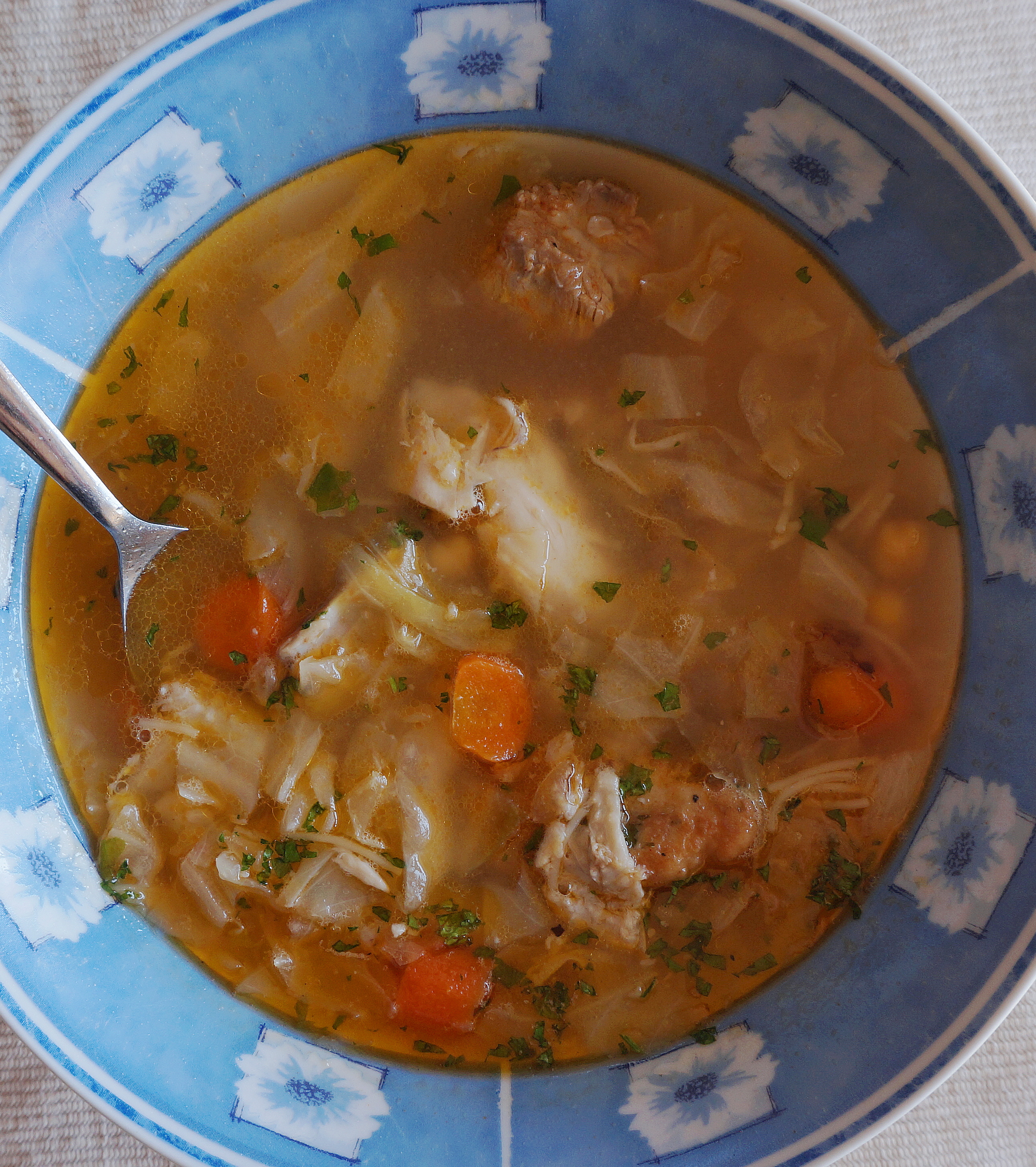 |
| Leftover cocido? Go ahead and put the leftovers all together with the broth. Sensational soup. |


