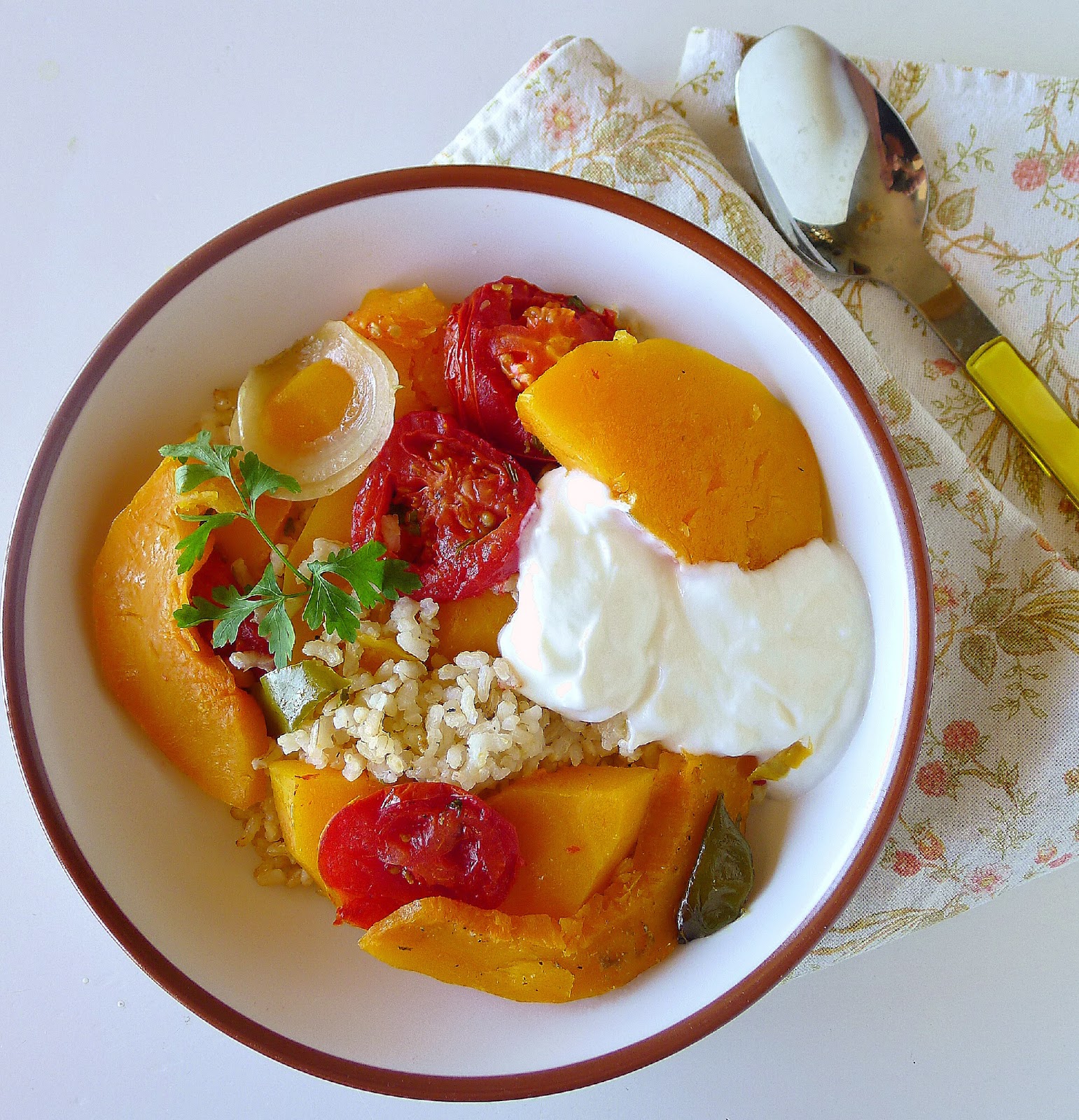
Rather than sheepishly apologize for cooking with frozen, imported shrimp (oh, gosh, the pre-Christmas oferta was too good to pass up), I’m using my crustacean stash to make a dish that’s traditional, but not very common—garbanzos con langostinos—chickpeas with shrimp.
 |
| Made with shrimp, this potaje with chickpeas is not as heavy as with pork and sausage. Squash and chard are optional vegetables. |
This is a typical potaje, much like the cold-weather soup-stews with legumes and laden with pork and sausages. With shrimp in place of meat, this potaje is suitable for Lenten meals (Lent begins February 14). In ports where fresh shrimp once was plentiful and cheap, it used to be a common dish made by fishermen’s families to use up the catch that didn’t sell.
I do buy fresh, wild, local shrimp (gambas) for making sizzled shrimp al ajillo, for adding to paella, for my favorite creole gumbo. Rarely do I buy Spanish langostinos (big shrimp) because they are so expensive. The most famous are those of Sanlucar de Barrameda (Cádiz), where the Guadalquivir River flows into the Atlantic, and Vinaròs (Castellón), near the delta of the River Ebro where it flows into the Mediterranean.
 |
| Langostinos in the market at Sanlucar de Barrameda (Cádiz). These are exquisite cooked a la plancha, on a hot griddle. |
 |
| Part of my cache of frozen langostinos, these imported from fish farms in Venezuela. I couldn't resist the price--- |
I call them “shrimp;” but maybe you say “prawn.” The restaurant menu calls them “scampi.” When is it a gamba and when is it a langostino? Does it matter?
The Brits tend to call any of the species (which belongs to the decapoda, or 10-legged family) “prawns.” Americans call them “shrimp. But sometimes the English call tiny ones “shrimp,” and, on the Pacific coast of the US, Americans have taken to calling one variety of shrimp, “prawn.”
In Spanish, gamba refers to the smallish common pink or white shrimp. Langostinos (which are not the same thing that the French call “langoustine”) are big prawns or jumbo shrimp, measuring up to 8 inches (22 cm). Stripy ones are “tiger shrimp.”
 |
| True scampi are not shrimp. (Cigala in Spanish.) |
Use any shrimp, prawn or scampi in this recipe.
This potaje with shrimp reminds me so much of one of my favorites, berza, a sturdy Andalusian stew with chickpeas, vegetables, pork, chorizo and blood sausage. So, on a whim, I decided to make a black seafood sausage to add to the shrimp. I used frozen cuttlefish ink to make the white fish sausage look like black blood sausage.
 |
| A traditional dish of chickpeas and shrimp, with the addition of non-traditional black seafood sausage. |
Chickpeas with Shrimp
Garbanzos con Langostinos
Garbanzos con Langostinos
Put the chickpeas to soak a day before cooking the stew. If your tap water is hard, add a pinch of baking soda to the soaking water or use low-mineral bottled water. (Hard water prevents chickpeas from cooking up soft.)
 |
| Heads and shells for flavor. |
A simple stock made with shrimp heads and shells gives the chickpea stew a lot of flavor. Notice the coral roe in the heads--huge flavor. The shrimp stock can be made in advance. Refrigerate the peeled shrimp until ready to use. If using peeled shrimp instead of whole ones, either allow an extra ¼ pound to make stock or else substitute prepared fish stock or clam broth.
Serves 4.
Serves 4.
2 cups dry chickpeas
Warm water
1 pound whole shrimp (with heads)
3 tablespoons olive oil
1 ½ cups chopped onion
1/3 cup white wine or dry Sherry
8 cups water
3 cups hot water
1 bay leaf
Salt
3 cloves garlic
2 teaspoons pimentón (paprika, not smoked)
¾ cup grated tomato pulp or crushed tomatoes
1 cup diced butternut squash (optional)
1 cup (or more) chopped chard (optional)
Black seafood sausage, optional
¼ cup chopped parsley
½ teaspoon grated lemon zest
1 tablespoon toasted pine nuts
Soak the chickpeas in warm water to cover for at least 8 hours.
Peel the shrimp. Refrigerate the bodies until ready to cook them. Use the heads and shells to make shrimp stock.
Heat 1 tablespoon oil in a soup pot. Add the shrimp shells and heads and ½ cup of the chopped onion. Sauté on medium-high heat until the shells turn pink. Add the bay leaf and wine. When alcohol is cooked off, add 6 cups of water. Bring to a boil, then reduce heat and cook 30 minutes. Don’t add salt to the stock.
Strain the stock, pressing on the solids to extract flavor. Discard shells.
Drain the soaked chickpeas. Put them in a soup pot or cazuela with the 3 cups of hot water. Bring to a boil, Skim off any froth that rises to the top. Cook the chickpeas 15 minutes.
Add 4 cups of the strained shrimp stock to the chickpeas. Bring again to a boil and cook, covered, 30 minutes.
Meanwhile, prepare a sofrito. In a skillet with remaining 2 tablespoons of oil, sauté the remaining 1 cup of chopped onion with 2 cloves of chopped garlic for 5 minutes. Don’t let the onions brown. Stir in the pimentón and immediately add the tomato pulp. Fry on medium-high until tomatoes lose their juice.
Puré the sofrito in a blender with ½ cup liquid from the chickpeas. (Add some of the chickpeas too to slightly thicken the stew.) Stir the purée mixture into the soup pot with the chickpeas. Add 1 teaspoon salt. Cook until the chickpeas are nearly tender, about 45 minutes more.
Add the squash and chard, if using. Taste again for salt. Cook just until chickpeas and vegetables are tender.
Add the shrimp to the chickpeas and cook until they turn pink and begin to curl, about 5 minutes. Add sliced seafood sausage, if using.
Chop the remaining 1 clove of garlic finely. Combine it with the parsley, lemon zest and pine nuts. Either stir this mixture into the chickpeas immediately before serving or sprinkle it on top of individual servings.
Warm water
1 pound whole shrimp (with heads)
3 tablespoons olive oil
1 ½ cups chopped onion
1/3 cup white wine or dry Sherry
8 cups water
3 cups hot water
1 bay leaf
Salt
3 cloves garlic
2 teaspoons pimentón (paprika, not smoked)
¾ cup grated tomato pulp or crushed tomatoes
1 cup diced butternut squash (optional)
1 cup (or more) chopped chard (optional)
Black seafood sausage, optional
¼ cup chopped parsley
½ teaspoon grated lemon zest
1 tablespoon toasted pine nuts
Soak the chickpeas in warm water to cover for at least 8 hours.
Peel the shrimp. Refrigerate the bodies until ready to cook them. Use the heads and shells to make shrimp stock.
Heat 1 tablespoon oil in a soup pot. Add the shrimp shells and heads and ½ cup of the chopped onion. Sauté on medium-high heat until the shells turn pink. Add the bay leaf and wine. When alcohol is cooked off, add 6 cups of water. Bring to a boil, then reduce heat and cook 30 minutes. Don’t add salt to the stock.
Strain the stock, pressing on the solids to extract flavor. Discard shells.
Drain the soaked chickpeas. Put them in a soup pot or cazuela with the 3 cups of hot water. Bring to a boil, Skim off any froth that rises to the top. Cook the chickpeas 15 minutes.
Add 4 cups of the strained shrimp stock to the chickpeas. Bring again to a boil and cook, covered, 30 minutes.
Meanwhile, prepare a sofrito. In a skillet with remaining 2 tablespoons of oil, sauté the remaining 1 cup of chopped onion with 2 cloves of chopped garlic for 5 minutes. Don’t let the onions brown. Stir in the pimentón and immediately add the tomato pulp. Fry on medium-high until tomatoes lose their juice.
Puré the sofrito in a blender with ½ cup liquid from the chickpeas. (Add some of the chickpeas too to slightly thicken the stew.) Stir the purée mixture into the soup pot with the chickpeas. Add 1 teaspoon salt. Cook until the chickpeas are nearly tender, about 45 minutes more.
Add the squash and chard, if using. Taste again for salt. Cook just until chickpeas and vegetables are tender.
Add the shrimp to the chickpeas and cook until they turn pink and begin to curl, about 5 minutes. Add sliced seafood sausage, if using.
Chop the remaining 1 clove of garlic finely. Combine it with the parsley, lemon zest and pine nuts. Either stir this mixture into the chickpeas immediately before serving or sprinkle it on top of individual servings.
 |
| Add chopped parsley, garlic and pine nuts to the finished dish. |
 |
| Add caption |
Black Seafood Sausage
“Morcilla” de Pescado
“Morcilla” de Pescado
 |
| Black fish sausage resembles blood sausage used in other potajes with meat. |
Little packets of frozen squid or cuttlefish ink can be purchased from some fish sellers and in frozen foods sections of specialty markets.
Use any white fish for this sausage--cod, hake, whiting, sole. I used corvina.
Use a food processor to make the sausage mix. Chill the bowl and blade before starting. The sausages are then rolled in plastic wrap instead of sausage casings.
The black fish paste can be prepared in advance and refrigerated. Then roll the sausages and poach them immediately. Let them cool slightly before unwrapping and slicing. Reheat the sausages in the stew or in a skillet with a little oil.
Makes 6 (3-inch) sausages.
10 ounces white fish fillets
2 egg whites
1 tablespoon chopped scallions
1 tablespoon fine, dry breadcrumbs
1 tablespoon chopped parsley
1/8 teaspoon allspice
1/8 teaspoon smoked pimentón (paprika)
1 teaspoon salt
½ cup chilled cream
2 (4-gram) sachets frozen squid or cuttlefish ink
Cut the fish into pieces and place in a food processor with the egg whites. Process until fairly smooth. Add the scallions, breadcrumbs, parsley, allspice, pimentón and salt. Process again. Add the cream and process to make a smooth paste. Squeeze the contents of the sachets of squid ink into the paste and process until combined.
Cover the fish paste and refrigerate at least two hours.
Use a food processor to make the sausage mix. Chill the bowl and blade before starting. The sausages are then rolled in plastic wrap instead of sausage casings.
The black fish paste can be prepared in advance and refrigerated. Then roll the sausages and poach them immediately. Let them cool slightly before unwrapping and slicing. Reheat the sausages in the stew or in a skillet with a little oil.
Makes 6 (3-inch) sausages.
10 ounces white fish fillets
2 egg whites
1 tablespoon chopped scallions
1 tablespoon fine, dry breadcrumbs
1 tablespoon chopped parsley
1/8 teaspoon allspice
1/8 teaspoon smoked pimentón (paprika)
1 teaspoon salt
½ cup chilled cream
2 (4-gram) sachets frozen squid or cuttlefish ink
Cut the fish into pieces and place in a food processor with the egg whites. Process until fairly smooth. Add the scallions, breadcrumbs, parsley, allspice, pimentón and salt. Process again. Add the cream and process to make a smooth paste. Squeeze the contents of the sachets of squid ink into the paste and process until combined.
Cover the fish paste and refrigerate at least two hours.
 |
| Log of black fish paste on plastic wrap. |
Lay a 12-inch piece of plastic wrap on a work surface. Spoon 1/3 of the fish paste across one end. With wet hands, quickly mold it into a compact log about 1 ¼ inch in diameter. Roll the log up in the plastic wrap. Twist the ends and tie them with kitchen twine. Tie the roll again in the middle, making two sausages. Repeat with remaining fish paste.
 |
| Rolled in plastic wrap, these fish sausages are ready to be poached. |
Poach the sausages in simmering water (180ºF) until they are firm, 12 minutes. Remove the sausages with a slotted spoon and allow them to cool slightly before unwrapping them from the plastic and slicing.
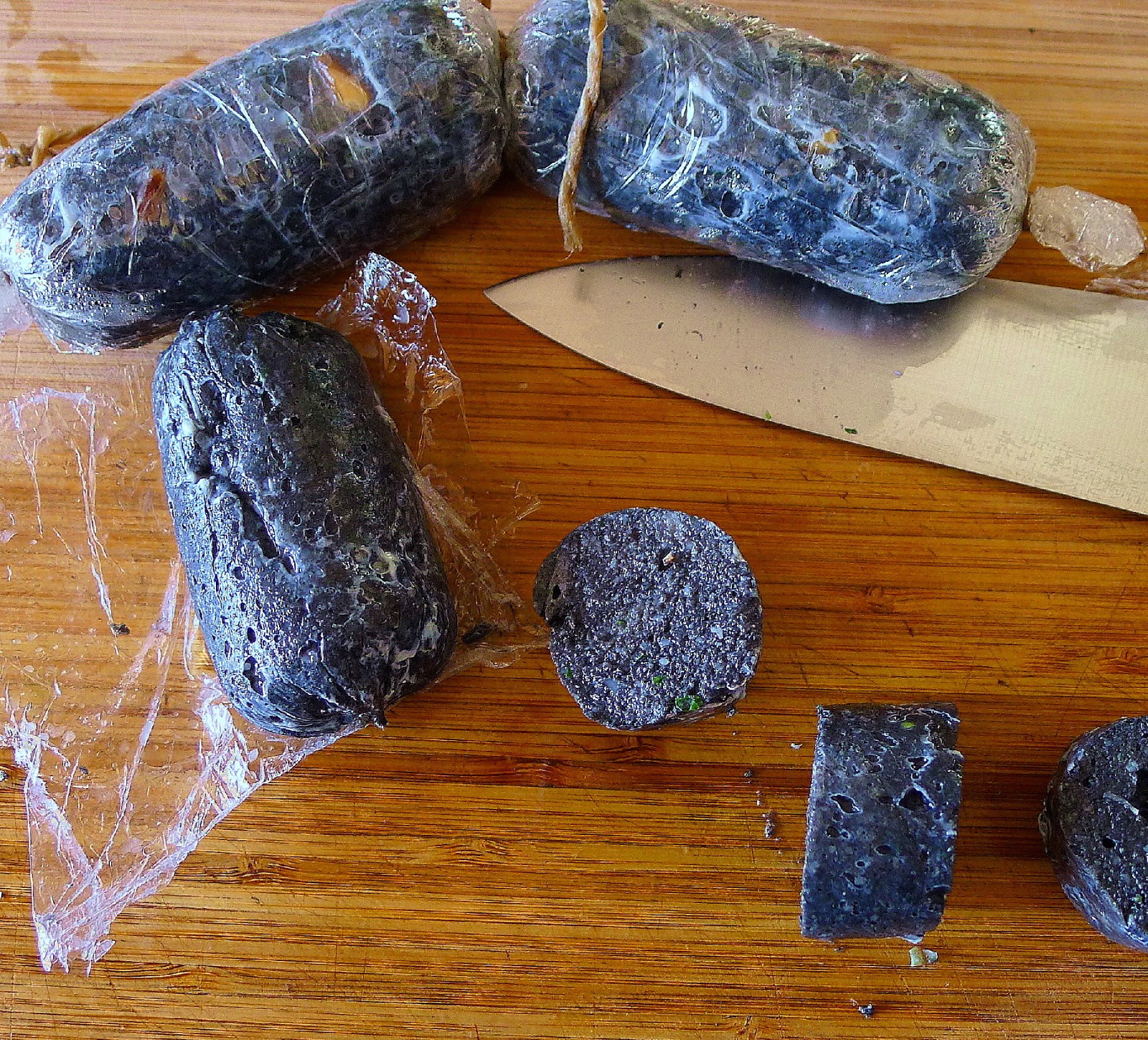 |
| Unwrap the sausage links and slice. |

More recipes for potaje soup-stews with legumes:
More recipes with shrimp: