Showing posts with label Lent. Show all posts

Saturday, March 28, 2026

LENTEN MEALS, BEYOND BACALAO

 
Batter-fried shrimp.

I remember my first Semana Santa in Málaga--60 years ago!—ducking into a tapas bar while processions were wending their way through city streets. We ordered a vinito and tapas. 


I already had sampled bacalao, salt cod, the emblematic food for Holy Week. But here were so many other seafood-based possibilities. We ordered a media-racion (half-plate) of gambas rebozadas, batter-dipped shrimp, and watched as a cook speared peeled shrimp on toothpicks, dipped them in batter, and dropped them into bubbling oil to fry. The shrimp were served piping hot with nothing more elaborate than a lemon wedge to accompany them.


The recipe for the batter-fried shrimp is below. And here are links to more than a dozen other recipes—beyond bacalao—that are popular for Holy Week. From soup to rice, fish to eggs, as well as vegetarian legume stews. 


This soup, 
caldillo de pintarroja, is another Málaga specialty. It's warming, restorative, eye-opening. Unusually in Spanish cooking, the soup packs a real jolt of chile.

Caldillo actually means “broth,” not soup. The broth has chunks of fish—pintarroja—and clams in it.  Ground almonds and bread thicken it slightly.

Broth with Fish and Clams (Caldillo de Pintarroja)


Leek and potato soup, a Basque dish called porrusalda, is typical during Lent. It can be vegetarian or contain salt cod.   

Leek and Potato Soup (Porrusalda).

Panadons
are the Catalan version of empanadillas. These are made with a yeast dough and filled with spinach, pine nuts, and raisins. 

Empanadillas with Spinach (Panadons) You'll also find a recipe here for fried empanadillas with tuna-olive filling, another good Lenten treat. 


Eggs are a favored standby for Lenten meals and the Spanish potato tortilla is classic. This variation from Murcia is made with eggplant, zucchini, and red peppers, no potatoes.

Eggplant Tortilla (Tortilla de Berenjena)
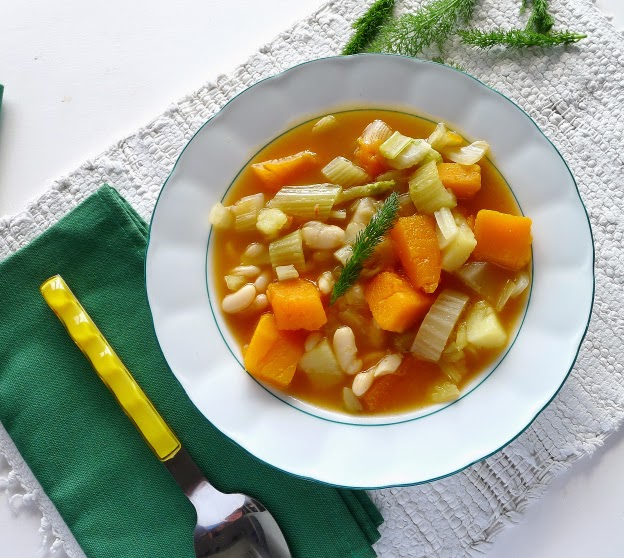


When meat is off the menu, legumes are a good source of protein. This (vegan) stew has the fresh springtime flavor of fennel with white beans (from a jar), pumpkin and potatoes. 

Lenten Fennel Soup with Beans (Potaje de Hinojo para Vigilia)


In Sevilla, Spinach with Chickpeas is a favorite tapas bar dish. (It usually has more spinach than chickpeas than my version.) The basic recipe is vegan, but for Holy Week it often has salt cod dumplings added. 

Spinach with Chickpeas  (Espinacas con Garbanzos)
Spinach and Chickpeas with Cod Dumplings (Potaje de Espinacas y Garbanzos con Rellenos de Bacalao)

Lentils are what Don Quixote ate on Fridays. Or, so Cervantes tells us in the first paragraph of the novel. Because it was Friday—usually a day of abstinence from meat in the Catholic Church—they were certainly lentils viudas, “widowed,” bereft of meat or sausage. These are flavored with cumin, pepper, and clove and make a terrific vegetarian meal. (On the recipe link, you will have to scroll past the recipe for sausages to get to the lentils! 

Don Quixote's Friday Lentils (Lentejas Viudas)


Sometimes legumes are combined with fish or shellfish. This potaje, or chickpea stew, has big shrimp, chard, squash, and a seafood sausage with squid ink that looks like morcilla black sausage! Hardly a penitence. The blog also explains the shrimp nomenclature--shrimp, prawn, scampi; gamba, langostino, cigala. (Pictured are langostinos.)

Shrimp and Chickpea Stew with Seafood Sausage (Potaje de Langostinos y Garbanzos con Embutido de Pescado)
Cuttlefish and Chickpea Stew (Potaje de Jibia con Garbanzos)


This combination of beans and clams is a Lenten version of Asturian fabada. Use any white bean if the true fabes, fat Asturian beans, are not available. Stir in some pimentón de la Vera, smoked paprika, to remind you of the chorizo you are not consuming. 

Beans with Clams (Alubias con Almejas)


This Alicante rice dish, a cousin of paella, is a celebration of springtime! With garden peas, fava beans, and artichokes along with pieces of cuttlefish it's perfect for Semana Santa. 

Rice with Peas and Cuttlefish (Arroz con Guisantes y Sepia)
Rice with Clams (Arroz con Almejas)


Migas are fried bread crumbs, a brunch or supper dish, that are usually made with bacon and sausage. But it's a versatile recipe that can easily be served vegetarian or pescatarian. Garnish with grapes, olives, and fried green peppers. Here the migas are accompanied by grilled sardines. 

Garlic-Fried Breadcrumbs (Migas Campesinas)


A whole conger eel at the market.

During Lent, the period leading up to Easter, when many Catholics observe days of vigilia, or abstinence from eating meat, the selection of fresh fish in Spanish markets is sensational. All fish and shellfish are considered suitable for Lenten meals, but some, such as salt cod, kippered sardines, and eel are favored. Pictured above is congrio, conger eel, at my local market. In Valencia, anguila, common eel, is popular for Holy Week.


If you haven't got an eel, make this Valencian dish with monkfish or other firm-fleshed fish. It's called all-i-pebre, which means "garlic and pepper" (as in red pepper or pimentón). 

Monkfish with Garlic and Pimentón (All-i-Pebre de Rap


So many fish in the sea, but not always at the market! Will it be a pretty wrasse for dinner on Good Friday? You will find hundreds (? ok, I didn't count them) of fish and shellfish recipes in my archive of blogs, including a dozen or more for bacalao. Use the tiny window in the upper left corner to Search (on a mobile phone, you have to select "View web version" to see the Search option). 

Baked Whole Fish with Chermoula Sauce and Preserved Lemons (Pescado al Horno con Salsa Chermoula)


Batter-Fried Shrimp
Gambas Rebozadas


If you’re serving the shrimp as bite-size tapas, choose medium-large shrimp, peel them completely, tail as well, and spear them on toothpicks. Dunk them in batter, picks and all. Or you can use large-to-jumbo sized shrimp (gambón or langostino) and leave the tails unpeeled. 

Use a small skillet and fry only 3 or 4 shrimp at a time. (Batter can be refrigerated and used again a day or two later.) Test the oil by adding a few drops of batter; it should quickly puff and rise to the top. Regulate the heat so the shrimp do not brown too quickly. Medium shrimp will cook in about 1 minute; jumbo shrimp in about 1 ½ minutes. To keep the oil clean, skim out fried bits of batter after every batch of shrimp. 

Makes 30-40 fried shrimp.

1 ½ pounds whole medium-large shrimp (30-40)
Toothpicks (optional)
Pinch saffron
8-10 tablespoons water
1 egg, lightly beaten
¾ teaspoon salt
1 cup flour
½ teaspoon baking powder
1 tablespoon chopped parsley
Olive oil for frying
Lemon wedges to serve

Spear on toothpicks (optional)
Peel the shrimp (save the heads for the stock-pot), leaving the tails unpeeled, if desired. Spear the shrimp on toothpicks if they are to be served as one-bite appetizers. Cover and refrigerate until ready to fry them.

Crush the saffron in a mortar and stir in 1 tablespoon of water.

Combine the egg and salt in a small bowl. Add the flour and baking powder. Stir in the saffron water. Stir in additional water, a tablespoon at a time, to make a batter the consistency of medium pancake batter (8 to 10 tablespoons). Let the batter rest at room temperature at least 30 minutes or, refrigerated, until the following day.


Stir parsley into the batter. Place oil in a pan to a depth of ½ inch and heat on medium-high. Test by dropping a small spoonful of batter into the oil; it should quickly rise to the surface.

Dip the shrimp into the batter. Letting excess drip off, place them in the hot oil. Don’t crowd the pan. Let the shrimp fry until golden-brown. Carefully turn and brown reverse sides. Skim the shrimp out and drain them on paper towels. Serve accompanied by lemon wedges.


This cookbook explores the fascinating story of the deep and lasting influences that Islamic culture has left on modern Spanish cooking. 

Author and Spanish cooking expert Janet Mendel tells the story of the Moorish influence on Spanish cooking through 120 recipes and photographs for modern-day dishes, from salads and vegetables to fish, poultry and meat to sweets and pastries, that trace their heritage to foods served in medieval times.  (Hippocrene Books)    

 Order on IndiePubs (USA) 

Use PROMO CODE HIPPOCRENE40 for 40% off on all Hippocrene titles at IndiePubs online bookstore.

Saturday, February 28, 2026

DO YOU DO BACALAO?


Salt cod (bacalao)

Bacalao (salt cod) must be part of the Spanish DNA. In medieval times, unless you lived less than a 24-hour mule ride from the coast, you probably never tasted fresh fish. Salt cod  and other salt fish were the only seafood available to you. 


"According to tax records in the city of Barcelona, 1,800,000 kippered sardines were sold in a single day, February 8, 1434, the first day of Lent." (That’s the introduction to the fish chapter in my newest cookbook, Flavors of al-Andalus, which also has lots of recipes for fresh fish!)


What’s amazing is that, even now, with fabulous fresh seafood everywhere in Spain, bacalao continues to be a favored ingredient. 

Nevertheless, salt cod is not to everyone’s taste. In the recipe for Salt Cod Dip in the cookbook, I suggest the alternative of using canned tuna. Here's how that worked out.


I made the Salt Cod Dip recipe using canned tuna in place of cod. Here it is served as a first course accompanied by marinated cauliflower and crispy garlic toasts.

Leftover tuna dip is spread on bread with cheese and pan-grilled with olive oil to make a very tasty tuna melt, 


Salt Cod Dip
Ajo Bacalao

The recipe that appears in FLAVORS OF AL-ANDALUS is made with salt cod. 


Cod is unknown in Mediterranean waters. But, thanks to seafaring Basques, who fished the cod banks off Newfoundland as early as the 9th century, cod in its salted, dried form has been ubiquitous in Spanish cooking from medieval times to the present. 

This recipe with cod, bread, and olive oil makes a garlicky, creamy dip or schmear that might remind you of brandade or Greek taromosalata. This version comes from the Axarquía region east of Málaga and is a specialty of Semana Santa, Holy Week, when salt cod dishes are traditional.

In bygone times, the dish was made in a lebrillo, a large clay bowl, or with a wooden mortar, the ingredients mashed together with a pestle. Nowadays, a food processor makes quick work of it. It’s a good recipe to make when you have scraps of salt cod left from cutting up a whole fish for another recipe. 

As prepared in present times, a big spoonful of pimentón is added to the dip, giving it a nice ruddy color. Pimentón would not have been available in Moorish times, so, if you like, include a mashed carrot or two to add color to the mix.

The resulting thick spread can be slathered on bread or toasts for a satisfying snack, spread on crisp crackers as a canapé or dipped with breadsticks. Serve it as a luncheon entrée with artichokes, quartered hard-boiled egg and lettuce. 

Unless you obtain cod that is already desalted, you will need to start preparations a day or two before making the dip, as the cod needs to soak in water to remove salt and soften the flesh. Small pieces need only 12 hours soaking. If you have a thick, loin cut of bacalao, it may need as long as 48 hours to soften and lose excess salt. Salt cod needs very little cooking on gentle heat. 

If salt cod is not your thing, you could make the recipe substituting canned tuna. Skip the steps for soaking and cooking the salt cod. Use a little water or stock to soak the bread.

8 ounces dry salt cod or 2 (5-ounce) cans tuna, drained
2 cloves garlic
1 or 2 cooked carrots (optional)
2 ½ cups diced day-old bread (5 ounces)
1 cup cod cooking liquid
Pinch of ground cloves
Freshly ground black pepper
1/3 cup extra virgin olive oil
3 tablespoons lemon juice
Salt, to taste
Olives and hard-boiled eggs to garnish (optional) 
Bread, toast, breadsticks or crackers to serve

Wash the cod and cut it into 1-inch pieces, discarding any skin and bones. Place the cod in a bowl. Cover with cold water. Refrigerate, covered, 12 hours, changing the water twice. 

Drain and rinse the pieces of cod. Place them in a pan and cover with 2 cups of water. Bring the water to a simmer (bubbling gently) and cook 1 minute. Drain, saving the cod cooking liquid. When the cod is cool, flake it with the fingers. Reserve the cod and the cooking liquid.

Finely chop the garlic and carrot, if using, in a food processor. Add the bread and ½ cup of the reserved cod cooking liquid. Let it set 5 minutes to soften the bread. Process until the bread is a smooth paste, adding additional cooking liquid, as needed. Season with cloves and pepper. With the processor running, slowly add the oil. Process until the oil is completely absorbed and the mixture is very smooth. Add the lemon juice to make a smooth, thick cream. 

Add the flaked cod and pulse the mixture to combine the cod. The cod does not have to be completely pureed. Taste and add salt if necessary.  

Cover and refrigerate the cod until serving time or up to 3 days. Garnish with olives and sliced egg, if desired. Serve with bread, toasts, breadsticks or crackers.


More recipes with salt cod (bacalao):


FLAVORS OF AL-ANDALUS 
The Culinary Legacy of Spain

FLAVORS OF AL-ANDALUS, The Culinary Legacy of Spain. Here's a fresh angle on the traditional cooking of Spain, with 120 recipes that trace their roots to Moorish Spain. See below for where to order. 

This cookbook explores the fascinating story of the deep and lasting influences that Islamic culture has left on modern Spanish cooking. 
Author and Spanish cooking expert Janet Mendel tells the story of the Moorish influence on Spanish cooking through 120 recipes and photographs for modern-day dishes, from salads and vegetables to fish, poultry and meat to sweets and pastries, that trace their heritage to foods served in medieval times. Dishes from this era include exotic spices such as saffron, the use of fruits and almonds with savory dishes, and honeyed sweets and pastries. The flavors of al-Andalus live on in modern Spanish cooking and are what makes Spain’s cuisine distinctive from the rest of Europe. (Hippocrene Books)    


 Order on IndiePubs (USA) 

Use PROMO CODE HIPPOCRENE40 for 40% off on all Hippocrene titles at IndiePubs online bookstore.


Saturday, March 29, 2025

BACALAO FOR LENTEN MEALS

Do you observe Lent? Fish on Fridays and abstinence from luxuries and alcohol are some of the observances for the 40-day period preceding Easter (April 20, 2025). Spain, a predominantly Catholic country for the past 500+ years, has hundreds of special dishes and sweets for cuaresma, Lent. They are called comida de vigilia, or meals of abstinence, and include, besides fish, vegetarian and dairy dishes. Heading the list are the many recipes for bacalao, dried salt cod. 


Bacalao is dry salt cod.

Why cod, a fish that is not even captured in Spanish waters? Medieval Basques who engaged on long whaling expeditions, invented the method of salt-curing cod, making it an important food that would keep on long ocean voyages. Salt fish became an important item of trade. Before the days of refrigeration, unless you lived within a few hours by mule from a coastal port or on the banks of a trout stream, salt-cured fish was the only fish available. For observant Christians eating fish on Fridays meant salt cod and other salt fish as the only alternative to meat during Lent. 


Garden chard ready to cut.

Anyone interested in the history of cod should read Cod: A Biography of the Fish That Changed the World by Mark Kurlansky (Penguin Books, 1998).

My annual tribute to bacalao this Lenten season is an Andalusian potaje of bacalao, chickpeas, and chard. Chard because I am blessed with a small plot of chard (acelga) that needs harvesting right now.  

Potaje, which means “pottage,” is neither a soup nor a stew. It’s soupy and almost always contains legumes and other vegetables, sometimes with meat and sausages, sometimes vegetarian, and, this time of year, often with bacalao or fresh seafood. 

A hearty main dish with chickpeas, potatoes, vegetables, and cod.


A serving of potaje with eggs and crushed croutons.

Lenten Stew with Chickpeas, Bacalao, and Chard
Potaje de Cuaresma con Bacalao y Acelgas

Bacalao is sold whole, in pieces (the thick lomo or loin is the choicest cut), and in migas or scraps. In specialty shops you can find it already desalted and ready to use. 

If you are starting with dry salt cod, allow two or three days to desalt it. Wash the pieces of salt cod to remove surface salt. Place them in a glass container and cover with cold water. Cover the container and refrigerate. Soak the cod for 36 hours, changing the water twice daily during the soaking period. Drain well and keep refrigerated until ready to cook it.

If you’re starting with dried chickpeas: Put the chickpeas to soak in hot water for 8 hours or overnight. If your water is very hard, use bottled water or add a pinch of baking soda to both the soaking water and the cooking water. Add the chickpeas to a saucepan of hot water and bring to a boil. Add a whole tomato and onion. Cover the pan, reduce the heat, and simmer until tender, about 90 minutes. Drain the chickpeas, saving the cooking liquid and the cooked tomato and onion. One cup of dried chickpeas yields approximately 3 cups cooked. Puree the tomato and onion in a blender and use them in the recipe instead of the chopped onion and crushed tomatoes.

Serves 4-6.

1 pound desalted salt cod
12-16 ounces chard
¼ cup olive oil
1 cup chopped onion (or cooked onion)
½ cup diced carrot
3 cloves garlic
½ teaspoon smoked pimentón (paprika)
Pinch hot pimentón or cayenne (optional)
1 teaspoon cumin
½ cup crushed tomatoes (or cooked tomato)
4 cups drained, cooked chickpeas
5 cups water, chickpeas cooking liquid or fish stock
1 bay leaf
Salt to taste
2 medium potatoes, diced
Croutons of fried bread
Hard boiled eggs to garnish
Chopped parsley to garnish

Cut the cod into 1-inch pieces. Discard any skin and bones. Refrigerate the cod until ready to cook.

Wash chard and separate leaves and stalks. Strip away any stringy fibres from the stalks and chop the stalks. Shred or chop the leaves. 

Heat the oil in a soup pot and sauté the onion, carrot, and garlic until softened, 5 minutes. Stir in the pimentón and cumin. Add the tomatoes and chickpeas. Cover with the water and add the bay leaf and salt to taste. Bring the water to a boil and add the potatoes and chard. Reduce heat to medium-low and simmer, partially covered, until potates are tender, 15 to 20 minutes. 

Immediately before serving add the pieces of cod to the pot. Cover and cook 2 minutes. Remove the pan from the heat and allow to settle 5 minutes. Lightly crush the croutons with a rolling pin or in a mini food processor. 

Serve the potaje in bowls garnished with quartered egg, the crouton crumbs, and parsley.

More potajes for Lenten meals:


Saturday, March 22, 2025

SWEET AND MILKY PUDDINGS FOR SPRINGTIME

 
Catalan custards with burnt-sugar topping.

Springtime brings wildflowers, rain showers, baby lambs, strawberries, and Lent.  It is the season for sweet and milky puddings. 


Traditionally, spring lambing season meant an abundance of milk (from cows and goats as well as sheep). During Cuaresma, the Lenten period of abstinence from foods such as meat, dairy foods were a stand-in. Here is a round-up of typical puddings that continue to be favorites during Lent, Semana Santa (Holy Week) and Easter. Or any spring day, rainy or bright.

Catalan Custard with Burnt-Sugar Topping (Crema Catalana, Crema de San José). Pictured above, these sweet and rich custards are typical for the festivities of Spanish Fathers' Day, San José, (March 19) as well as for Lenten meals. The recipe, with instructions for caramelizing the sugar topping, is here. 


Creamy Rice Pudding (Arroz con Leche) in the traditional style is made with milk (often goat's milk) infused with cinnamon and lemon peel. Other versions might be flavored with vanilla or rum; have cream or butter incorporated, or be sweetened with honey or molasses instead of sugar. Restaurant renditions often have a burnt-sugar topping, similar to the above custards. The recipe for old-fashioned Spanish arroz con leche is below. Here is another version Rice Pudding with Cherries and almonds.


Custard Pudding with Meringue (Natillas con Merengue)Natillas is a simple homemade pudding, typical in rural areas where fresh milk and eggs are plentiful. In La Mancha it is made with warmed sheep’s milk (Manchego cheese is a sheep’s milk cheese). The custard is poured over tortas, sponge cookies, somewhat like ladyfingers, then sprinkled with sugar and cinnamon. In Andalusia natillas is made with goat’s milk and served with crispy galletas, plain cookies. The pudding is especially good with fruit. It can be topped with baked meringue made with leftover egg whites. Get the recipe for Natillas here.


Honey with Fresh Cheese (Mel i Mató). So simple it is not really a pudding--a fresh, unsalted cream cheese, in Catalonia called mató, served with honey or fruit in syrup. The recipe for serving is here


"Burnt" Cheesecake (Quesada al Estilo de Cantábria). This is a cheesecake with no crust, more of a baked custard, made with soft, fresh cheese. Should you have a surplus of milk, you can easily make the cheese yourself. The recipes for both cheesecake and cheese making are here.


Mango Pudding with Fresh Cheese (Pudín de Mango con Cuajada)Cuajada is a sort of “custard” with no eggs. In Spain you can find cuajada in individual cups in the dairy section of grocery stores. Cuajo, an enzyme (rennet or junket), sets the custard. Cuajada is, basically, the first step in cheese making. But, instead of cutting the curds and draining off the whey, the thickened milk is poured into cups and allowed to cuajar, set. Serve it with honey, fruit and nuts, an old-fashioned traditional dessert especially in Euskadi (Basque Land). For this pudding the cuajada is mixed with fruit, sugar, and whipped cream. The recipe for the pudding is here.


Caramel Custards (Flan con Caramelo). Old-fashioned flan is as Spanish as sunshine! Baked in caramel-coated molds, the custards are easy to prepare and can be made in advance of serving. The basic recipe is here.


Dark Chocolate Cream Custards (Crema de Chocolate). Perhaps these rich custards are a bit too decadent for Lenten abstemiousness, but joyous feasting of Easter is near, when chocolate is very much on the menu. The recipe for Chocolate Custards is here.


Creamy Rice Pudding
Arroz con Leche

Serves 4-6.

6 cups whole milk
1 strip lemon peel
1 (2-inch) cinnamon stick
½ cup medium-grain rice
Pinch salt
1/3 cup sugar
Ground cinnamon, for dusting

Place the milk in a pan with the lemon peel and cinnamon stick. Bring just to a boil over high heat, then remove the pan from the heat and let the milk infuse 10 minutes. Strain the milk, discarding the cinnamon and peel.

Add the rice and salt to the milk. Heat over medium heat until the milk begins to barely bubble. Cook, stirring frequently, until the rice is very soft and the milk thickens, about 45 minutes. Add the sugar and cook for 5 minutes, stirring constantly so the sugar doesn’t scorch on the bottom.

Ladle the hot pudding into dessert cups or a pudding bowl. Allow the pudding to cool. Cover with plastic wrap and refrigerate until serving time. The pudding will thicken as it cools. Sprinkle generously with ground cinnamon before serving.