 |
| Batter-fried shrimp. |
I remember my first Semana Santa in Málaga--60 years ago!—ducking into a tapas bar while processions were wending their way through city streets. We ordered a vinito and tapas.
I already had sampled bacalao, salt cod, the emblematic food for Holy Week. But here were so many other seafood-based possibilities. We ordered a media-racion (half-plate) of gambas rebozadas, batter-dipped shrimp, and watched as a cook speared peeled shrimp on toothpicks, dipped them in batter, and dropped them into bubbling oil to fry. The shrimp were served piping hot with nothing more elaborate than a lemon wedge to accompany them.

The recipe for the batter-fried shrimp is below. And here are links to more than a dozen other recipes—beyond bacalao—that are popular for Holy Week. From soup to rice, fish to eggs, as well as vegetarian legume stews.

Caldillo actually means “broth,” not soup. The broth has chunks of fish—pintarroja—and clams in it. Ground almonds and bread thicken it slightly.
Broth with Fish and Clams (Caldillo de Pintarroja)

Leek and Potato Soup (Porrusalda).

Empanadillas with Spinach (Panadons) You'll also find a recipe here for fried empanadillas with tuna-olive filling, another good Lenten treat.

Eggplant Tortilla (Tortilla de Berenjena)
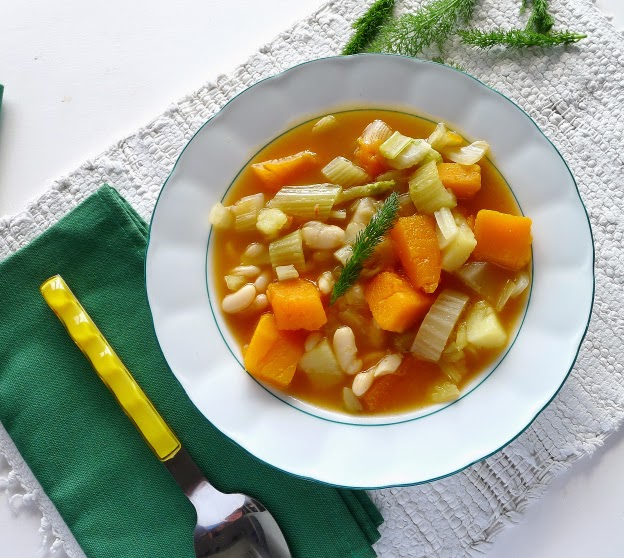 |
When meat is off the menu, legumes are a good source of protein. This (vegan) stew has the fresh springtime flavor of fennel with white beans (from a jar), pumpkin and potatoes.
Lenten Fennel Soup with Beans (Potaje de Hinojo para Vigilia)

In Sevilla, Spinach with Chickpeas is a favorite tapas bar dish. (It usually has more spinach than chickpeas than my version.) The basic recipe is vegan, but for Holy Week it often has salt cod dumplings added.
Spinach with Chickpeas (Espinacas con Garbanzos)
Spinach and Chickpeas with Cod Dumplings (Potaje de Espinacas y Garbanzos con Rellenos de Bacalao)

Don Quixote's Friday Lentils (Lentejas Viudas)

Sometimes legumes are combined with fish or shellfish. This potaje, or chickpea stew, has big shrimp, chard, squash, and a seafood sausage with squid ink that looks like morcilla black sausage! Hardly a penitence. The blog also explains the shrimp nomenclature--shrimp, prawn, scampi; gamba, langostino, cigala. (Pictured are langostinos.)
Shrimp and Chickpea Stew with Seafood Sausage (Potaje de Langostinos y Garbanzos con Embutido de Pescado)
Cuttlefish and Chickpea Stew (Potaje de Jibia con Garbanzos)

Beans with Clams (Alubias con Almejas)

Rice with Peas and Cuttlefish (Arroz con Guisantes y Sepia)
Rice with Clams (Arroz con Almejas)

Migas are fried bread crumbs, a brunch or supper dish, that are usually made with bacon and sausage. But it's a versatile recipe that can easily be served vegetarian or pescatarian. Garnish with grapes, olives, and fried green peppers. Here the migas are accompanied by grilled sardines.
Garlic-Fried Breadcrumbs (Migas Campesinas)
.JPG) |
| A whole conger eel at the market. |
During Lent, the period leading up to Easter, when many Catholics observe days of vigilia, or abstinence from eating meat, the selection of fresh fish in Spanish markets is sensational. All fish and shellfish are considered suitable for Lenten meals, but some, such as salt cod, kippered sardines, and eel are favored. Pictured above is congrio, conger eel, at my local market. In Valencia, anguila, common eel, is popular for Holy Week.

Monkfish with Garlic and Pimentón (All-i-Pebre de Rap)

So many fish in the sea, but not always at the market! Will it be a pretty wrasse for dinner on Good Friday? You will find hundreds (? ok, I didn't count them) of fish and shellfish recipes in my archive of blogs, including a dozen or more for bacalao. Use the tiny window in the upper left corner to Search (on a mobile phone, you have to select "View web version" to see the Search option).
Baked Whole Fish with Chermoula Sauce and Preserved Lemons (Pescado al Horno con Salsa Chermoula)
Batter-Fried Shrimp
Gambas Rebozadas

If you’re serving the shrimp as bite-size tapas, choose medium-large shrimp, peel them completely, tail as well, and spear them on toothpicks. Dunk them in batter, picks and all. Or you can use large-to-jumbo sized shrimp (gambón or langostino) and leave the tails unpeeled.
Use a small skillet and fry only 3 or 4 shrimp at a time. (Batter can be refrigerated and used again a day or two later.) Test the oil by adding a few drops of batter; it should quickly puff and rise to the top. Regulate the heat so the shrimp do not brown too quickly. Medium shrimp will cook in about 1 minute; jumbo shrimp in about 1 ½ minutes. To keep the oil clean, skim out fried bits of batter after every batch of shrimp.
Makes 30-40 fried shrimp.

1 ½ pounds whole medium-large shrimp (30-40)
Toothpicks (optional)
Pinch saffron
8-10 tablespoons water
1 egg, lightly beaten
¾ teaspoon salt
1 cup flour
½ teaspoon baking powder
1 tablespoon chopped parsley
Olive oil for frying
Lemon wedges to serve
 |
| Spear on toothpicks (optional) |
Peel the shrimp (save the heads for the stock-pot), leaving the tails unpeeled, if desired. Spear the shrimp on toothpicks if they are to be served as one-bite appetizers. Cover and refrigerate until ready to fry them.
Crush the saffron in a mortar and stir in 1 tablespoon of water.
Combine the egg and salt in a small bowl. Add the flour and baking powder. Stir in the saffron water. Stir in additional water, a tablespoon at a time, to make a batter the consistency of medium pancake batter (8 to 10 tablespoons). Let the batter rest at room temperature at least 30 minutes or, refrigerated, until the following day.

Stir parsley into the batter. Place oil in a pan to a depth of ½ inch and heat on medium-high. Test by dropping a small spoonful of batter into the oil; it should quickly rise to the surface.
Dip the shrimp into the batter. Letting excess drip off, place them in the hot oil. Don’t crowd the pan. Let the shrimp fry until golden-brown. Carefully turn and brown reverse sides. Skim the shrimp out and drain them on paper towels. Serve accompanied by lemon wedges.


This cookbook explores the fascinating story of the deep and lasting influences that Islamic culture has left on modern Spanish cooking.
Author and Spanish cooking expert Janet Mendel tells the story of the Moorish influence on Spanish cooking through 120 recipes and photographs for modern-day dishes, from salads and vegetables to fish, poultry and meat to sweets and pastries, that trace their heritage to foods served in medieval times. (Hippocrene Books)
Order on IndiePubs (USA)
Use PROMO CODE HIPPOCRENE40 for 40% off on all Hippocrene titles at IndiePubs online bookstore.
***
Order on amazon (USA)
(If you order on Amazon, please give my book a review!)
***


No comments:
Post a Comment