Showing posts with label tortas de aceite. Show all posts

Saturday, February 21, 2026

EVERYONE’S FAVORITE SPANISH COOKIE

What is it about tortas de aceite? Everyone who tries these crispy cookies—or are they pastries?—is hooked. They are hand-made pastry discs very lightly flecked with aniseeds and sesame. Although they somewhat resemble "pie-crust cookies," these are made with olive oil and are leavened with a touch of yeast. 


In the US, you can order tortas de aceite from La Tienda, importers of Spanish products (2 packets of 6 cookies each for $19.00). Or you can make them yourself.  
Tortas de aceite are crispy pastry cookies with aniseed and sesame.


A COOKIE FOR EVERY MOOD

February, 2018

Tortas de aceite are the “little black dress” of cookies, because you can dress them up or down. Wear your pearls, sip cava and heap the crisp crackers with caviar. Or, get cozy in your jammies and spread them with peanut butter and jelly. Serve them for breakfast with coffee or tea, for dessert with cheese and fruit compotes, or, accompanied by a mellow muscatel wine, on a rainy afternoon with classical guitar music playing.

These tortas can be sweet or savory. Serve them with fruit, cheese, nuts and a mellow, medium-dry muscatel wine or sweet Sherry.
Tortas de aceite are round, olive oil flat breads/cookies/crackers. There are actually two versions with the same name, one a soft, sweet bun, and this one, a crisp, wafer-like cookie. The crispy ones have attained gourmet status, tortas de aceite Ines Rosales® from Sevilla. The “legítimas y acreditadas” tortas are slightly sweet and contain both sesame and aniseed. 


Tortas are studded with sesame and aniseed. This version has toasted almonds too.

Serve tortas alongside fruit compote (this is apple-raisin-cinnamon). Or heap the fruit right on the torta for a quickie "pie." Go ahead and add a dollop of ice cream. The tortas are equally good with springtime strawberries.

Goat cheese and crispy tortas, a perfect pairing.

Crispy Olive Oil Cookies/Crackers
Tortas de Aceite

Use bread flour or all-purpose flour for the dough. You will not need to flour the board for kneading this dough or for rolling out the tortas, as the oil keeps the dough from sticking. 

The cookies are not overly sweet, with only a coating of sugar on the top. Make them sweeter with a honey glaze, made by boiling 1/3 cup honey with 2 tablespoons water for 6 minutes, then brushing it on the tortas when they come out of the oven. For savory crackers, omit the sugar and top the rolled tortas with flaky salt.

The olive oil is “infused” with lemon zest, aniseed and sesame. Heat the oil on a low fire—don’t allow the seeds to fry. Discard the lemon zest. Let the oil cool slightly before adding the yeast to it. The water for dissolving the yeast should be very warm, not hot (105ºF/ 40ºC).

Makes 12 (4-inch) cookies.

Warm water (105ºF/ 40ºC), ¼  + ¼ cups
1 envelope active dry yeast (2 ¼ teaspoons)
1 teaspoon sugar
1/3 cup extra virgin olive oil
6-inch strip of lemon zest
1 tablespoon aniseed
2 tablespoons sesame seed
2 cups bread flour
½ teaspoon salt
¼ cup finely chopped toasted almonds
2 tablespoons sugar (optional)
Salt flakes (optional)


Place ¼ cup very warm water in a small bowl. Add the yeast and 1 teaspoon of sugar. Stir to combine. Allow the yeast to proof 10 minutes, until it bubbles.

Place the oil in a small pan with the lemon zest, aniseed and sesame seed. Heat on low heat for 4 minutes. Cool slightly. Skim out and discard the strip of lemon zest.

Place the warm oil and seeds in a bowl. Add ¼ cup of warm water and the yeast mixture.

Combine the flour, salt and almonds. Beat them into the oil-yeast mixture in the bowl. When the dough is too stiff to mix, turn it out on a board. Knead the dough until very smooth and stretchy, 5 minutes. Gather the dough into a ball.

Place the ball of dough in an oiled bowl, turning it to coat both sides. Cover with a damp cloth and place in a warm place to rise until doubled in bulk, about 1 hour.

Preheat oven to 450ºF/ 230ºC. Line two or more baking sheets with baking parchment.

Roll balls of dough out very thinly. No flour needed on the board, as oil keeps the dough from sticking.

Sprinkle with sugar.
Punch down the dough and gather it into a ball. Divide the dough into 12 golf ball-size balls (about 1 ¼ ounce each). Roll or pat the balls as thinly as possible into 4-inch (approx.) circles. Place them on baking sheets.

For sweet cookies, sprinkle the tops of the tortas with 2 tablespoons sugar, pressing it lightly into the dough. For savory crackers, omit sugar and sprinkle tops with salt flakes.

Bake the tortas (in two or three batches) until they are browned on the edges, about 8 minutes. Cool them on a rack.

Store the tortas in a tightly covered container. 
The recipe for tortas de aceite also appears in my newest cookbook, FLAVORS OF AL-ANDALUS, a collection of 120 recipes that have roots in Moorish Spain. (See below for where to order.)

***   ***   ***
These are another type of torta de aceite:


Or, tortas de mantecaCrispy Lard Cookies


FLAVORS OF AL-ANDALUS 
The Culinary Legacy of Spain

FLAVORS OF AL-ANDALUS, The Culinary Legacy of Spain. Here's a fresh angle on the traditional cooking of Spain, with 120 recipes that trace their roots to Moorish Spain. See below for where to order. 

This cookbook explores the fascinating story of the deep and lasting influences that Islamic culture has left on modern Spanish cooking. 
Author and Spanish cooking expert Janet Mendel tells the story of the Moorish influence on Spanish cooking through 120 recipes and photographs for modern-day dishes, from salads and vegetables to fish, poultry and meat to sweets and pastries, that trace their heritage to foods served in medieval times. Dishes from this era include exotic spices such as saffron, the use of fruits and almonds with savory dishes, and honeyed sweets and pastries. The flavors of al-Andalus live on in modern Spanish cooking and are what makes Spain’s cuisine distinctive from the rest of Europe. (Hippocrene Books)    


 Order on IndiePubs (USA) 

Use PROMO CODE HIPPOCRENE40 for 40% off on all Hippocrene titles at IndiePubs online bookstore.

Saturday, August 30, 2025

TWEAKING THE RECIPES

 Do you follow recipes exactly? Or, like most of us, do you embellish, adapt, substitute or otherwise make a recipe your own? 


When I was testing recipes for my new cookbook Flavors of al-Andalus, I tried to be very specific and accurate even though I know full well that most cooks will make changes.  And, full disclosure—I do it too! 

Having invited friends to Sunday lunch, I opened my new cookbook, FLAVORS OF AL-ANDALUS, The Culinary Legacy of Spain, and picked a few recipes suitable for a sizzling August day. 


How about chilled gazpacho? The recipe for Winter Gazpacho with Oranges did not sound exactly seasonal for late August. I just happened to have a bag of oranges that needed to be used and I could swap luscious fresh figs for the dried ones that the recipe called for. <<<

Served chilled, this version of gazpacho was perfect for a hot August lunch. I used fresh figs instead of dried, added sliced radishes for crunch.<<< Just a little tweaking, otherwise the recipe is straight from the book. (See below for a more radical tweak.)

Like all gazpacho, this one starts with an emulsion of bread, garlic, and extra virgin olive oil. It has oranges and lettuce added. Other versions have only cucumbers.  Or tomatoes.

Fideo Noodles with Octopus, a pasta paella with seafood, sounded like a good choice for pescatarian guests. But, in fact, most of my pescatarian acquaintances refuse to eat octopus. (Re.: the film “My Octopus Teacher.”) Maybe I should have thought of that when compiling recipes for the book, but I do make the point throughout that you can always change up the ingredients, tweak the recipes to your tastes. So I used squid and anglerfish instead of octopus. <<<

Stock and sofrito are the base that gives Spanish paella and pasta dishes so much flavor. In this day and age sofrito is made with tomatoes slowly fried in olive oil. But the recipes in the book contain no tomatoes! That’s because tomatoes come from the New World and were unknown in Moorish Spain. But we don’t live in Moorish Spain and I had plenty of tomatoes. Should I use them?

No. I made the sofrito as given in my recipe—carrots add bulk and color, a spoonful of vinegar or wine gives a tangy flavor boost. It was perfect, deeply flavorful. 

Sunday lunch: Beatrice serves fideo noodles with fish, shrimp, and vegetables.

Fideo Noodles with Octopus
Cazuela de Fideos con Pulpo

The recipe in Flavors of al-Andalus calls for cooked octopus (and even tells how to cook it). But you can change the octopus for fish or squid.<<<

Fideos are thin, round noodles, the sort you might put in chicken-noodle soup. They range in thickness from threads of angel’s hair to spaghetti-like cords. The name comes from the Arabic, fidaush, which means fresh pasta (the Arabic word for dried pasta is itriyya).

Fideos have been toasted.
The method of cooking fideos is quite different from Italian-style pasta dishes. The dried pasta is usually toasted in olive oil. And rather than cooking it in a pot of boiling water, the fideos cook right in the sauce, soaking up the flavors. For this recipe, use thick fideos, designated grueso or no.4. If fideos are not available, substitute spaghetti broken into short lengths.

You will need stock both for the sofrito and for cooking the noodles. Use a simple stock made from fish trimmings and shrimp shells or store-bought stock. (There is a recipe for Simple Fish Stock in Flavors of al-Andalus or in this blog post.  


For the sofrito
Makes 1 cup sofrito, half of which is needed for the noodle recipe.

Sofrito after blending.
¼ cup olive oil
1 ½ cups chopped onions
1 cup chopped carrots
3 cloves chopped garlic 
¼ cup chopped fennel bulb (optional)
1 tablespoon chopped parsley
1 tablespoon Sherry vinegar
¼ cup water, chicken, or fish stock
Salt
Freshly ground black pepper
Herbs (optional)

Heat the oil in a heavy pan over medium heat. Add the onions, carrots, garlic, and fennel, if using, and sauté for 15 minutes or until the onions are golden and beginning to brown. Add the parsley, vinegar, and water or stock. Add salt to taste, ½ teaspoon if using water. Season with pepper and herbs, if desired. Cover and cook the mixture 5 to 10 minutes, until the carrots are soft enough to mash.

Transfer the mixture to a mini food processor and process until the sauce is fairly smooth. Use immediately or cover and refrigerate for up to 5 days or freeze for up to 6 months.   

To cook the fideo noodles
>>>You can substitute pieces of squid or firm-fleshed fish such as angler or halibut for the octopus.

Serves 4
¼ teaspoon saffron threads, crushed
3 tablespoons olive oil
8 ounces whole shrimp, peeled, heads and tails reserved
1 pound thick (#4) fideo noodles or spaghetti broken into 1 ½- inch pieces
1 ½ cups sliced asparagus from a 10-ounce bunch
½ cup sofrito (recipe above)
¼ cup white wine
5 cups octopus cooking water or fish stock 
Freshly ground black pepper
Salt to taste
½ cup shelled peas
8 ounces cooked octopus tentacles
Sprigs of mint to serve
Sliced lemon to serve

Place the saffron in a small bowl and add ¼ cup hot water. Let it infuse 10 minutes.

Heat the oil in a cazuela, paella pan, large skillet or flat-bottomed wok over medium-high heat. Add the shrimp heads and shells and fry them, pressing on the heads to extract the flavorful juices. When the shells begin to brown, remove the pan from the heat, tip it so the oil runs to one side, and lift out the heads and shells. (The fried shrimp shells and heads can be added to stock or discarded.)


Add the fideo noodles and asparagus to the oil remaining in the pan and fry them, stirring, on medium heat until the noodles just begin to brown, about 2 minutes. Add the sofrito, wine, and saffron water. Stir to combine well. Add the octopus cooking water or fish stock. Season with salt and pepper. Bring to a boil, reduce heat and simmer the noodles 10 minutes. >>>I toasted the fideos and skimmed them out before sautéing the pieces of fish and asparagus. I stirred in the sofrito, returned the fideos to the pan, then added the stock and continued with the recipe.

Stir in the peas and shrimp. Place the cooked octopus tentacles on top of the noodles. Cook until noodles are al dente, 5 to 8 minutes. Add sprigs of mint, cover the pan with foil or a cloth and let the noodles sit 5 minutes.

Serve the noodles in the pan garnished with sprigs of mint and lemon slices. Use scissors to cut the octopus into bite-size pieces. 


The fideos I served to guests has monkfish, small pieces of cooked squid, shrimp, asparagus, peas, and artichoke hearts from a jar. 

(Winter) Gazpacho with Orangeswith the addition of sliced avocado and shrimp.<<<  Use dried figs instead of fresh ones, change the summery colors for winter ones and this would make a gorgeous starter for Christmas dinner when oranges and avocados are in season. 

Dessert was a nod to a recipe in Flavors of al-Andalus. Tortas de aceite—crispy olive oil cookies—formed the base of a sort of napolean dessert with sliced peaches, cream, and caramel sauce. There is a recipe for the tortas in Flavors of al-Andalus. Only I didn’t bake these; I bought packaged Inés Rosales® tortas. (The peaches were macerated in oloroso Sherry. The cream was equal parts whipped cream and cream cheese with vanilla and grated lemon peel--no sugar. The caramel sauce was straight out of a squeeze-bottle.) 

*** *** ***


My new cookbook,
FLAVORS OF AL-ANDALUS, The Culinary Legacy of Spain, published by Hippocrene Books, is available from your favorite bookseller. For more about what’s in the book, see Meatballs with Backstory

This cookbook explores the fascinating story of the deep and lasting influences that Islamic culture has left on modern Spanish cooking. 
Author and Spanish cooking expert Janet Mendel tells the story of the Moorish influence on Spanish cooking through 120 recipes and photographs for modern-day dishes, from salads and vegetables to fish, poultry and meat to sweets and pastries, that trace their heritage to foods served in medieval times. Dishes from this era include exotic spices such as saffron, the use of fruits and almonds with savory dishes, and honeyed sweets and pastries. The flavors of al-Andalus live on in modern Spanish cooking and are what makes Spain’s cuisine distinctive from the rest of Europe. (Hippocrene Books)    

 Order on IndiePubs

Use PROMO CODE HIPPOCRENE40 for 40% off on all Hippocrene titles at IndiePubs online bookstore.

***


Order on amazon


Saturday, March 19, 2022

BEYOND BASIC BREAD

 A pueblo panadería, where bread is made and baked daily, usually makes items in addition to basic loaves and rolls. Nowadays, that includes croissants, empanadas, all sorts of tarts, cookies and muffins. But in earlier times, the extras were confections of bread dough. Where I live (Málaga province), tortas de aceite were one of the baked goods beyond basic bread.


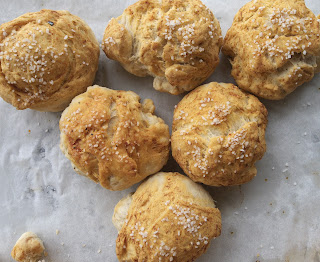
Tortas de aceite are flat buns spiced with cinnamon and aniseed.

The torta de aceite is a big cookie or flat bun. It starts with basic bread dough to which aniseed-flavored olive oil is added. A little sugar in the dough and sprinkled on top makes it perfect as a breakfast bun, served with café con leche, milky coffee, tea or even a copita of aguardiente, anisette. Tortas de aceite are perfect for dunking.

Tortas de aceite are enjoyed for breakfast or snack, with coffee or tea.


Dunk pieces of torta in the coffee, if you like.


A similar olive oil dough in towns of Jaén province is turned into little round rolls called ochíos, or “eighths,” so-called because they were made with an eighth of the bread dough. The ochíos are topped with pimentón (paprika) and coarse salt. They´re perfect for making tiny sandwiches for a merienda, snack. 

Small rolls are brushed with oil and pimentón, topped with coarse salt. 


Ochío rolls can be split and filled for small sandwiches. Typical fillings are chorizo or morcilla. Shown clockwise from the right are salchichón and cheese; marinated fresh anchovies; fresh goat cheese and sliced tomato and, in the center, sliced egg with pickle and mayonnaise.


Basic Bread Dough
Masa Para Pan

Bread flour is harina de fuerza.

Basic “country” bread starts with masa madre, a piece of the fermented dough from a previous baking, to which some fresh yeast is added. I bake bread so seldom that I haven´t bothered experimenting with sourdough. I used instant dry yeast because that´s what I had in my cupboard.  

1 envelope instant dry yeast 
½ teaspoon sugar
1 cup all-purpose flour
½ cup hand-hot water (115ºF)
4 cups bread flour
2 teaspoons salt
1 cup warm water

Day before baking
In a medium bowl combine the yeast, sugar and flour. Add the hand-hot water and mix to make a spongy batter. Cover the batter with a damp cloth and place in a draft-free place to rise overnight (8 hours).

Dough before kneading is shaggy.
For the bread dough
Rinse a large crockery mixing bowl in very hot water to warm it and wipe it dry. Combine the bread flour and salt in the bowl. Make a well in the center. Add the sponge that fermented overnight to the flour. Pour in half of the warm water. With a wooden spoon, begin stirring the flour into the liquid in the center, incorporating the yeast dough. When the dough is too stiff to work with the spoon, add the remaining ½ cup of warm water.

Begin kneading the dough. Work it in the bowl or turn it out onto a board. The dough will be dry and shaggy at first, but becomes smooth with kneading. Knead the dough for at least 15 minutes until it is smooth, stretchy and almost glossy looking. (Use a dough hook on a mixer if you have one.)

Roll the dough into a smooth ball and place it in an oiled bowl. Turn to coat both sides with oil and cover with a damp cloth. Put the bowl in a warm, draft-free place to rise until doubled in bulk, 2-3 hours. The dough is now ready for shaping. (Divide it in half to prepare the two following recipes.)


Olive Oil Breakfast Buns with Aniseed
Tortas de Aceite con Matalahúga

Dough with spiced olive oil.

Makes 12 (3 ½ -inch) buns.

16 ounces bread dough (½ of previous recipe)
½ cup extra virgin olive oil
1 strip orange zest
1 teaspoon aniseed
¼ cup + 2 teaspoons sugar
½ teaspoon baking soda
½ teaspoon cinnamon
½ cup all-purpose flour
12 almonds

After the bread dough has risen, as described in the previous recipe, punch it down and place in a bowl. Make a depression in the dough.

Combine the oil in a saucepan with the orange zest and heat over medium heat until the zest begins to turn brown. Remove from the heat and stir in the aniseeds. Let the oil cool, then remove and discard the orange zest. Stir the ¼ cup sugar, baking soda and cinnamon into the cooled oil.

Pour the oil mixture into the depression in the dough and begin kneading it in. Sprinkle with some of the flour and continue working the oil into the dough, gradually adding the remainder of the flour. When most of the oil has been absorbed, turn the dough out onto a board and knead it for a few minutes. The oil in the dough keeps it from sticking, so you probably don’t need additional flour.

Place the dough in the bowl, cover with a cloth and allow it to rest for 30 minutes.

Make balls of dough, pat into flat circles.

Line a baking sheet with baking parchment. Divide the dough into 12 pieces (each about 2 ounces). Roll each piece into a ball and pat it into a 3 ½-inch circle. Place on the prepared baking sheet. Sprinkle the tops with the remaining sugar. Place an almond in the center of each. Let rise in a warm place for 30 minutes.

Preheat oven to 375ºF. 

If baking two sheets of buns, place them on upper and lower oven shelves. Bake 10 minutes, then switch positions of the sheets. Bake until the buns are golden, about 20 minutes total. Cool the buns on a rack.


Olive Oil Rolls with Pimentón
Ochíos (Bollitos con Pimentón)

Mix pimentón and olive oi.

These rolls are savory, but are made with a pinch of aniseed in the dough. On a whim, I omitted the aniseed and used poppy seeds instead. Use pimentón de la Vera (smoked paprika) mixed with olive oil to brush on the rolls before baking them. Any remaining oil can be brushed on the rolls again after baking for a deeper color.

16 ounces bread dough (about ½ of previous recipe for Basic Bread Dough)
¼ cup + 1 tablespoon extra virgin olive oil
¼ cup all-purpose flour
½ teaspoon aniseed or poppy seeds
1 teaspoon smoked pimentón (paprika)
1 teaspoon coarse salt

After the bread dough has risen, as described in the previous recipe, punch it down and place in a bowl. Make a depression in the dough. Pour the ¼ cup oil into the depression. Use a wooden spoon or hands to gradually mix the oil into the dough, adding the flour as needed. 

When most of the oil has been absorbed, turn the dough out onto a board. Knead in the aniseed or poppy seeds. When the dough is smooth, place it in a bowl, cover with a damp cloth and let it rest 30 minutes.

Line a baking sheet with parchment. Divide the dough into 8 pieces (each about 2 ½ ounces). Roll each piece into a smooth ball, flatten it slightly and place on the baking sheet. 

Combine the remaining 1 tablespoon oil with the pimentón. Brush the tops of the rolls with the pimentón oil. Sprinkle the tops with the salt. Let rest 30 minutes.

Preheat oven to 375ºF.

If baking two sheets of buns, place them on upper and lower oven racks. Bake 10 minutes, then switch positions of the sheets. Bake until the buns are golden, about 20 minutes total. Cool the rolls on a rack. If desired, brush tops with remaining pimentón oil.

Brush rolls with more pimentón oil after baking.


Split the rolls for sandwiches.


More variations on basic bread:
Crispy Olive Oil Cookies (Tortas de Aceite). These tortas are different from the ones in the recipe above. They are rolled very thin and baked until crisp. They are not at all “bready.”


Saturday, February 10, 2018

TORTAS DE ACEITE—A COOKIE FOR EVERY MOOD

Tortas de aceite are the “little black dress” of cookies, because you can dress them up or down. Wear your pearls, sip cava and heap the crisp crackers with caviar. Or, get cozy in your jammies and spread them with peanut butter and jelly. Serve them for breakfast with coffee or tea, for dessert with cheese and fruit compotes, or, accompanied by a mellow muscatel wine, on a rainy afternoon with classical guitar music playing.


These tortas can be sweet or savory. Serve them with fruit, cheese, nuts and a mellow, medium-dry muscatel wine or sweet Sherry.

Tortas de aceite are round, olive oil flat breads/cookies/crackers. There are actually two versions, one a soft, sweet bun, another a crispy, wafer-like cookie. The crispy ones have attained gourmet status, tortas de aceite Ines Rosales® from Sevilla. The “legítimas y acreditadas” tortas are slightly sweet and contain both sesame and aniseed. (They are available in the US at specialty food stores and on-line from La Tienda.

Packaged tortas, the famous Tortas de Aceite Ines Rosales ®


But, for $15.95 for 12 tortas (in the US), you may want to make your own. They’re easy and fun.

Golden and crispy, olive oil tortas go with everything.

Tortas are studded with sesame and aniseed. This version has toasted almonds too.

Serve tortas alongside fruit compote (this is apple-raisin-cinnamon). Or heap the fruit right on the torta for a quickie "pie." Go ahead and add a dollop of ice cream. The tortas are equally good with springtime strawberries.

Goat cheese and crispy tortas, a perfect pairing.

Crispy Olive Oil Cookies/Crackers
Tortas de Aceite

Use bread flour or all-purpose flour for the dough. You will not need to flour the board for kneading this dough or for rolling out the tortas, as the oil keeps the dough from sticking. 

Almond blossom time in southern Spain. Add chopped almonds to the torta dough, if you like.
To celebrate almond-blossom time, I’ve added finely chopped almonds to the basic dough. If you prefer the tortas without almonds, add about ¼ cup additional flour.

The cookies are not overly sweet, with only a coating of sugar on the top. Make them sweeter with a honey glaze, made by boiling 1/3 cup honey with 2 tablespoons water for 6 minutes, then brushing it on the tortas when they come out of the oven. For savory crackers, omit the sugar and top the rolled tortas with flaky salt.

The olive oil is “infused” with lemon zest, aniseed and sesame. Heat the oil on a low fire—don’t allow the seeds to fry. Discard the lemon zest. Let the oil cool slightly before adding the yeast to it. The water for dissolving the yeast should be very warm, not hot (105ºF/ 40ºC).

Makes 12 (4-inch) cookies.

Warm water (105ºF/ 40ºC), ¼  + ¼ cups
1 envelope active dry yeast (2 ¼ teaspoons)
1 teaspoon sugar
1/3 cup extra virgin olive oil
6-inch strip of lemon zest
1 tablespoon aniseed
2 tablespoons sesame seed
2 cups bread flour
½ teaspoon salt
¼ cup finely chopped toasted almonds
2 tablespoons sugar (optional)
Salt flakes (optional)


Place ¼ cup very warm water in a small bowl. Add the yeast and 1 teaspoon of sugar. Stir to combine. Allow the yeast to proof 10 minutes, until it expands.

Place the oil in a small pan with the lemon zest, aniseed and sesame seed. Heat on low heat for 4 minutes. Cool slightly. Skim out and discard the strip of lemon zest.

Place the warm oil and seeds in a bowl. Add ¼ cup of warm water and the yeast mixture.

Combine the flour, salt and almonds. Beat them into the oil-yeast mixture in the bowl. When the dough is too stiff to mix, turn it out on a board. Knead the dough until very smooth and stretchy, 5 minutes. Gather the dough into a ball.

Place the ball of dough in an oiled bowl, turning it to coat both sides. Cover with a damp cloth and place in a warm place to rise until doubled in bulk, about 1 hour.

Preheat oven to 450ºF/ 230ºC. Line two or more baking sheets with baking parchment.

Roll balls of dough out very thinly. No flour needed on the board, as oil keeps the dough from sticking.

Sprinkle with sugar.
Punch down the dough and gather it into a ball. Divide the dough into 12 golf ball-size balls (about 1 ¼ ounce each). Roll out the balls as thinly as possible into 4-inch (approx.) circles. Place them on baking sheets.

For sweet cookies, sprinkle the tops of the tortas with 2 tablespoons sugar, pressing it lightly into the dough. For savory crackers, omit sugar and sprinkle tops with salt flakes.

Bake the tortas (in two or three batches) until they are browned on the edges, about 8 minutes. Cool them on a rack.

Store the tortas in a tightly covered container.