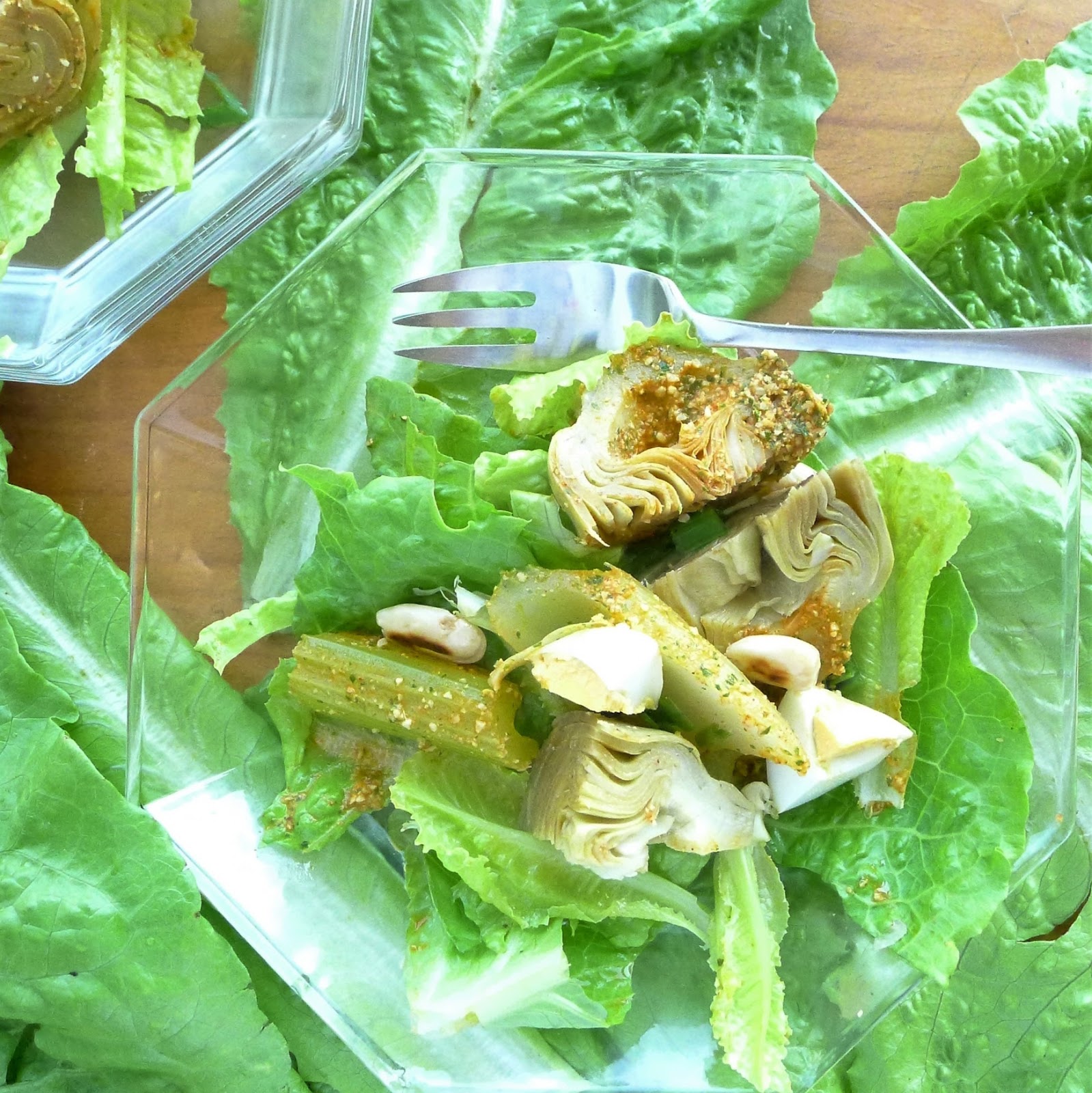
Two tall artichoke plants in my garden are sending up buds. The buds are the edible artichokes. My local market has bins brimming with this very special thistle.
 |
| The artichoke is the edible bud of a kind of thistle. |
I love artichokes! Fresh ones have a sweet, earthy flavor and a meaty texture, somewhere between a firm mushroom and a boiled potato, that seem to be lost when artichokes are frozen or packed in jars. So I go a little crazy during artichoke season.
But, artichokes really are a pain to prep—stripping away outer leaves, trimming the bottoms, cutting off the tops, scooping out the fuzzy chokes. Artichokes thus stripped of their prickly exteriors need to be bathed in lemon juice to prevent their turning dark.
Rather than forego artichoke pleasure, my solution is SIMPLIFY! Cook the whole artichokes without all that prepping (no lemon juice needed) and let the people at the table do it themselves. Kids love dismantling whole artichokes, dipping the leaves in mayo and scraping the fleshy leaves between their teeth.
 |
| All the prepping necessary: cut off the stem, snap off a few outer leaves. No lemon juice needed, because inner leaves are not exposed. Drop the whole artichokes into salted boiling water. |
 |
| After cooking, open up the leaves of the artichoke, exposing the tip of the choke in the center. |
 |
| Use a spoon to scrape out the fuzzy choke--or let each person do it for herself. |
 |
| Fill the center with a blob of mayonnaise (homemade or straight from the jar) or just drizzle with olive oil and lemon juice. |
 |
| To eat: pull off a leaf, dip it in mayo and pull the leaf through the teeth to extract the fleshy bit. Discard the leaf. (Yes, you'll need a plate for the leaf debris.) |
 |
| The heart of the matter: when all the leaves are stripped away, sprinkle the heart (also called the artichoke "bottom") with a little salt and eat it all. |
Even when I'm cooking artichokes with other ingredients, such as in this cazuela of rice with fish, I do a minimum of prepping—snap off a few outer leaves, cut the artichokes in quarters and add them right to the oil in the cazuela. Then, it’s hands on. You pick up the artichoke by the inedible leaf tips and bite off the tender heart, discarding the leafy “handle.” Accompany with paper towels for finger wiping.
Rice with Fish and Artichokes in Cazuela
Cazuela de Arroz con Pescado y Alcachofas
Cazuela de Arroz con Pescado y Alcachofas
 |
| Savory rice cooks with artichokes and other vegetables and fish. Shrimp garnish the finished dish. |
 |
| Pick up the cut artichokes by the tips and bite off the tender heart. Provide paper towels for hand wiping! |
 |
| Cut immediately before cooking. |
Prepare the artichokes immediately before adding them to the pan. Cut off stems, snap off a few outer leaves and cut them in quarters. You can also nip out the chokes with the tip of a knife. Drop the artichokes, cut sides down, into the hot oil.
 |
| Sauté the cut artichokes in oil with the beans. |
Monkfish is a meaty fish that won’t disintegrate with cooking. Sautéeing the shrimp in the oil at the start flavors the oil. In the spirit of “simplify,” chicken broth stands in for fish stock. You can easily turn this into a vegetarian dish by omitting the fish and shrimp and using water instead of chicken broth. Feel free to add other vegetables.
As for paella, use medium-short-grained Spanish rice or substitute Arborio rice. The cooked rice should be meloso, a little juicy, not dry like paella.
Serves 4
 |
| Ingredients for rice with fish and artichokes. |
3 tablespoons olive oil
8 large shrimp, not peeled (about 4 ounces)
¼ cup chopped onion
2 cloves garlic, chopped
2 medium artichokes, quartered
1 cup sliced green beans
1 pound monkfish fillets, cut in bite-size pieces
2 teaspoons pimentón (paprika)
½ teaspoon smoked pimentón
½ cup grated tomato pulp
1 ½ cups medium-grain rice
4 cups hot chicken broth
Salt
¼ cup cooked peas
Strips of red pimiento
Heat the oil in a cazuela or deep skillet. Add the unpeeled shrimp and cook them on medium heat, turning once, until they are cooked. Remove the shrimp and reserve them.
Add the onion and garlic to the oil in the pan. Add the artichokes and beans. Sauté until artichokes begin to brown. Add the pieces of fish and the two kinds of pimentón. Immediately add the tomato pulp. Fry for 2 minutes. Stir in the rice.
8 large shrimp, not peeled (about 4 ounces)
¼ cup chopped onion
2 cloves garlic, chopped
2 medium artichokes, quartered
1 cup sliced green beans
1 pound monkfish fillets, cut in bite-size pieces
2 teaspoons pimentón (paprika)
½ teaspoon smoked pimentón
½ cup grated tomato pulp
1 ½ cups medium-grain rice
4 cups hot chicken broth
Salt
¼ cup cooked peas
Strips of red pimiento
Heat the oil in a cazuela or deep skillet. Add the unpeeled shrimp and cook them on medium heat, turning once, until they are cooked. Remove the shrimp and reserve them.
Add the onion and garlic to the oil in the pan. Add the artichokes and beans. Sauté until artichokes begin to brown. Add the pieces of fish and the two kinds of pimentón. Immediately add the tomato pulp. Fry for 2 minutes. Stir in the rice.
Add the broth. Bring the liquid to a boil and reduce heat so it bubbles gently. Taste and add salt if necessary. Cook, stirring occasionally, for 8 minutes. Reduce heat to a simmer and cook until rice is al dente and artichokes are cooked, 10 to 12 minutes more. Remove from heat.
Place the reserved shrimp on top. Sprinkle with peas and add strips of red pimiento. Allow the rice to set for 5 minutes before serving.

More recipes with artichokes: