Showing posts with label fish stock. Show all posts

Saturday, September 21, 2024

PAELLA: BUILDING FLAVOR


Arroz de carabineros. (Photo: Josh Elliott)

I´ve eaten a lot of paellas in my time, from the classic València version, with rabbit and snails, cooked on a wood fire in the rice fields of the Albufera, to a rustic Andalusian campo one where we picked the fava beans and peas from the nearby huerta to add to the rice with chicken and shrimp. I’ve made my share of paellas too, some pretty good.  


But the best paella rice I’ve ever eaten was at a beach restaurant on the Costa del Sol, a glorified chiringuito. We ordered arroz de carabineros, rice cooked in paella (the typical flat pan is called “paella” as is the rice cooked in it) with jumbo red shrimp. It contained almost no protein matter. The shrimp had been reduced to essence giving the perfectly cooked rice intense flavor. The arroz was served topped with a few pieces of the barely cooked carabineros plus their heads, for sucking. No baroque garnishes. No sauce. No lemons. Arroz in its purest form.

I vowed to try to make rice that good. Because it’s World Paella Day (September 20), today I took up the challenge. 

My arroz--rice in paella with shrimp. Flavor is fantastic, texture pretty good. I served cosas, accompaniments, as side dishes. 

What I learned about building flavor can be applied to any rice cooked in paella, including more elaborate ones with chicken, squid, clams, shrimp, artichokes, beans, etc. There are three steps—a sofrito, the foundation for building flavor; a fish/shellfish stock, and the cooking of the rice. 

Sofrito, first step in building flavor.
Sofrito 

This is where flavor begins so make the sofrito as intense as possible. If possible, cook shrimp heads, small crabs, squid bits, etc., with the vegetables, puré the sofrito, shells and all, then push the thick sauce through a fine sieve. Lacking crustaceans, add a few canned anchovies to contribute umami to the basic sauce. This recipe makes enough sofrito for three or four paellas. It can be prepared in advance of cooking the rice and refrigerated or stored in the freezer.


Makes about 2 ¼ cups sofrito.

2 ¼ pounds ripe tomatoes
Olive oil
2 cups chopped onions
½ to 1 cup chopped green peppers
4 cloves chopped garlic
¼ cup white wine
2-3 anchovy fillets, chopped (optional)
2 teaspoons smoked pimentón (paprika)
Sprig of thyme
1 bay leaf
Sprig of parsley
1 teaspoon salt
Freshly ground black pepper

Heat oven to 400ºF.

Place the tomatoes on a rimmed sheet pan, drizzle them with oil and roast them until very soft, about 30 minutes. (Alternatively, drop the tomatoes in a pot of boiling water until the skins begin to split. Drain.) When tomatoes are cool enough to handle, cut out cores and slip off the skins. You should have approximately 3 cups of tomatoes.

Heat ¼ cup of oil in a pan. Sauté the onions on medium-high until they begin to brown around the edges, 5 minutes. Add 2 tablespoons of water and continue sautéing until the water cooks away and onions begin to sizzle again. Add the peppers and garlic and sauté 5 minutes more. Add the anchovies, if using. Add the wine and cook 1 minute to cook off the alcohol. 

Use kitchen scissors to cut the tomatoes into pieces. Add them to the pan with the thyme, bay, parsley, salt and pepper. Fry the tomatoes on high heat 2 minutes. Lower the heat and cook the sofrito, covered, 15 minutes, stirring occasionally. Uncover the pan and cook 10 to 15 minutes more until the sofrito is quite thick. Discard the bay leaf and parsley.

Puré the sofrito with a hand-held blender. Set aside ¾ cup of sofrito for use in the paella. Divide the remainder in half and store in the refrigerator or freezer for future use.

Fish Stock
Caldo de Pescado

Fish head for the stock pot.
Along with sofrito, a flavorful fish stock is essential for this rice dish. This can be freely varied, depending on what shellfish and fish trimmings are available. I lucked out, my local fish vendor gave me a whole mero (grouper) head that was lurking in her deep freeze. I made the stock with just the head, no shrimp shells. You can also use clam broth or store-bought stock. Use wine, lemon, herbs, aromatics and sufficient salt. Reduce the stock somewhat so that it’s a powerful cooking medium for the rice. Here’s a basic recipe for Fish Stock.


Rice with Shrimp in Paella
Arroz al Marinero

Unlike traditional paella, this arroz starts on top of the stove and is finished in the oven. If you want socarrat, the crunchy rice on the bottom, you will need to return the pan to the stove-top after the oven.

Size matters. I used a 34-centimeter (13.3-inches) paella pan for 2 cups of rice (400 grams/ 14 ounces), serving 6. This size fits on a large burner of an induction stove and into a normal oven. The cooked rice reached a depth of 1 ½ inches. The restaurant version was made in a similar size pan, but with half the quantity of rice and liquid, changing the timing, the texture of the rice and the yield. I’ll try that method next time, using a thinner layer of rice for the same pan diameter, and see how it changes the rice. 

Use a medium-short grain rice, sometimes called “round rice,” for paella. València varieties include Bahia, Senia, Marisma and Bomba. They are similar to Italian risotto rice, but, unlike risotto, paella rice is never stirred during cooking. 

Serves 6.

1 pound heads-on shrimp
¼ cup olive oil + additional if needed
¾ cup sofrito
½ teaspoon saffron threads
2 cups medium-short-grain rice
4 ½ cup fish or shellfish stock, heated (see note below)
Salt if needed
Finely chopped parsley
Cooked romano green beans (optional)
Alioli garlic sauce to accompany (recipe follows)

Shell the shrimp. Save the heads (clip off the antennae) and tails in a covered container. Save the shrimp bodies in another container. Refrigerate them until ready to cook.

Heat the oil in a skillet and add 1 cup (or more) of shrimp heads and tails. Fry them until they start to brown, crushing the shells with a wooden paddle to extract all the flavorful juices. Remove the pan from the heat, tip it so that the oil drains to one side and scoop out the shells and discard them. (If you do this step in advance of preparing the rice, the fried shrimp heads can be added to the fish trimmings to make the stock.)

Preheat oven to 425ºF.

Taste the cooking liquid for salt. 
Place the shrimp oil in the paella pan. Add additional oil to make 2 tablespoons. Heat on medium and stir in the sofrito. Cook it until it begins to darken slightly. Sprinkle the saffron into the pan. Add the rice and mix it until coated with the sofrito.

Bring the stock to a full boil and carefully pour it into the rice. Stir thoroughly. Taste the liquid and add more salt as needed. 

Cook the rice on medium-high for 5 minutes.

Very carefully transfer the rice to the oven for 10 minutes. 

While rice is in the oven, sauté the shrimp bodies in the skillet just until they turn pink. Remove from pan and sprinkle them with chopped parsley.

Taste the rice. It should be al-dente tender, with just a little kernel of resistance in the center. Remove the pan from the oven. (If you want socarrat, place the pan on medium-high heat for 2 to 3 minutes.) Scatter some of the shrimp on top. Scatter the beans, if using, on the surface. Let the rice set at least 5 minutes before serving.

Lettuce hearts with garlic.
How to serve paella rice. Arroz might be served in its pristine glory, as a primer plato, a starter, to be followed by a main  course of fish, meat or chicken. Or it can be preceded by an assortment of salads and shellfish para picar, to be shared amongst diners at the table. 

I chose to accompany the rice with side dishes to be eaten alongside the rice— sautéed shrimp, fried fillets of gallineta, red rockfish; tiny calamaritos; green beans, sliced tomatoes, and lettuce hearts with fried garlic, piquillo peppers and serrano ham. And, why not? a garlicky alioli sauce. 


Rice is minimally garnished, with side dishes.

Garlic Sauce
Alioli

This is not a true alioli, which is made with only crushed garlic and olive oil. It’s a simple blender mayonnaise with garlic added. Use an immersion blender with a narrow container. (This recipe calls for raw egg.)

1 medium egg, room temperature
½ teaspoon smoked pimentón (paprika)
1 tablespoon lemon juice
1 clove garlic
½ teaspoon salt
¾ cup extra virgin olive oil

Wash the egg. Break it into the blender container. Add the pimentón, lemon juice, garlic and salt. Add the oil. Insert the blender blade to the bottom of the container and run the blender on high speed without lifting it until the egg and oil thicken. Then lift the blade to incorporate any oil on the top and move the blender up and down briefly until it is completely incorporated. If desired, thin the alioli with a little warm water. 

Store the sauce refrigerated and use within 3 days.


Finalists in the World Paella Day competition, which takes place annually on September 20 (time of rice harvest) in València with participants from all over the globe, came from Puerto Rico, Colombia, Japan, Romania, Mexico and China. The winner was Joe Padilla from Puerto Rico.

Where we ate the superb rice: Parador Playa, Benalmadena Costa (Málaga).

Where to get all kinds and sizes of paella pans in the U.S.: La Tienda.

Saturday, May 21, 2016

MY MEDITERRANEAN DIET

Happy International Mediterranean Diet Month!  Created in 2009 by Oldways and the Mediterranean Foods Alliance, Med Diet Month celebrates the delicious foods and wide-ranging health benefits associated with the Mediterranean Diet. (Oldways is a nonprofit food and nutrition education organization, with a mission to guide people to good health through heritage.)  


The Mediterranean Diet is a way of eating based on the traditional foods of the countries surrounding the Mediterranean Sea. The “poor” diet of the people of the southern Mediterranean, consisting mainly of fruits and vegetables, beans and nuts, healthy grains, fish, olive oil, small amounts of dairy, and red wine, proved to be most likely to lead to lifelong good health. It has been studied and noted by scores of leading scientists as one of the healthiest in the world.

Seafood--one of the ingredients of a healthful Mediterranean diet. In the center are fillets of hake and on the left, the hake's head for the stock pot. Above the hake is a rascasse, also for the stock. Jumbo shrimp are at the top. At the bottom are cigalas, aka sea crayfish, scampi or Dublin Bay prawns. These are so small, I'm putting them in the stock pot. Squid, cut in rings is on the left. Some small clams in the center, mussels on the right. Not visible are fillets of sea bass and slices of monkfish.

I celebrate the Mediterranean diet just about every day! In fact, I’m a gold medalist! (Take the Oldways quiz here and find out “How Mediterranean is your diet?”)

But it wasn’t always so. When I came to live on the shores of the Mediterranean, more than 40 years ago, I was disappointed to learn that you can’t eat olives straight off the tree (they have to be sweetened in brine first). In those days, olive oil was so raunchy I refused to use it. I stuck to butter and margarine for a very long time. I wasn’t crazy about garbanzos and lentils, either. Whole grains were not part of the heritage of this Mediterranean village! I got wheat ground at a local mill, took home the whole wheat flour and made my own bread.

But, from the very first day that I landed on these shores, as I devoured a whole grilled red mullet for lunch, I was a convert to Mediterranean fish and shellfish. Growing up in Midwest America where I rarely ate seafood, there was something deeply lacking in my diet.

Here, with a fishing port only a few miles from where I lived, I could indulge myself with fresh shrimp. I came to love fresh anchovies fried in olive oil and fresh sardines roasted on skewers. I experimented with ugly monkfish, scaly gurnards, awesome swordfish, oily mackerel and squishy squid. (A 1972 Penguin edition of Alan Davidson’s Mediterranean Seafood was my guide.)

Zarzuela--a seafood "operetta," in all its glory.


Serve each person a piece of each fish, a few squid, shrimp, clams and mussels.
 My personal Mediterranean Diet is still slanted towards seafood. To celebrate the month, I’m cooking an old-favorite, zarzuela de pescados y mariscos, a classic Catalan seafood stew. I first ate zarzuela in Tarragona (a Mediterranean port city south of Barcelona) on a road trip along the Mediterranean coasts of Spain and France (where I also tasted my first-ever bouillabaisse in Sêtes).

Besides a variety of seafood, the recipe calls for tomatoes, almonds, hazelnuts and plenty of virgin olive oil, all important items in the healthful Mediterranean diet.

Seafood Operetta
Zarzuela de Pescados y Mariscos

Zarzuela is operetta, a genre of popular musical theater that developed in the 17th century. Why this Catalan seafood stew has the same name is a mystery to me. It’s a lavish but simply staged production if all the ingredients are prepared before starting to cook.

The dish is usually cooked in a shallow earthenware cazuela or a paella pan. A separate skillet is used to sauté all the ingredients first. They are then combined to finish cooking in the cazuela.

Use at least two and as many as four different fish in this recipe. Examples are “meaty” fish such as monkfish, conger or lobster; flaky fish such as bass, grouper, bream or rascasse, and delicate fish such as hake, sole or turbot. (I used monkfish, hake and sea bass.) The servings can be cut into fillets or steaks of about 4 ounces. Ideally, you are going to serve each person one piece of each fish plus shellfish.

You can use fish heads, bones, trimmings and crustacean shells to make fish stock (that recipe follows the recipe for zarzuela) or use store-bought stock. The stock can be prepared a day before cooking the zarzuela.

You’re going to be making a sofrito (fried onion and tomato) and a picada (paste of ground almonds and hazelnuts) to add to the fish. Both of these can be prepared in advance. Clams and mussels can be steamed open in advance as well. Strain their cooking liquid and add it to the fish stock. Discard empty half-shells.

Zarzuela is usually served with strips of bread fried in olive oil as an accompaniment. Some people wish for potatoes or pasta or rice to go with it, but, personally, I like the intensity of the seafood with nothing more than bread. 


Serves 4—or more.

Pieces of fish, ready to cook.
4 (4-ounce) servings each of  2 or 3 different fish
Salt
Flour for dredging fish
Extra virgin olive oil (about ½ cup)
½ pound cleaned squid, cut in rings
8 jumbo shrimp
8 mussels, cleaned and steamed open
½ pound small clams, scrubbed and steamed open  
1 onion, finely chopped
1 cup grated tomato pulp (2 large tomatoes)
¼ cup brandy, rum or aguardiente (anisette)
1 bay leaf 
Pinch of crushed saffron
Pinch of crushed red pepper
1 ½ cups fish stock (recipe below)
¼ cup picada (recipe follows)
Salt
Chopped parsley to serve
Triangles of fried bread to serve


Shake off excess flour in a sieve.

Salt the pieces of fish and allow them to stand 30 minutes. (Do not salt fish that has been frozen.) Working with one type of fish at a time, dredge the pieces in flour, patting off excess.

Heat enough oil in a skillet to cover the surface. Fry each of the floured pieces of fish, starting with skin-side up, until lightly golden (about 1 ½ minutes per side). They do not need to cook through. Remove them as they are browned and place in a large (12-inch) cazuela or paella pan.  Add additional oil to the skillet as needed.

Place all the seafood in the cazuela in more or less a single layer.

Flour the pieces of squid and fry them until golden. Place them around the pieces of fish in the cazuela. Sauté the shrimp without flouring them and place in the cazuela. Place the mussels and clams around the fish.

Grate tomatoes to make pulp.
Wipe out the skillet and add 2 tablespoons more oil. Sauté the chopped onion, stirring frequently, until it begins to brown, about 8 minutes. Add the tomato pulp and fry, stirring frequently, until it is thick and jam-like and slightly caramelized. Add the brandy and cook until the alcohol is cooked off. Add the bay leaf, saffron, crushed red pepper and fish stock. Cook 5 minutes. Stir in the picada. Taste for salt (if stock was well-salted, you may not need any additional salt).

Pour the sofrito-picada over the fish and shellfish in the cazuela. Either cook over a medium flame, shaking the cazuela to prevent fish from sticking on the bottom, or place in a preheated 375ºF oven until sauce is bubbling and fish is completely heated (about 20 minutes).

Sprinkle with chopped parsley and serve with triangles of bread that have been fried crisp in olive oil.

Almond-Hazelnut Sauce
Picada

Picada is a flavoring paste that is stirred into soups, stews, rice dishes during cooking. This makes more sauce than you need for the zarzuela. Refrigerate what’s left and try it dolloped over plain grilled fish or chicken as a serving sauce.

Ingredients for picada--olive oil essential!
3 tablespoons extra virgin olive oil
1 slice bread, crusts removed
 2 cloves garlic
¼ cup skinned and toasted almonds
¼ cup toasted and skinned hazelnuts
¼ cup chopped parsley
½ cup water or fish stock
Salt


Heat 1 tablespoon of oil in a small skillet and fry the slice of bread until browned on both sides. Remove.

Place the bread, garlic, almonds, hazelnuts and parsley in a blender or mini-processor and process with 2 tablespoons oil until it makes a smooth paste. Dilute the paste with water or stock. Add a pinch of salt. 

Fish Stock
Caldo de Pescado

This version of fish stock starts out with a sofrito of fried vegetables and tomato. You need about 2 cups of the stock for the zarzuela. Freeze the remaining for use in fish soups.

This "cute" little fish is a rascasse, a Mediterranean fish essential for bouillabaisse. I'm putting this one in the stock pot along with the hake head and small crustraceans.


Makes 10 cups.

2 tablespoons olive oil
1 onion, chopped
1 carrot, chopped
2 cloves garlic, chopped
2 tomatoes, chopped
2 pounds small fish, fish bones and trimmings, crustacean shells, small crabs, etc
½ cup white wine
1 tablespoon salt
1 slice lemon
Sprig of thyme
Parsley stems
12 cups water


Heat the oil in a large soup pot and sauté the onion, carrot and garlic until onions begin to brown, 8 minutes. Add the tomatoes and continue frying until tomatoes begin to caramelize. Add any crustaceans and sauté.

Put in the remaining fish, bones, trimmings.Add the wine, salt, lemon, thyme, parsley and water. Bring to a boil, skim away froth. Partially cover and cook 40 minutes. Let set 10 minutes.

Carefully strain the broth, first through a colander, then through a fine sieve. Discard the solids. Refrigerate the stock, covered, until ready to use.

Fry triangles of (whole grain) bread in olive oil to accompany this fish stew. Make lots--it's delicious.
Mediterranean flavors--a seafood stew from Catalonia.


Saturday, March 21, 2015

RICE "ON THE SIDE"

Last week, after filleting a whole corvina, I saved the head, bones and trimmings to make fish stock. Usually I stash stock in the freezer, ready for making one of my favorite Spanish fish soups. This time I decided to use that pot of concentrated flavor for a Spanish rice dish that’s not paella.


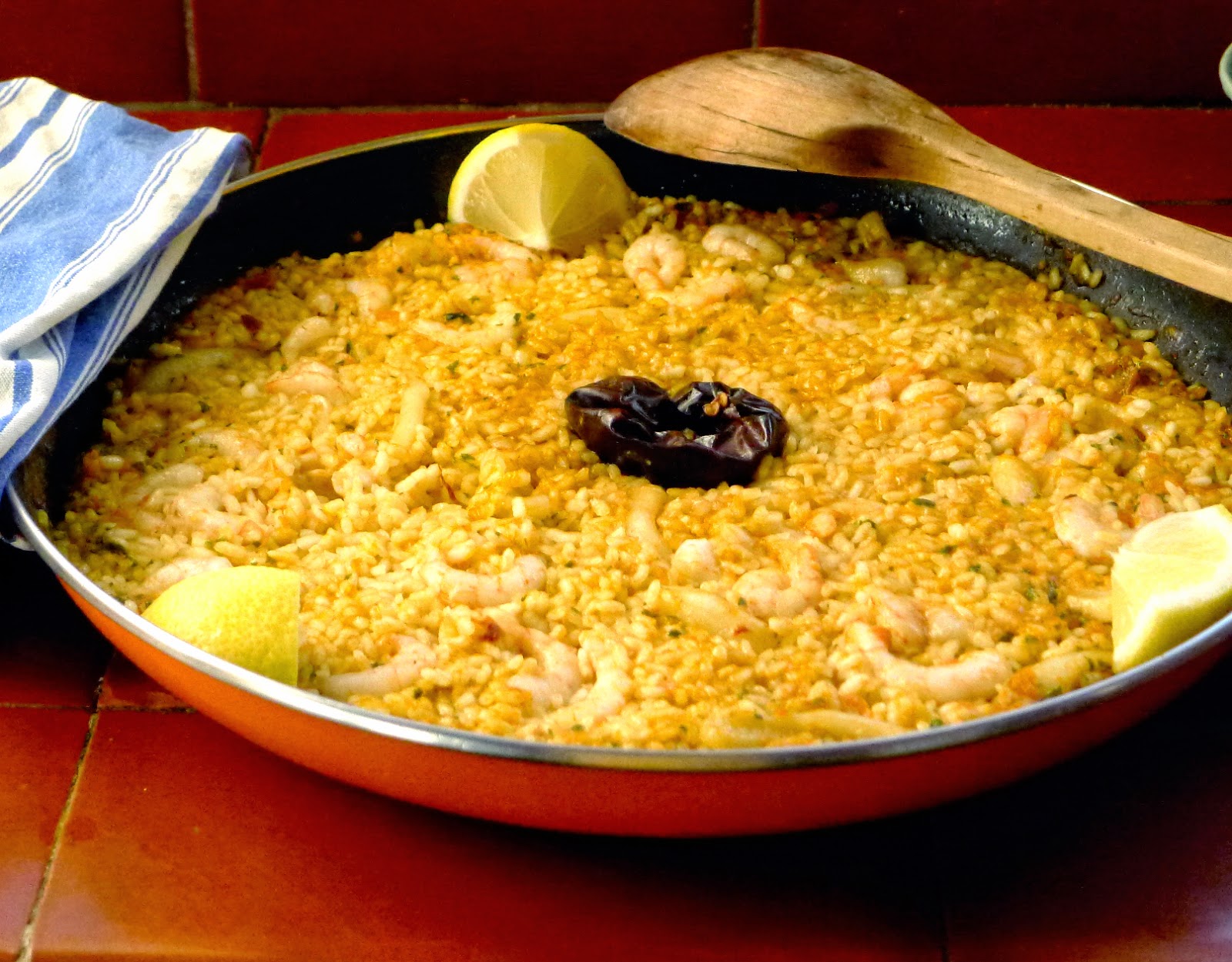
Flavorful rice and not much else.

Arroz abanda (in Alicante lingo, it’s arròs a banda) means rice “on the side.” It’s sort of like paella but without all the baroque trimmings. Originally it was a simple fisherman’s dish cooked on board a trawler. Some of the day’s catch was boiled in a pot, then skimmed out. Rice was added to cook in the tasty broth. The rice was served first, followed by the boiled fish.

The dish has since achieved near-cult status, especially in the provincial city of Alicante, where the rice is usually prepared in a paella pan instead of a fisherman’s kettle. It can be served in solitary splendor as a starter or as a side dish with fish cooked simply. A pungent alioli (garlic sauce) is the only accompaniment.

The success of arroz abanda depends on starting with a flavor-packed fish stock. You’ll find a basic recipe here. Use small, whole fish; trimmings from larger fish; crustacean shells; clam or mussel juices.

About Spanish rice. Spanish rice, the kind used for paella, is a round-grained, medium-short variety. Spanish rice has a white perla (pearl), where the starch is concentrated. Its great virtue is as a flavor conductor, soaking up the savory juices with which the rice cooks—olive oil sofrito, chicken, rabbit or seafood,  saffron. Spanish (often called “Valencian”) rice is similar to Italian varieties used for risotto. But the cooking method is totally different. Risotto is stirred to develop the creamy starch. Paella rice, cooked “dry,” is never stirred, as stirring would break up the starch kernel.

Bomba is one of several varieties of rice grown in Spain (it may be from the region called Calasparra). Bomba rice is especially esteemed for caldoso (soupy) and meloso, juicy, rice dishes because the kernel of starch doesn’t burst open and make the rice sticky. Bomba rice is absolutely not necessary for paella.

But, for this recipe, if possible use the bomba variety of rice because it will absorb more of that flavorful fish stock (use triple the volume of liquid to rice). If using varieties other than bomba, decrease the quantity of stock, using approximately double the volume of liquid to rice.

Ñoras are small dried peppers.
The traditional recipe calls for the pulp of a ñora, a bittersweet dried red pepper, the same pepper used to make pimentón (paprika). If not available, substitute a spoonful of sweet pimentón, stirred with a little water to make a paste. Saffron is optional; it adds that vibrant golden color.

Fry shrimp shells for flavor.
In addition to the fish stock, this recipe also calls for flavoring the cooking oil with shrimp shells and heads. If you haven’t got heads and shells, just omit this step. And, instead of a sofrito of chopped vegetables, it calls for a picada of tomatoes, ñora, garlic and parsley crushed in a mortar or blender.


Arroz Abanda
Rice on the Side

A few shrimp and pieces of squid for a tasty rice dish.

Serves 6 as a starter or side dish.

2 ñoras (or 2 teaspoons pimentón)
¼ cup boiling water
12 ounces small unpeeled shrimp (or 6 ounces peeled)
2 small tomatoes, peeled and chopped
3 cloves garlic
Small bunch of flat-leaf parsley, chopped
Salt
4 tablespoons olive oil
6 ounces squid, cut in rings
Pinch of saffron threads (optional)
2 cups medium-short rice, preferably bomba variety
5 ½-6 cups fish stock, heated
Alioli (garlic mayonnaise) to serve


Remove stem and seeds from the ñoras. Place one of them in a small bowl and add boiling water. Allow to soak 30 minutes.

Peel the shrimp, reserving both the bodies and the heads and shells.

Ingredients for a picada to flavor the rice.
Make the picada. Open the soaked ñora and, with the side of a spoon, scoop the pulp from the skin. Discard the skin and add the pulp to a mortar or blender. (Add the soaking liquid to the stock pot.) Add the tomatoes, garlic, parsley and ½ teaspoon salt to the pulp of the ñora. Crush or blend to make a smooth paste.

Heat 3 tablespoons of the oil in a paella pan, cazuela or skillet. Add the reserved shrimp heads and shells. Sautée until shells turn pink. Skim out the heads and shells and discard them, reserving the oil.

Add remaining 1 tablespoon oil to the pan. Add the remaining ñora and fry it on all sides. Remove the ñora and reserve. Add the tomato-garlic paste to the pan and sautée, stirring. Add the squid rings and the saffron threads.

Stir in the rice and let it sautée a few minutes. Add the hot stock. Cook the rice on a high heat for 8 minutes. Taste and add additional salt if needed. Stir in the reserved shrimp. Return the fried ñora to the pan, placing it in the center of the rice. Lower the heat and cook until rice is cooked, 15-18 minutes longer. Let the rice set 5 minutes before serving. Serve accompanied by alioli.

Serve rice with alioli--garlic mayonnaise.
Alioli
Garlic Mayonnaise

This is not a true alioli, which is an emulsion of crushed garlic and olive oil. But this simplified version is quick and delicious.

½ cup bottled mayonnaise
1-2 cloves garlic
3 tablespoons extra virgin olive oil
1 tablespoon fresh lemon juice
Salt, if needed


Place the mayonnaise, garlic, oil and lemon juice in a blender. Blend until smooth. Taste and add salt if necessary. Keeps, refrigerated, up to 1 week.