| |
| Let there be peas! Garden peas, almost ready for picking. |
And, glory be, so it has come to pass. Sweet garden peas. At first, just a handful at a time. My grandson Leo shells them and eats them raw. Within a few days, I have enough for a couple of servings, quickly blanched and spritzed with a little olive oil.
Now, I’m picking a small basketful every other day. Sure, I could freeze them. But they are so delicate and sweet when freshly picked that I’m trying to use them fresh while they last.
 |
| Easy-peasy to shell. |
 |
| Fresh-picked peas are so sweet. |
Peas from the garden have natural sugars that start turning to starch as soon as they are picked. To keep that sweetness, I shell the peas immediately after picking and blanch them, then store them, refrigerated, until I’m ready to use them. (To blanch the peas, bring a pan of salted water to a rolling boil. Add the peas and return the water to a full boil—about 1 ½ minutes. Drain and rinse in very cold water.)
Peas are really easy to shell. On the convex curved side, get the side of your thumb nail into the pod and just sort of unzip the shell.
 |
| Peas in a pod. |
Here are some of the ways I prepared peas this week.
 |
| Peas sautéed with serrano ham. |
 |
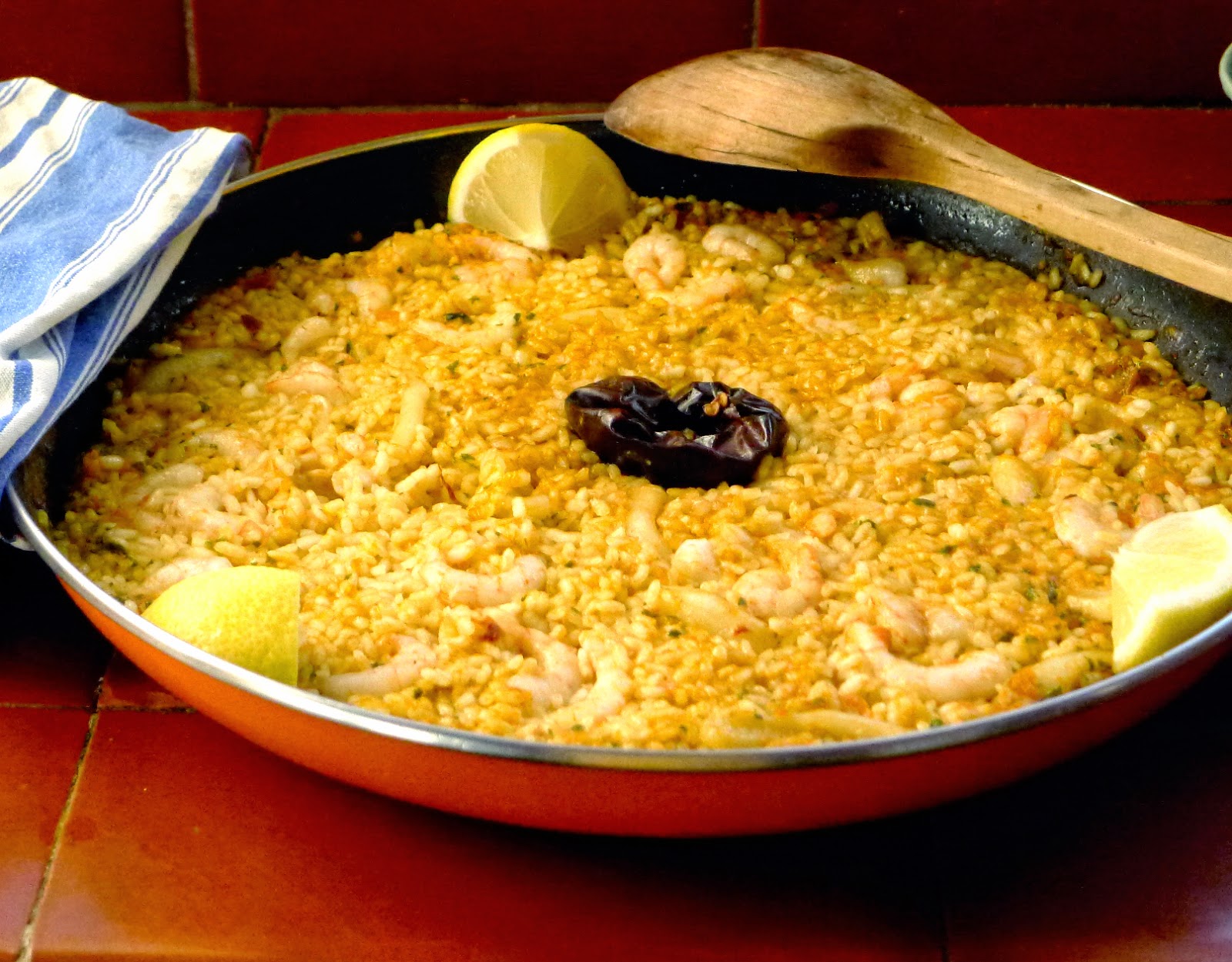
| Rice with cuttlefish, peas, fava beans and artichokes. |
 |
| Salad with peas, potatoes and fresh mint. The wildflowers bloom right next to the pea patch. |
 |
| For a rainy spring day--split-pea soup with carrots, chard and fresh peas. |
Salteado de Gusiantes con Jamón
Sauté of Peas with Ham
Sauté of Peas with Ham
 |
| With poached egg, peas are a main dish. |
This is the sort of dish that might be served as a starter or tapa in
Spain. Garnish with a little chopped cooked egg, if desired. Or, top a
serving with a poached egg and serve it as a luncheon or supper dish.
For this recipe, I used garden peas that had been blanched, so they only needed to reheat in the sauté pan. If using frozen or raw peas, let them cook for 5 minutes.
You will need about 1 ¼ pounds of peas in their pods to make 1 cup shelled peas.
Serves 6 as a starter or side; 3 as a supper dish.
3 cups shelled peas (about 1 pound)
3 tablespoons olive oil
½ cup finely chopped spring onion or scallions
1 clove garlic (optional)
3 ounces chopped serrano ham (about ½ cup)
1 tablespoon dry Sherry or white wine (optional)
Salt and freshly ground black pepper
Eggs (optional), hard-cooked and chopped or poached
Heat the oil in a medium skillet and add the onions and garlic, if using. Sauté very gently until onion is almost melted, about 6 minutes. Add the ham and sauté 2 minutes. Add the Sherry, if using, and cook until liquid has evaporated and ham is sizzling in the oil again.
Add the peas to the skillet. Sauté, stirring, until peas are cooked, about 5 minutes for fresh or frozen peas. Season with salt to taste and pepper.
Serve hot or room temperature. Garnish, if desired, with chopped hard-cooked egg. Or, top each serving with a poached egg.
You will need about 1 ¼ pounds of peas in their pods to make 1 cup shelled peas.
Serves 6 as a starter or side; 3 as a supper dish.
3 cups shelled peas (about 1 pound)
3 tablespoons olive oil
½ cup finely chopped spring onion or scallions
1 clove garlic (optional)
3 ounces chopped serrano ham (about ½ cup)
1 tablespoon dry Sherry or white wine (optional)
Salt and freshly ground black pepper
Eggs (optional), hard-cooked and chopped or poached
Heat the oil in a medium skillet and add the onions and garlic, if using. Sauté very gently until onion is almost melted, about 6 minutes. Add the ham and sauté 2 minutes. Add the Sherry, if using, and cook until liquid has evaporated and ham is sizzling in the oil again.
Add the peas to the skillet. Sauté, stirring, until peas are cooked, about 5 minutes for fresh or frozen peas. Season with salt to taste and pepper.
Serve hot or room temperature. Garnish, if desired, with chopped hard-cooked egg. Or, top each serving with a poached egg.

Cool way to poach eggs. Line a small bowl with plastic wrap. Add a little olive oil. Break an egg into the bowl. Sprinkle with salt and pepper. Twist the plastic to close tightly and tie. Submerge the egg packets in boiling water. Reduce heat to a simmer. Poach eggs 3 to 4 minutes. Remove the packets. Untie the plastic and carefully roll the eggs onto the plate of peas and ham.
Arroz con Guisantes y Sepia
Rice with Peas and Cuttlefish
Rice with Peas and Cuttlefish
 |
| A simple paella: rice, cuttlefish, vegetables. |
Instead of a whole head of garlic, I used a stem of immature garlic from the garden.
3 tablespoons olive oil
1 small head of garlic
1 pound cleaned cuttlefish, cut in pieces
1 tomato, grated (½ cup pulp)
1 small artichoke
¼ cup white wine
¼ teaspoon saffron threads, crushed
¼ cup hot water
1 ½ cups rice
3 cups water
1 ½ teaspoons salt
1 cup shelled fava beans
1 cup shelled peas
Lemon slices, to serve
Heat the oil in a paella pan or deep skillet. Fry the whole head of garlic. Add the pieces of cuttlefish and sauté for a few minutes. Add the grated tomato pulp.
Strip off and discard outer leaves from the artichoke. With a serrated knife, cut the artichoke into quarters. Use the tip of a small knife to nip out the fuzzy choke. Add the quartered artichoke to the pan.
Add the wine and cook until wine has evaporated.
Place the crushed saffron in a small bowl and add the hot water. Allow to infuse for 5 minutes.
Add the rice to the pan and allow to sauté a few minutes. Add the water, salt, fava beans and the saffron-infused water. Bring to a boil, then reduce heat to medium and allow rice to bubble for 10 minutes. Add the peas. Place the head of garlic in the center of the rice. Reduce heat and cook until liquid is absorbed and rice is nearly tender, about 8 minutes. Don’t stir the rice.
Remove the pan from the heat and allow to set for 10 minutes. Serve with lemon slices.
Ensalada de Patatas y Guisantes
Potato and Pea Salad with Mint
Potato and Pea Salad with Mint
 |
| Mint leaves lend a fresh springtime flavor. |
Mint gives this salad a fresh, springtime flavor. Stir the cooked peas into the potatoes and dressing immediately before serving, so the vinegar dressing does not leach the green color from the peas.
Serves 6.
¾ pound small new potatoes
½ teaspoon Dijon mustard
2 tablespoons Sherry vinegar
¼ cup extra virgin olive oil
½ teaspoon salt
1 cup shelled peas
¼ cup fresh mint leaves, chopped
Cook the potatoes in boiling salted water to cover until they are tender. Drain and let them cool. Cut the potatoes in quarters and place in a bowl.
Combine the mustard and vinegar. Whisk in the oil until dressing is emulsified. Season with salt. Pour over the potatoes. Let them marinate at least 1 hour or, refrigerated, overnight.
Cook the peas until tender, 5 to 7 minutes for frozen or shelled peas; 2 minutes for small garden peas.
Immediately before serving, stir the peas into the potatoes with some of the chopped mint. Place on a serving plate and sprinkle remaining mint on top. Serve room temperature.
Serves 6.
¾ pound small new potatoes
½ teaspoon Dijon mustard
2 tablespoons Sherry vinegar
¼ cup extra virgin olive oil
½ teaspoon salt
1 cup shelled peas
¼ cup fresh mint leaves, chopped
Cook the potatoes in boiling salted water to cover until they are tender. Drain and let them cool. Cut the potatoes in quarters and place in a bowl.
Combine the mustard and vinegar. Whisk in the oil until dressing is emulsified. Season with salt. Pour over the potatoes. Let them marinate at least 1 hour or, refrigerated, overnight.
Cook the peas until tender, 5 to 7 minutes for frozen or shelled peas; 2 minutes for small garden peas.
Immediately before serving, stir the peas into the potatoes with some of the chopped mint. Place on a serving plate and sprinkle remaining mint on top. Serve room temperature.
 |
| Wildflowers, garden peas, April showers. Must be springtime. |