Showing posts with label sugar-free. Show all posts

Saturday, December 27, 2025

DECADENT (SUGAR-FREE) FINALE TO 2025

Luscious turrón mousse to finish the year.
 

Looking ahead to festive dining on New Year’s, before the inevitable January diet, I am planning a meal a little decadent, luxurious with calories. I’ll throw some foie gras into the serving of black-eyed peas, flambé the tenderloin with fine brandy, and, for dessert, indulge in a rich mousse of cream and turrón, almond nougat candy.


It’s a rich dessert, no matter how you figure. But I am making it with no sugar! I found sugar-free versions of both the crunchy-hard Alicante and the fudgy-soft Jijona turrón that are made with sweeteners such as malitol and sorbitol. You might even like them better than the original, sugar-laden turrón! The mousse requires no gelatin and is absolutely simple to prepare. 

If sugar-free is not your thing, you can make the recipe with regular soft turrón containing sugar. Look for Spanish turrón at specialty food shops or order from LaTienda.

A layer of cookie crumbs (crushed polvorones) forms the base for the cream. Toppings of grated dark chocolate, chopped salted almonds, or ground cinnamon. Or, why not? all three. 

Luscious and so easy to make.

Almond Nougat Mousse
Espuma de Turrón


Crumbled polvorón.
Use whipping cream that has been well-chilled. Chill the bowl and beaters by placing them in the freezer 30 minutes before whipping the cream. If desired, sugar or sugar substitute can be beaten into the cream. 

A layer of crumbled cookies (polvorones*) make a base for the creamy mousse. Use any cookie crumbs if polvorones are not available. Once the mousse has been scooped into dessert cups, sprinkle the tops with grated dark chocolate (look for sugar-free chocolate), chopped fried almonds, ground cinnamon, or all three! Cover the cups with plastic wrap and refrigerate for up to 2 days. 

Soft turrón mashes easily.
Makes 5 (½ -cup) servings
 
8 ounces (Philadelphia) cream cheese, room temperature
1 (150-gram/ 5 ¼- ounce) bar of (sugar-free) soft almond turrón, room temperature
1 teaspoon vanilla extract
1 tablespoon rum or Brandy de Jerez
Pinch of salt
1 cup whipping cream, chilled
Sugar or sugar-substitute (optional)
1-2 (sugar-free) polvorones (crumbly cookies) 
Topping: grated dark chocolate, ground cinnamon, or chopped salted almonds

Combine the cream cheese, turrón, vanilla, rum, and salt in a blender. Blend until smooth. 

In a chilled bowl, whip the cream until stiff adding sugar/substitute, if desired. Whisk a spoonful of the cream cheese-turrón mixture into the cream then gently fold the remainder into the cream. 

Crush the polvorones and place a spoonful in the bottom of 5-6 dessert cups. Spoon the mousse mixture into the cups. Top them, as desired, with chocolate, cinnamon, and/or chopped almonds.

Cover the dessert cups with plastic wrap and refrigerate until ready to serve. 

*Polvorones are a popular Andalusian Christmas cookie confected of lard, sugar, ground almonds, and flour. Their name means "powdery" because they easily crumble to bits. See more about polvorones and the similar mantecados here.

***   ***   ***
Here are more suggestions for New Year dining:
Almond Nougat Mousse This version is with eggs and gelatin (and I see that I used the same dessert cups!)


HAPPY NEW YEAR!


FLAVORS OF AL-ANDALUS 
The Culinary Legacy of Spain

FLAVORS OF AL-ANDALUS, The Culinary Legacy of Spain. Here's a fresh angle on the traditional cooking of Spain, with 120 recipes that trace their roots to Moorish Spain. See below for where to order. 

This cookbook explores the fascinating story of the deep and lasting influences that Islamic culture has left on modern Spanish cooking. 
Author and Spanish cooking expert Janet Mendel tells the story of the Moorish influence on Spanish cooking through 120 recipes and photographs for modern-day dishes, from salads and vegetables to fish, poultry and meat to sweets and pastries, that trace their heritage to foods served in medieval times. Dishes from this era include exotic spices such as saffron, the use of fruits and almonds with savory dishes, and honeyed sweets and pastries. The flavors of al-Andalus live on in modern Spanish cooking and are what makes Spain’s cuisine distinctive from the rest of Europe. (Hippocrene Books)    


 Order on IndiePubs (USA) 

Use PROMO CODE HIPPOCRENE40 for 40% off on all Hippocrene titles at IndiePubs online bookstore.


Saturday, October 11, 2025

ALT CARROT CAKE

 
No-gluten, sugar-free carrot cake.

I baked a cake to celebrate other birthdays, but a cake of which I, too, with my various dietary restrictions, could partake. Call it “alternative” carrot cake. 


The carrots were real enough. But the batter was made with no-gluten flour and sugar substitutes. Instead of the original recipe’s bland “vegetable oil,” I used extra virgin olive oil. The sugar-free frosting should have been made with no-lactose cream cheese, but I was unable to find it. 

I’ve lived a sugar-free life for 20 years now, ever since I found I was pre-diabetic. No sugar, no honey, no maple syrup, but, yes to all fruits. I’m not pretending that fruit is  calorie-free, but it allows me a little wiggle room when it comes to dessert. 

Sugar is valued in baking for its hygroscopic properties, the ability to attract and hold moisture, as well as for sweetness. I have found that dried fruits such as raisins, prunes, and dates are superb substitutes for sugar. They add volume and keep the cake moist. 

I used dates for my carrot cake and I also added some King Arthur Baking Sugar Alternative, a 0-calorie product from the U.S. (erythritol, corn fiber, cane sugar fiber, monk fruit extract and stevia leaf extract). No-gluten flour is easy to find in supermercados in Spain.  Grated orange or lemon peel complements the fruity flavor of extra virgin olive oil. I also like spices such as ginger and cardamom with olive oil cakes. 

Dates give the cake sweetness. 

Extra virgin olive oil makes a moist, soft-crumbed cake.


Sugar-Free Carrot Cake
Bizcocho de Zanahoria sin Azucar

Serves 8. For a two-layered cake, double the recipe and bake in 2 pans.

1 cup no-gluten flour
1 teaspoon baking powder
½ teaspoon baking soda
1 teaspoon cinnamon
¼ teaspoon ground cardamon
¼ teaspoon ground ginger
1/8 teaspoon salt
½- ¾ cup pitted and chopped dates
¾ cup extra virgin olive oil
Grated orange or lemon peel
2 eggs
¼ cup baking sugar substitute (optional)
1 cup peeled and grated carrots
½ cup chopped walnuts
Frosting, optional (recipe follows)

Preheat oven to 350ºF. Lightly oil an 8-inch cake pan and line it with baking parchment.

Sift together the flour, baking powder, baking soda, cinnamon, cardamom, ginger, and salt.

Combine the dates, olive oil, and grated peel in a blender and blend until smooth.

In a mixing bowl beat the eggs with sugar substitute if using. Beat in the oil-date mixture until smooth. Fold in the carrots. Add the dry ingredients gradually and mix until well combined. Add the nuts. Pour into the baking pan. Bake the cake until a skewer comes out clean, about 35 minutes. Cool the cake in the pan 10 minutes. Turn out onto a rack. Remove parchment and let the cake cool completely. Place it on a cake platter. Spread frosting, if desired.

For the frosting:
Use lactose-free cream cheese, if available.

Cream cheese (approx. ½ cup)
Grated orange or lemon peel
Liquid stevia sweetener, to taste

Beat the cream cheese with grated peel until smooth. Add sweetener to taste. Spread on cake. 

***   ***   ***

Note: When I am testing recipes for traditional pastries and puddings, such as those that appear in my new cookbook, Flavors of al-Andalus, I use real sugar and honey, not substitutes. Yes, I taste, but I give away the rest. Interestingly, many Spanish "sweets" don't require sugar. An example is the dough for buñuelos, or fritters, that are customarily rolled in sugar after frying. 

***   ***   ***

More sugar-free cakes:


More gluten-free cakes:


***   ***   *** 

Did you know? The Arabs introduced sugar cane and the making of sugar to al-Andalus, the Muslim kingdoms of medieval Spain. Read more about sugar in my new cookbook, Flavors of al-Andalus.


FLAVORS OF AL-ANDALUS 
The Culinary Legacy of Spain

This new cookbook has lots of recipes for cakes, cookies, and pastries, perfect for upcoming holidays.  Ask for Flavors of al-Andalus from your favorite bookseller or click below to order. 

This cookbook explores the fascinating story of the deep and lasting influences that Islamic culture has left on modern Spanish cooking. 
Author and Spanish cooking expert Janet Mendel tells the story of the Moorish influence on Spanish cooking through 120 recipes and photographs for modern-day dishes, from salads and vegetables to fish, poultry and meat to sweets and pastries, that trace their heritage to foods served in medieval times. Dishes from this era include exotic spices such as saffron, the use of fruits and almonds with savory dishes, and honeyed sweets and pastries. The flavors of al-Andalus live on in modern Spanish cooking and are what makes Spain’s cuisine distinctive from the rest of Europe. (Hippocrene Books)    


 Order on IndiePubs

Use PROMO CODE HIPPOCRENE40 for 40% off on all Hippocrene titles at IndiePubs online bookstore.

***

Order on amazon

FLAVORS OF AL-ANDALUS by Janet Mendel is the #1 New Release in Spanish Cooking on Amazon!


***   ***   *** 

Saturday, February 25, 2023

MAGDALENAS—EVOCATIVE LITTLE CAKES

 
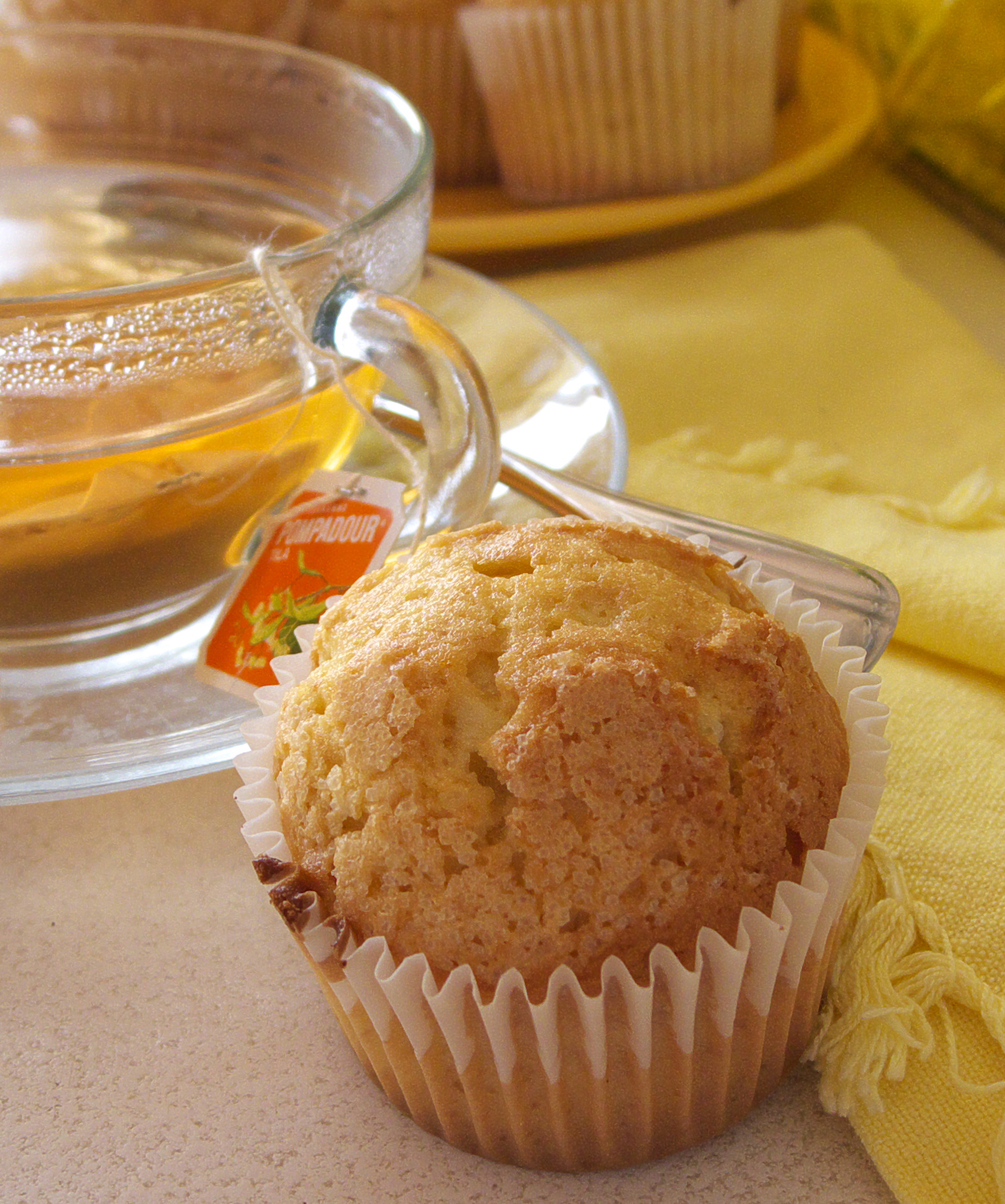
Magdalena with linden-flower tea.

If Proust had been named Pérez, he might have recalled dipping a magdalena, rather than a madeleine, into his tia’s cup of tila (linden-flower tea). The magdalena is Spain’s rendition of this little tea cake. 


A magdalena resembles a small muffin or a cupcake in size. Proust’s madeleine was baked in a small scalloped mold, but  nowadays magdalenas are generally round or square.

French madeleines are confected with butter, but the magdalena is made with oil, preferably extra virgin olive. It’s not as cakey as a cupcake, nor is it ever frosted. A magdalena is not as dense as a muffin and would not normally have anything such as raisins, blueberries or chopped nuts incorporated. It is basically a tiny sponge cake, scented with lemon zest.

In Spain, magdalenas are served for breakfast—lovely dipped in café con leche, milky tea or chocolate—or for merienda, afternoon snack, with a cup of tea. The Proustian memory is of his aunt dipping a madeleine into an aromatic tisane of tilleul (linden flower, lime blossom, tila in Spanish). Any herb tea or chai goes with magdalenas. Serve them with sweet wine or liqueurs as well. Magdalenas also make a good base for desserts—add fruit and whipped cream or a dollop of rich yogurt for a shortcake shortcut.  

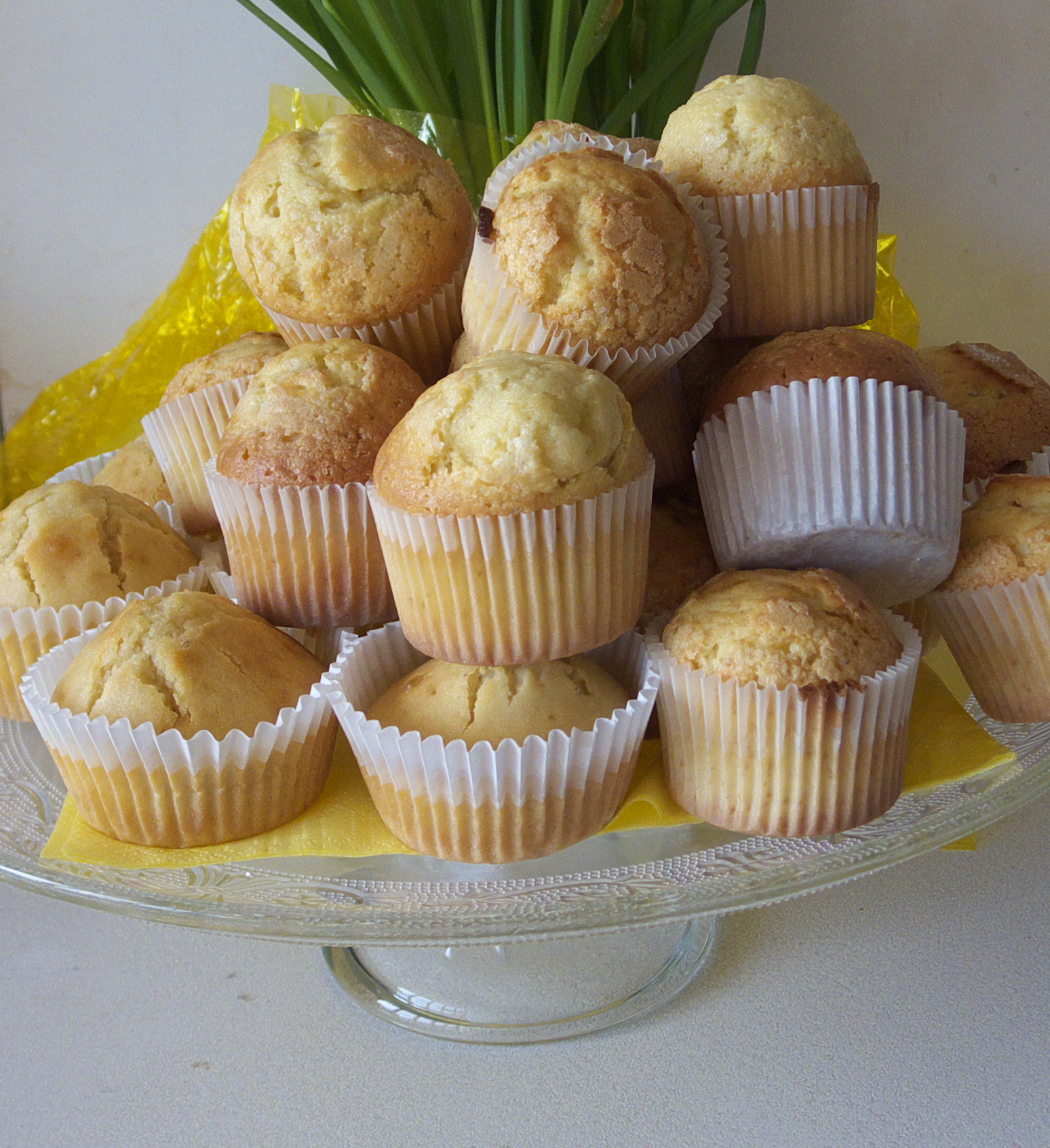
Not cupcakes, not muffins. These are magdalenas, small sponge cakes that make perfect snacks. 


Not overly sweet, the little cakes are scented with lemon zest.

Just right for a coffee break, a gluten-free magdalena. To dunk or not to dunk?


Use magdalenas as the base for desserts--on the left, with sliced strawberry and Greek yogurt; on the right, with sliced mango and caramel syrup. Yes, that is a giant strawberry in the foreground.


I’ve made two different batches of magdalenas. The second recipe is gluten-free, dairy-free, sugar-free. While these did not pouf up so high as the regular version, with wheat flour, they were equally delicious.

Lemon-Scented Tea Cakes
Magdalenas

A mild-flavored olive oil, such as Arbequina, is good for these delicate cakes, but any extra virgin olive oil is fine. 

Although not traditional, I have added a pinch of saffron, infused in the milk, to the batter. It adds a subtle flavor and golden color.   

Two important tips to making these little cakes. One, beat the eggs and sugar until they are thickened and pale, four or five minutes with electric mixer or whisk. And, secondly, allow the batter to chill at least four hours before baking.

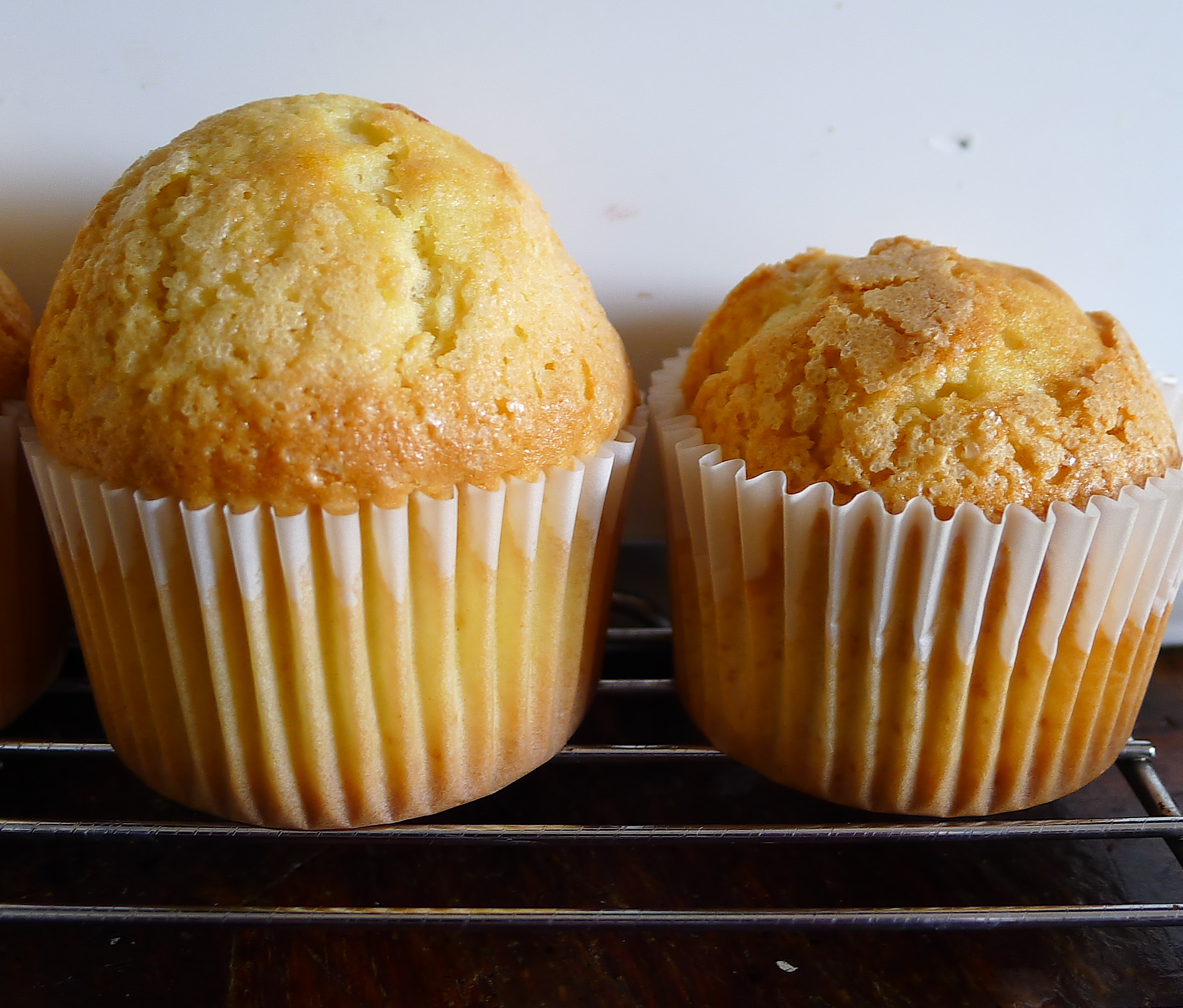
Chilling the batter makes a puffier cake.


The experiment: I divided one batch of magdalena  batter in half. I baked off one half (eight cakes) immediately. I chilled the remaining batter 4 hours before baking eight more cakes. The second batch, from chilled batter (the cake pictured on the left), rose a half-inch higher than the first (pictured on the right).  I don't know why, but chilling the batter  produces cakes that are nicely domed. (The gluten-free cakes, not pictured here, were chilled before baking, but did not pouf up as high as the regular ones.)  I suggest chilling the batter  for at least 4 hours and up to 24 hours before baking. 


Makes 16 (2 ½-inch) cakes

2 cups all-purpose flour
2 teaspoons baking powder
½ teaspoon salt
¼ cup milk
Pinch of saffron threads (optional)
3 large eggs
¾ cup + 1 teaspoon sugar
½ cup extra virgin olive oil
Grated zest of 1 lemon

Sift together the flour, baking powder and salt. Set aside.

Combine the milk and saffron, if using.

Beat the eggs in a mixing bowl for one minute. Add the ¾ cup of sugar and beat with an electric mixer until the mixture is pale and thick and increased in volume, 3 minutes. Beat in the milk with saffron, then the oil. On low speed, beat in the sifted flour.

Cover the bowl and refrigerate the batter for 4 hours or up to 24 hours.

Preheat oven to 425ºF. Place cupcake liners or muffin papers (cápsulas para magdalenas) in muffin trays. Remove batter from the refrigerator. 

Sprinkle on sugar before baking.
Fill the liners ¾ full. Sprinkle tops with a little sugar. 

Place the tray(s) in the oven. Reduce oven temperature to 400ºF. Bake 15 minutes without opening the oven. Test the cakes for doneness. They should feel springy when lightly pressed and a toothpick inserted comes out clean. Return them to the oven until lightly golden, about 3 minutes more.

Cool the trays on a rack 5 minutes. Carefully remove the cakes from the trays and cool completely on a rack. The cakes keep in an air-tight container up to a week.


Gluten-Free Tea Cakes
Magdalenas sin Gluten

I used a mix (total 1 ¾ cups, about 7.5 ounces) of rice flour and cornstarch (cornflour) in place of all-purpose wheat flour. You could use any gluten-free cake flour. I added almond flour for a little texture. 

I used a non-caloric sweetener especially for baking (King Arthur® Baking Sugar Alternative). This product, which I have not found in Spain, has a mix of ingredients that, like sugar, adds volume and bulk as well as sweetness to baked goods.  

On a whim, I mixed about ½ teaspoon of dried linden flowers (from a tila tea bag) with the flour. I did not notice the flavor in the finished magdalenas whatsoever, so I’ve not included that ingredient in the recipe. I think it would require a larger quantity of the dry leaves or else a strong infusion. 

Two kinds of gluten-free flour.

Makes 10 (2 ½-inch cakes).

¾ cup rice flour
1 cup cornstarch
2 teaspoons baking powder
½ teaspoon salt 
1/3 cup almond flour (unsweetened)
3 eggs
¾ cup sweetener for baking or sugar
1/3 cup extra virgin olive oil
¼ cup almond milk (unsweetened)
Grated zest of 1 lemon

Sift together the rice flour, cornstarch, baking powder and salt. Stir in the almond flour. Set the dry ingredients aside.

Using an electric mixer, beat the eggs in a bowl until they are pale and increased in volume, 4 minutes. Beat in the sweetener or sugar. Beat in the oil and the milk. Add the lemon zest. Fold in the dry ingredients until batter is smooth. Cover and chill the batter at least 4 hours and up to 24 hours.

Preheat oven to 400ºF. Line muffin cups with liners. Remove the batter from the refrigerator. Fill muffin cups ¾ full. Place them in the oven and reduce oven temperature to 375ºF. Bake about 18 minutes until cakes are lightly golden and springy when pressed lightly.

Cool the muffin cups on a rack 5 minutes. Remove the cakes and cool completely on a rack. Store the cakes in an air-tight container.

The gluten-free magdalenas did not pouf up as much as the regular ones, even though the batter was chilled. 

More recipes for gluten-free and sugar-free baked goods: