Is pastel a cake or a pie, a tart or, simply, “pastry”? This spinach pie—or is it a tart?—is called “pastel.” I was reminded of pastel de espinacas a couple weeks ago when I made a Sephardic dish, called mina, for a vegetarian Passover meal. It consists of spinach with egg-cheese custard layered with matzo. That recipe is Turkish-Sephardic, but it probably came originally from Spain. So I went searching for the Spanish original that doesn’t require matzo to make.
“Pastel” is usually a custardy mixture, often with vegetables, baked in a crust, open-faced, like a tart, or completely encased. But it can also be baked with no crust in a loaf pan, thus, more of a terrine (also called cuajado). Versatile and delicious, the pastel can be served either hot or cold. Add a grain salad for a vegetarian lunch. Pair it with smoked salmon for brunch. Pack the pastel on a picnic.
 |
| This spinach tart has a flaky pastry crust, a cheesy-spinach layer, a custard layer and cheese-crumb topping. |
 |
| Serve the tart with a grain salad for a vegetarian lunch. |
 |
| Or, pair the tart with smoked salmon for brunch. |

Spinach Tart
Pastel de Espinacas
The spinach tart is vegetarian, but it can be embellished with diced bacon or ham, if desired.
You could use store-bought prepared pie dough. I made a simple pasta quebrada, flaky pastry crust with olive oil. Bake the open-faced tart in a round, square or rectangular pan.
Any soft or crumbly cheese, such as well-drained cottage cheese, ricotta or crumbled feta cheese, is suitable for the tart. I used queso fresco de cabra, a soft, fresh white goat’s milk cheese. Part of the cheese-egg-milk mixture gets mixed with the spinach; the rest goes on top of the spinach to form a custard.
I used two bags of fresh spinach, weighing about 1 ¼ pounds. Once cooked and drained, the spinach weighed 12 ounces, making about 1 ¾ cups. Frozen spinach can be substituted for fresh. After thawing, be sure to squeeze out as much moisture as possible.
For the olive oil crust (pasta quebrada) :
1 ¼ cups flour + additional for rolling out dough
¼ teaspoon salt
¼ teaspoon baking powder
1 egg, separated
3 tablespoons olive oil + additional for the tart pan
4-5 tablespoons water
Combine the flour, salt and baking powder in a mixing bowl. Place the egg yolk in a small bowl. (Reserve the egg white to add to the spinach pie batter.) Whisk the oil and 4 tablespoons of water with the yolk.
Make a well in the center of the flour and pour in the yolk-oil-water mixture. Gradually stir the flour into the liquid ingredients to make a soft dough. Add additional water if necessary. Turn the dough out on a lightly floured board and gently knead just to combine the ingredients well. Gather the dough into a ball and place it in the bowl. Cover with a clean cloth. Leave at room temperature to rest at least 1 hour. (The dough can be prepared a day in advance, wrapped in plastic wrap and refrigerated. Bring it to room temperature before rolling out.)
 |
| Line baking pan with dough. |
When ready to bake the tart, roll the dough out on a lightly floured board into a rectangle. Fold it in thirds and roll it out again. Repeat, folding and rolling two more times.
Oil a (9X12-inch) baking pan. Roll the dough into a rectangle to fit the baking pan. Roll the dough onto the rolling pin and lift it onto the baking pan. Line the bottom and part way up the sides of the pan with the dough.
 |
| Soft goat's cheese with spinach for the filling. |
For the spinach tart:
1 ¼ pounds fresh spinach
3 tablespoons olive oil
2-3 leeks and/or spring onions, chopped (2 cups)
2 cloves garlic, chopped
1 ounce diced bacon (optional)
Salt
Freshly ground black pepper
Pinch of ground cloves
4 eggs (or 3 eggs + 1 reserved egg white)
16 ounces queso fresco or equivalent cheese
1 cup evaporated milk
Grated nutmeg
Tart pan lined with pastry dough (recipe above)
2 ounces grated cheese (1 cup)
1 ounce fine dry bread crumbs (¼ cup)
1 teaspoon pimentón de la Vera (smoked paprika)
 |
| Cook, drain and chop the spinach. |
Wash the spinach if necessary. Place in a pot with a little water. Cover and cook until the leaves are wilted. Drain well. When cool, pick up handfuls of the spinach and squeeze out as much liquid as possible. Place the cooked spinach on a cutting board and chop it coarsely.
Heat the oil in a skillet on moderate heat. Add the chopped leeks or onions, garlic and bacon, if using. Sauté until leeks are softened, but not browned, 10 minutes. Add the chopped spinach to the skillet. Season with ½ teaspoon salt, pepper and cloves. Remove from heat and let cool.
Preheat oven to 400ºF.
Combine the eggs, cheese and evaporated milk in a deep mixing bowl. Use an immersion blender to beat the ingredients until smooth. Season with salt (½ teaspoon or to taste—depending on how salty the cheese is) and nutmeg.
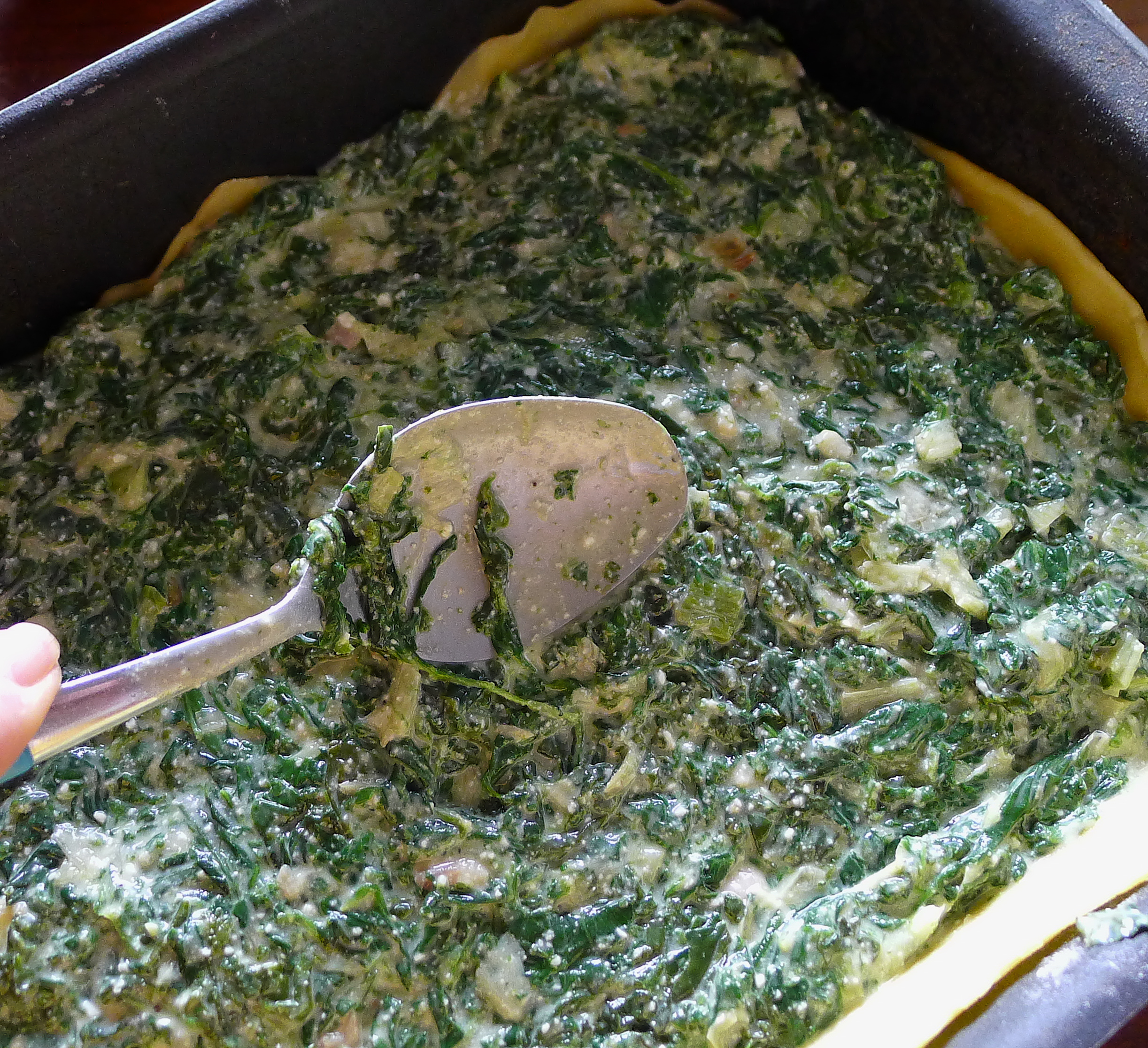 |
| Spread spinach on crust. |
Mix 1 ½ cups of the egg-cheese-milk mixture into the spinach. Spread the spinach evenly in the dough-lined pan. Pour the remaining egg-cheese-milk mixture evenly on top of the spinach.
In a small bowl, combine the grated cheese, bread crumbs and pimentón. Sprinkle the cheese-crumb mixture on top of the tart.
Bake 10 minutes. Lower temperature to 375ºF. Bake until a skewer comes out clean, 25 minutes more. Let the tart rest 10 minutes before slicing. Serve it hot, warm, room temperature or chilled.
 |
| Grain salad to accompany the spinach tart. |
The grain salad served with the spinach tart is made with wheat berries, a product called trigo tierno that only needs 10 minutes cooking time. Farro or barley would be a good substitute. The grains are mixed with chopped radishes, scallions, celery, cucumber, cherry tomatoes and pistachios. The dressing is extra virgin olive oil, lemon juice and chopped mint plus salt and pepper.

 |
| This is a slice of mina, the spinach-cheese-matzo Passover pie that I made a couple weeks ago. Obviously related to pastel! |
More versions of pastel, tart, terrine, pie and timbale:


