Showing posts with label bitter orange. Show all posts

Saturday, March 8, 2025

BITTER ORANGES ARE TRENDING


My blog stats show that a post about how to use bitter oranges has been the most viewed in the past few months. (Followed by “ways to serve smoked trout,” all about that “pink fish called rosada,” and rising fast, “searching for the best tomato.” Falling from top position is one of my earliest posts, “clay pot cooking, cazuela edition.”


The season for bitter oranges—or as I prefer to call them, sour oranges—is coming to an end. The orange trees on the streets of Sevilla are beginning to blossom. I’m picking what’s left on my tree. So I’m in sour-orange mode, using them in lots of different ways. (See the links at the end for more recipes using sour oranges.) You can use sour orange juice pretty much in any way you would use lemon juice or vinegar, in uncooked dressings such as ceviche, escabeche or adobo as well as in cooking. If you haven’t got sour oranges and want to mimic their citric flavor, use equal parts sweet orange juice and white wine vinegar.

This week I swapped sour juice for sweet orange juice in a marinade for roast pork (that recipe is here). I made a quickie sauce, more of an aliño or dressing. It was brilliant with the pork as well as with broccoli and sweet potatoes.

This tangy orange sauce complements meat, vegetables, sweet potatoes.

Sauce is picante--spicy-hot--with chiles. Adjust the amount to your tastes.


Sour Orange Sauce
Aliño de Naranja Agria 


Add chiles (or chile crisp) to taste. 

¼ cup packed parsley
3 tablespoons cilantro
1 clove garlic
¼ cup chopped scallions
1-2 chiles, stems and seeds removed
½ teaspoon grated (sweet) orange peel
¼ cup sour orange juice
¼ cup extra virgin olive oil
Salt to taste

In a mini food processor finely chop the parsley, cilantro, garlic, scallions, and chiles. Add the orange peel, juice, and oil. Process until smooth. Season to taste with salt. Store refrigerated but bring the sauce to room temperature to serve.

More about using bitter/sour oranges in cooking:


Saturday, January 14, 2023

WHAT TO DO WITH BITTER ORANGES


Bitter orange tree in my garden.

Sure, you could make marmalade. But, not if  you’re the city of Sevilla, where ornamental bitter oranges are emblematic. Sevilla has some 50,000 urban orange trees, creating a major headache for the crews which, during January and February, must pick the fruit before it rots and falls. The oranges on city streets cannot be used for making commercial marmalade because the leaves and skin of the fruit absorb contaminants. 


A pilot project started in Sevilla in 2020 uses street oranges to make juice, which, in fermenting, creates methane that can be converted into biofuel to generate electricity to power the city’s residual water treatment plants. So far, this accounts for only about 3.5 percent of the fruit collected. With funding, the project may continue to expand. Another 7.7 percent of oranges goes to dumps where some become compost. The lion’s share—88.8 percent—is used for industrial purposes such as the distillation of essential oils and to manufacture livestock feed. (These figures are from an article in Diario de Sevilla.)

These oranges, native to China, were first planted in Spain by the Romans. But it was the Moors (Arabs) who extended the plantings widely. The essential oils were used medicinally and as a fragrance. The naranja amarga, known in English as the “Seville orange,” is not actually bitter. The peel is bitter, the juice is sour. Really sour. As mouth-puckeringly tart as lemons. 

Sour oranges can be used in any way you use lemons. Squeeze some on vegetables (brilliant with artichokes and asparagus); on fried fish, in salads. The juice makes a terrific vinaigrette. Or, use it to make a classic orange sauce as in Duck a l'Orange. Biofuel, anybody?

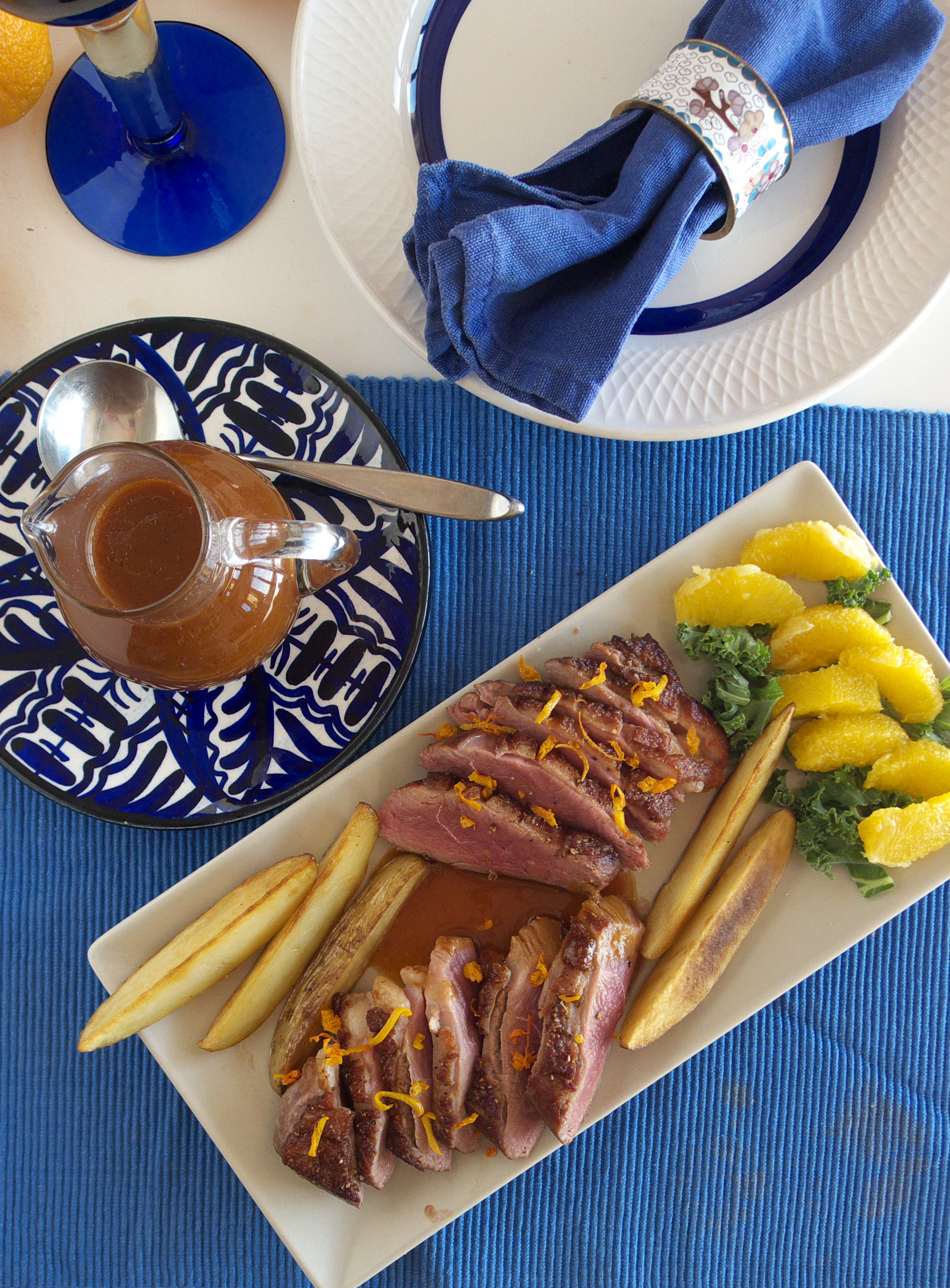
A variation on classic Duck a l'Orange, here made with duck breast. The sauce is made with the juice of sour oranges.


Coleslaw with a difference--shredded cabbage, fennel and carrots are mixed with pieces of sweet orange and dressed with a sour orange vinaigrette.


The same vinaigrette used for the coleslaw is poured over roast salmon. The vinaigrette is made with equal parts sour orange juice and extra virgin olive oil, a half-teaspoon of sesame oil, grated ginger, grated (sweet) orange zest, and chile paste to taste. 


Roast fillet of salmon with a side of slaw, both dressed with sour orange vinaigrette and speckled with black sesame.


Sour orange sponge pudding, baked in oven-proof cups.

Duck Breast a l’Orange
Magret de Pato a la Naranja

Classic French Duck a l’Orange is actually Canard au Bigarade—duck with a sauce made with sour oranges—not, a la Julia Child, with sweet oranges. Bigarade is the Provençal name for the Seville bitter orange. So tangy is the sauce that it really needs the addition of caramel, which both deepens the color of the sauce and sweetens it.

Although the classic recipe calls for roast duck, I’m making a version using magret, boneless duck breast, that cooks in minutes. 

Starting point for the orange sauce is a deeply flavored brown stock. Make it with beef bones or pieces of duck carcass that have been browned in the oven. Add aromatics and herbs and canned tomatoes for depth of color. Take care not to add too much salt, as the stock is going to be reduced, which concentrates the salt.

You can make caramel (melt sugar until dark brown, dissolve it in some water or vinegar to make it  sauce consistency) or, as I chose to do, use store-bought bottled liquid caramel (look for it on the shelves with the baking and pudding ingredients). 

Sour oranges for juicing.

Makes enough orange sauce for 3 duck breasts or 1 whole roast duck.

1 orange (bitter or sweet)
1 ½ cups brown stock (beef and/or duck)
2 teaspoons cornstarch
1 ½ cups sour orange juice, strained
Salt
Freshly ground black pepper
2 tablespoons liquid caramel
2 tablespoons rendered duck fat or butter
Duck breasts, each about 14 ounces
Sweet orange segments to garnish (optional)


Use a vegetable peeler or zester to remove the zest from the orange without any white pith . Cut the zest into julienne slivers. Blanch the zest in boiling water 1 minute and drain. Return the zest to the pan with fresh water, bring again to a boil. Cook sweet orange zest 4 minutes and drain. If using bitter orange peel, cook it 10 minutes. Drain well. Pat dry and reserve the slivered zest.

Place ¼ cup of the stock in a small bowl with the cornstarch. Stir to blend. Combine the remaining stock and sour orange juice in a saucepan. Bring to a boil, reduce heat to medium and cook, uncovered, until the liquid is reduced by half (about 20 minutes). Whisk in the cornstarch mixture and cook until the sauce is slightly thickened. Add salt and pepper to taste. Remove from heat and whisk in the liquid caramel. (Sauce can be made in advance. Reheat when duck is ready to serve.) Before serving, whisk duck fat or butter into the hot sauce.

Score the fat of the duck breast.

For the duck breast: Use a sharp knife to score the fatty side of the duck breast in a diagonal cross-hatch, without cutting into the flesh. Sprinkle generously with salt and pepper. Allow to stand at room temperature for 30 minutes.

Heat a heavy skillet on medium heat. Brown the duck breast, fat side down, until fat is crisped and browned, 4 to 5 minutes. Very carefully drain off excess fat. Turn the duck breast and cook until browned, 3 to 4 minutes. Turn the breast on end to brown the edges. The duck should be browned on the outside and rare in the center.

Remove to a cutting board and allow it to stand 10 minutes. Slice crosswise into ½-inch slices. Arrange slices on a platter or individual plates. Spoon some of the sauce over the duck. Sprinkle with the strips of zest. Garnish, if desired, with sweet orange segments. 

Tangy orange sauce complements the rich and fatty duck breast. The segments used as garnish are sweet orange.


Duck breast is usually served rare. Strips of blanched orange zest garnish the duck.


Sour Orange Sponge Pudding
Flan Bizcochado de Naranja Amarga


This is based on an old favorite dessert recipe, Lemon Sponge Pudding (in The Joy of Cooking by Rombauer and Becker). I like it tart! I’ve used less sugar than called for in the original recipe, even though I have substituted sour orange juice for sweet. 

Serves 4.

½ cup sugar
1 ½ tablespoons butter
1 tablespoon grated zest from a sweet orange
2 large eggs, separated
3 tablespoons flour
1/3 cup sour orange juice
1 cup evaporated milk

Preheat oven to 350ºF.

Cream together the sugar and butter. Add the zest. Beat in the egg yolks. Beat in the orange juice. Add the flour and milk.

Beat the egg whites in a clean bowl until they form stiff peaks. Fold the egg whites into the batter. 

Grease 4 custard cups or oven-proof pudding bowls. Set them in a pan with 1 inch of hot water. Ladle the batter into the cups. Bake until the pudding is set, 40 minutes.  Serve the puddings in the custard cups in which they baked.


More recipes using bitter oranges:


Saturday, March 3, 2018

RINGING THE CHANGES ON SOUR ORANGES

Do you ever start out to make one recipe, then change your mind and turn the ingredients into something else altogether? That’s what I did. I picked sour oranges from a tree that’s about to be cut back and grafted to produce sweet eating oranges. I intended to make a traditional fish soup, called cachorreñas.


Bitter orange tree will be grafted to produce sweet oranges.
Cachorreña is the local name for the bitter Seville orange, the marmalade orange or bigarade. The peel of the fruit is bitingly bitter; the juice is mouth-puckeringly sour. The bitter orange is used as rootstock for growing sweet oranges and is also grown for its decorative beauty and the heady perfume of orange blossoms in springtime.

I had gotten as far as making the fish stock for the soup, with head, bones and trimmings from fresh hake, with a strip of orange zest, a whole tomato, green pepper and onion. That’s when it occurred to me to make a thick sauce instead of soup. And, instead of cooking the hake fillets in the soup, maybe bake them? Grill? Batter-fried!

Crisp, beer-battered fried fish is served with sour orange sauce and sweet orange salad on the side.

In Spain, the bitter oranges are used as an aliño, dressing, for salads. They can be substituted for sweet oranges in remojón, orange and cod salad. The juice is added to marinades and meat stews. Sopa de cachorreñas is a fish soup with sour orange typical of Málaga. In Cádiz a somewhat similar fishermen’s soup is caldillo de perro, or “dog” soup.

Mayonnaise made with sour orange juice in place of vinegar or lemon is terrific on asparagus or artichokes. The juice is perfect for making Peruvian ceviche, marinated fish. Use it, too, in Persian sweet-sour stews.  And, there's always marmalade made with whole, shredded bitter oranges that are exceptionally rich in pectin.

In Spain, bitter orange trees grow in public squares and streets, the fruit free for the picking. Bitter oranges can be found in the US in Latino groceries during winter months. (This is the end of the season.) If not available, I suggest using half white wine vinegar for the sourness, and half sweet orange juice.


Sour Orange Sauce
Salsa de Cachorreñas


Sour orange juice makes a tangy sauce to serve with fish, shrimp or vegetables such as asparagus.


This makes a pouring sauce that can be served room temperature. For a thicker, dipping sauce, double the quantity of bread (thickener) and add more salt to season. The sauce is also good with a couple spoonfuls of mayonnaise beaten into it. Try it with shrimp.


Makes 1 cup sauce.
Bitter peel, sour juice.

1 tomato
½ green bell pepper
1 small onion
Sprig parsley
1 bay leaf
Water or fish stock
Salt
½ cup packed day-old bread crumbs (1 ounce)
½ teaspoon pimentón (paprika), not smoked
1-2 cloves garlic
½ cup sour orange juice
¼ cup extra virgin olive oil
Dash of hot pepper sauce
1 tablespoon chopped scallions


Place the whole tomato, pepper, onion, parsley and bay leaf in a pan and cover with water or fish stock. Add 1 teaspoon salt. Bring to a boil and cook until the vegetables are very soft, about 15 minutes. Skim out the tomato, pepper and onion and discard the water, parsley and bay.

Place the bread crumbs in a blender. Add the pimentón. Slip the skins off the tomato and pepper and add them to the blender with the onion, garlic and sour orange juice. Blend until smooth. Gradually blend in the oil. Season the sauce with ½ teaspoon salt and a dash of hot pepper sauce. Stir in the chopped scallions.

Serve the sauce at room temperature.

Beer-Battered Fried Fish
Pescado Frito con Rebozado de Cerveza

Batter-fried fish is crisp on the outside, moist on the inside.

Use a white fish such as hake, cod, grouper or halibut.

Serves 4.

1 ½ pounds fish fillets
Salt and pepper
1 cup flour
1 teaspoon salt
½ teaspoon baking powder
¾ cup lager beer
Olive oil for frying


Cut the fish in 8 equal-sized pieces and place them on a plate in one layer. Sprinkle them with salt and pepper.

Place 2 tablespoons of the flour in a small bowl. Combine the remaining flour in a bowl with the salt and baking powder. Beat in the beer to make a fairly smooth batter about the consistency of thick cream. Let the batter set 30 minutes. 

Pat the pieces of fish with paper towels to absorb excess moisture. Sprinkle the reserved 2 tablespoons of flour on both sides of the fish.

Place oil to a depth of 2 inches in a wide, heavy pan. Heat the oil until it is shimmering  (360ºF/ 180ºC). A drop of the batter should immediately sizzle and rise to the top of the oil.

Dip the pieces of fish in the batter, letting excess run off. Place them, a few at a time, in the hot oil. Fry until golden on one side. Carefully turn the fish and fry until golden on reverse side (about 5 minutes total). Remove with a skimmer and place on paper towels to absorb excess oil. 

The fish stock I made with orange peel is in the freezer, ready to make the sour orange fish soup on another day.

Perhaps we should leave one branch of the tree ungrafted. I like having a few sour oranges every year.
 

Saturday, January 15, 2011

BITTER ORANGES--MOUTH-PUCKERINGLY DELICIOUS

I’ve watched as tourists reach up and pick an orange or two from the trees that grow in the village plaza, peel them and pop a bite into their mouths. What an expression as they taste the sour juice!

Orange trees planted in public plazas in Spain, such as the enchanting Patio de los Naranjos adjoining the cathedral in Sevilla, are the bitter orange, the same kind used for marmelade. The peel of the fruit is bitingly bitter; the juice is mouth-puckeringly sour. The bitter orange is used as rootstock for growing sweet oranges and is also grown for its decorative beauty and the heady perfume of orange blossoms in springtime.

The first orange groves in Spain which proliferated during Moorish rule (between the eighth and 15th centuries) were bitter oranges. The sour juice was a useful condiment in ancient times. The sweet orange, as we know it, was unknown until Portuguese travelers in the 15th century brought it from China.

Affectionately called cachorreñas, bitter oranges are used in quite a few Andalusian dishes. The following recipe is for an unusual fish soup that is subtly flavored with the sour juice. At its simplest, the soup is concocted with small bits of salt cod (bacalao) and served as a starter. I like to turn it into a main course, using big pieces of fresh hake. You could use cod or haddock instead of hake or any flavorful rock fish. If possible use head, bones and trimmings to make stock.

In the U.S., look for bitter oranges at Hispanic markets during winter months. (December-March). If they are not available, use half orange juice and half lemon juice in this recipe.


Fish Soup with Sour Orange 
Cachorreñas


This recipe comes from MY KITCHEN IN SPAIN, the book (HarperCollins).
       
Serves 4.

2 pounds whole hake, filleted, bones reserved (or 1 ½ pounds fillets)
2-inch strip of orange zest, blanched in boiling water
1 tablespoon salt
sprig of parsley
½ onion
1 tomato
1 small green pepper, seeds removed
1 bay leaf
1 cup lightly packed bread crumbs (2 ounces)
3 tablespoons olive oil
1 clove garlic
1 teaspoon pimentón (paprika, not smoked)
¼ teaspoon ground cumin
½ cup juice from bitter oranges (or orange and lemon juice)
thinly sliced orange for garnish
chopped scallions for garnish

Place the fish head, bones and trimmings in a soup pot and cover with 6 cups of water. Add the orange zest, salt, parsley, onion, whole tomato, pepper and bay leaf. Bring to a boil and simmer 30 minutes. (If head and trimmings are not available, cook the zest, parsley, onion, tomato, pepper and bay in water for 15 minutes.)

Strain the liquid into another pan. Discard the fish heads and bones, parsley, zest and bay leaf. Remove and discard the tomato core. Place the tomato, onion and pepper in a blender with ½ cup of the reserved liquid. Sieve the puree to remove skins and seeds. Return to blender with the bread crumbs, oil, garlic, pimentón and cumin. Blend until smooth.

Add the tomato mixture to the soup. Bring to a boil and cook 5 minutes.

Cut the fish fillets into 4 pieces. Add them to the soup and cook 5 minutes more. Hake is very delicate, so take care not to break it up. Stir in the orange juice and cook 1 minute more.
   
Serve the soup into 4 soup bowls, each with a piece of fish, garnished with a thin slice of orange and a sprinkling of scallions.

Cachorreñas-- Fish Soup with Sour Orange