Showing posts with label Fallas. Show all posts

Saturday, March 18, 2023

A TASTE OF VALENCIA FALLAS

 While most of us are chugging along with routines, thinking of spring holidays to come, the city of Valencia is celebrating its two-week festival, the Fallas, which culminates tomorrow (March 19) with a grand cremà, the burning of the ninots, gigantic effigies, creative, often satirical tableaux erected in the streets of the city. 


Besides brass bands, fireworks and dancing, food is an important element of the Fallas. This article (Las 9 Comidas Más Tipicas en las Fallas de Valencia)  lists “The Nine Most Typical Foods for the Fallas of Valencia”, so, without the gunpowder and noise, here’s a little Fallas flavor of Valencia.


1. Paella Valenciana. No sausage, no shrimp in Valencia paella. It's made with chicken, rabbit, wide green beans and butter beans. Check out the recipe here.


Fartons are buns for dunking in horchata.


2. Horchata con Fartons (Tigernut drink with Valencia sweet buns). If you like to dunk your doughnuts, you’ll love fartons. They are sweet buns—long and thick, like doughnuts gone straight. Fartons are perfect for dipping into a cup of thick chocolate or a tall glass of horchata. Horchata, or “orgeat,” is a sweet drink made with tigernuts (chufas). The recipe for fartons is below.


Puffy fritters made with pumpkin.


3.  Buñuelos de Calabaza (Fried Pumpkin Puffs). Sold at street stalls, but easy to make at home, these puffy fritters are real fiesta food. The recipe for the puffs is here.


Another Valencian rice dish.


4, Arroz del Senyoret (Rice for the Señoritos). A Valencian rice dish that’s not paella, cooked in flavorful fish stock with the addition of squid and shrimp. A version of it, arroz a banda, is here.


5. All i Pebre de Anguila (Eel in Garlic-Pimentón Sauce). I loved this dish in Valencia, but have never made it. No easy supply of eels. (Perhaps I will try the recipe with rosada.)


Fideuá, a pasta dish chock full of seafood.

6. Fideuá de Pescados y Mariscos. (Noodles with Seafood). While there's no seafood in Valencia paella, this pasta dish celebrates Valencia’s maritime tradition. Get the recipe here.

Bocadillo--a meal on a crusty roll. 


7. Esmorzaret (Snacks). This is the Valencian version of a segundo desayuno, or second breakfast, a meal between early breakfast and midday dinner. So important to keep a body going through days of festivities. Bocadillos, hefty sandwiches on thick bread rolls, eaten with draft beer or coffee, are typical. Street food or homemade. Here’s a selection of bocadillo ideas.


Churros with thick chocolate.


8. Churros con chocolate. (Fried dough strips with thick drinking chocolate). Street food for popular fiestas. Recipe for the drinking chocolate is here.


9. Cremaet (Coffee flambé). After all the burning, finish the Fallas with this concoction—rum, sugar and lemon peel flambéed in a glass to which espresso is added. Finale fiesta. And it didn’t rain!


Valencia Sweet Buns
Fartons

These sweet buns are perfect for dunking in coffee, drinking chocolate or horchata.


Horchata is a sweet and milky drink made by soaking ground chufas, tigernuts, in water (no dairy) and sweetening with sugar and cinnamon. 


Fartons have a light and spongy texture. 

For a light and spongy texture, use harina de fuerza, high-gluten bread flour, to make these buns. 
The buns are only slightly sweet, but a sugar-water glaze applied after baking adds to the sweetness. 


Makes 10 (7-inch) buns

1 ounce fresh yeast
¼ cup warm water
¼ cup sugar
2 ½ cups bread flour plus additional for rolling the dough
¼ cup sugar
1 large egg, lightly beaten
¼ cup vegetable or extra virgin olive oil
½ teaspoon grated orange zest
1 teaspoon salt
For the glaze:
1/3 cup confectioners’ sugar
1 teaspoon lemon juice
1-2 tablespoons water

Combine the yeast, water and 1 teaspoon of sugar in a small bowl. Stir well to combine. Let the yeast activate until bubbly, 10 minutes.

Sift the flour into a mixing bowl. Add the remaining sugar. Make a well in the center and pour in the yeast mixture and the egg. Gradually mix the flour into the yeast and egg. Add the oil, orange zest and salt. Use one hand to mix and squeeze all the ingredients together until the bowl comes clean.

Turn the dough out onto a clean work surface and knead it until smooth and stretchy, about 4 minutes. Form the dough into a smooth ball and place it in a lightly oiled bowl. Cover with a damp cloth or plastic film and leave in a warm, draft-free place until the dough doubles in volume, about 1 hour. 

Roll dough into balls.
Divide the dough into 10 equal pieces (each approximately 2 ounces). Working with one piece at a time, roll it firmly into a ball. Cover the balls of dough with a cloth and let them rest 15 minutes. 

On a lightly floured board, pat the ball of dough to flatten it, then roll it out thinly into a rectangle/oval approximately 7 ½ inches long and 5 ½ inches wide. Roll the dough into cylinder. 

Roll dough into a cylinder.


Place the rolls as they are shaped on baking sheet covered with baking parchment. Space the rolls about 1 ½ inches apart. They will spread during rising.
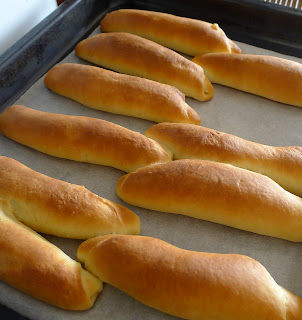
Let rise before baking.

Cover the rolls with a cloth and place in a draft-free place to rise until doubled in size, about 1 hour.

Preheat oven to 425ºF. Place the sheet of rolls in the oven and lower oven temperature to 400ºF. Bake the rolls 12 minutes or until golden. 

While the rolls are baking, make the sugar glaze. Combine the confectioners’ sugar, lemon juice and water to make a thick slurry. Stir well to dissolve the sugar.

Remove the rolls from the baking sheet, separating any which have baked together. Place them on a rack. While they are still warm, brush the rolls with the sugar glaze. Allow the rolls to cool completely. If desired, brush on a second coat of the glaze and again allow them to dry completely.


Saturday, March 16, 2019

FIESTA WITH A BANG

It´s Fallas in Valencia! Fallas is a week-long spring fiesta ending at midnight on San José day (March 19), where the protagonists are fireworks, firecrackers and giant bonfires to burn the fallas, or ninots, effigies, usually representing satirical and allegorical characters. 


The Fallas were originally a pagan festival marking the Spring equinox, a time for cleansing bonfires as fields were prepared for sowing. Over the centuries they became a popular fiesta incorporated into the Christian holiday of St. Joseph (which, by the way, is Spanish Fathers’ Day).

Besides the noise of firecrackers and smell of gunpowder, the festival is full of music (brass bands at 8 in the morning!), thousands of feria lights and good things to eat. Being Valencia, of course there’s paella and other rice dishes. Street stalls sell sweets and holiday fritters such as buñuelos de calabaza.

Buñuelos de calabaza are puffy fritters of fried dough that's made with squash.

Buñuelos are small fried doughnuts made with a pumpkin batter. They’re delicious eaten out-of-hand or dipped in thick, hot drinking chocolate or, if the weather is warm, cold horchata, a sweet and refreshing drink made of tigernuts.

I am terrorized by loud bangs, gunshot, firecrackers and the like. So I have never been to the Fallas in Valencia. But I’m celebrating with some quiet buñuelos with friends and family and touring the fallas--tableaux of images that will soon be put to the torch--on TV.

Puffs of fried dough, sprinkled with sugar, are good dunked in thick, hot chocolate.


The squash gives the puffs a nice color; grated orange zest flavors them.

Puffs are spongy on the inside.

Serve the puffs any time of the day. Breakfast? With a fruit salad.


Fried Pumpkin Puffs
Buñuelos de Calabaza

I made this with pureed butternut squash. The directions for making the puree follow the recipe. You could also use unsweetened canned pumpkin.

This recipe makes a soft, squishy yeast dough—more of a heavy batter than dough, really. The dough is formed into balls and a hole poked through them. They are then dropped into hot oil to fry until golden. To form them takes practice. My first two rounds were just misshapen puffs. It wasn’t until the third batch went into the hot oil that I managed to get my thumb through the dough to make a hole in the middle. 

It would be easier to have two people to make these—one with hands in the sticky dough, the other to turn the puffs and skim them out when golden. 

Another option: forget the doughnut hole. Use two spoons dipped in (cold) oil to scoop up a ball of dough and push it into the oil.

Moderate the heat as needed so the balls don’t brown too fast, otherwise the dough will not be fully cooked.

Serve the puffs at room temperature. They are best on the same day they are fried, but are pretty good the following day for dipping in hot chocolate.

Makes about 45 puffs.

1 cup warm water
1 teaspoon sugar + more to sprinkle on the puffs
1 envelope active dry yeast (2 ¼ teaspoons)
1 ½ cups unsweetened pumpkin or squash puree (see recipe below)
½ teaspoon salt
½ teaspoon grated orange zest
3 ½ cups plain flour
Olive or sunflower oil for frying

In a small bowl combine the warm water, 1 teaspoon of sugar and yeast. Stir and allow the yeast to set 5 minutes until it becomes bubbly.

Put the pumpkin puree in a large bowl. Stir in the salt and orange zest. Beat in the yeast water. Use a large wooden spoon to gradually stir in all the flour. Use spoon or hands to thoroughly mix the dough until very smooth. The dough will be loose, more like a heavy batter than like dough. 

Cover the bowl with plastic wrap and put in a warm place to rise for 1 ½ hours until doubled in bulk. (Dough can be prepared a day in advance of frying the puffs. Refrigerate it without rising. Remove from fridge and allow to rise before forming and frying the puffs.)

Place oil in a deep skillet or pan to a depth of at least 2 inches. Place on medium-hot heat. Place a bowl of water (for dipping fingers) near the pan. Have ready a skewer and/or heat-proof skimmer for turning and removing the puffs. Place a sheet pan covered with paper towels close at hand. 

Squeeze out ball of dough.
With the left hand, scoop up a handful of dough. Squeeze the squishy dough in the fist, extruding a “bubble” of dough (about the size of a walnut) from between the thumb and forefinger. Dip the right hand in water and pinch off the ball of dough with the fingertips. Stick your thumb through the center of the ball. Let it stretch slightly as you (carefully) drop the dough into the hot oil. Continue forming the balls and dropping them into hot oil. Don’t crowd the pan.

Skim puffs out of oil when they are golden-brown.
When puffs are golden-brown on the bottom, use a skewer or skimmer to turn them. Remove them when browned on all sides and drain on paper towels. Regulate the heat so the puffs don’t brown too fast, or the dough will not be cooked all the way through. Continue frying puffs in batches until all the dough is used.

Sprinkle the warm puffs with sugar. 

Sprinkle sugar on warm puffs.


Squash Puree
Puré de Calabaza

Hard-skinned pumpkin and winter squash are difficult to pare. But it’s easy to strip off the skin once they are cooked. I sliced the butternut squash and cooked it quickly in the microwave. You could also cook it in a little water or roast in the oven. 

To make 1 ½ cups squash puree:
1 butternut squash (approx. 1 ¾ pounds)

Sliced squash is easy to peel after cooking.
Cut the squash in half lengthwise and scoop out seeds and fibers. Cut the squash crosswise into 1 ½-inch slices. Place them in a microwave-safe bowl. Microwave on “high” for 5 minutes. Stir the slices to redistribute them. Microwave on high for 5 minutes more or until squash is very tender. 

Slice away peel.

When the squash is cool enough to handle, slice off and discard the skin. Drain any accumulated liquid. Mash the squash with a fork until smooth. It’s now ready to use in the puffs.


Only about a third of my buñuelos have holes! It takes some practice to poke a hole in the dough and drop it into the hot oil.


More recipes for fritters/buñuelos:

For dunking the buñuelos:

Also for dipping in drinking chocolate: Sweet and Crunchy Fried Bread.

Another recipe for San José day:

More about Valencian horchata.