Saturday, July 2, 2022

PLAYING THE MELON LOTTERY


Luck of the draw--from the top left, piel de sapo melon, seedless watermelon, Galia melon and, below, Dino variety. I am trying them all in search of the perfect melon.
 

I was putting the rush on summer. When the first piel de sapo melons showed up in the market, I bought one. What a disappointment! It, obviously, had been picked too soon, because it was not sweet, not juicy. I chose another, of the same variety, from a different grocery, and, then, yet another. Same result. 


Playing the melon lottery, I was coming up a loser. I feared it was going to be a bad year for melons. Or that I would have to switch allegiance and find a different variety.

Finally, by mid-June, came the sweet melons that I craved. By then, I had experimented with other melon varieties as well as watermelon, which matures earlier than most melons. 

How to increase your luck of the draw when it comes to melons? In the case of the piel de sapo variety, don’t even roll the dice before the holiday of Corpus Christi (this year, that was June 16). 

Piel de sapo means "toad skin."
This Spanish melon variety is extensively grown in La Mancha (central Spain) and exported to all of Europe. (In the U.S. it’s grown in California and Arizona and known as the “Santa Claus melon,” because its long-keeping qualities make it available for Christmas.) 

Unlike cantaloupe or Galia melons, the piel de sapo (the name means “toad skin,” for its rough green rind) has no fragrance, even when fully ripe. The sniff test will not distinguish a mature melon from an unripe one.

This variety is ovoid, football shaped, and often very large. Choose a melon that feels heavy for its size.  The skin should be dark green, striped or mottled with yellow.  

The best indicators of ripeness are a slight “give” when pressed on the blossom end and a yellow splotch (not white or pale green) on the side of the melon that rested on the ground. 

Once opened, the flesh is pale green to yellow in color. It should be crisp in texture, but juicy and very sweet. While it may look somewhat like Honeydew melon, its flavor is more complex and, when fully ripe, extraordinarily sweet.


A fairly new hybrid, Dino, so-called because it supposedly looks like a dinosaur egg, is perfectly round, white striped with green. The pale green flesh is fragrant and sweet, its texture is soft.   


The Galia variety of melon is small and round, with a webbed yellow rind. The flesh is pale yellow, sweet and fragrant; its texture is creamy.  

Cover any melon, once cut, with plastic wrap and store it refrigerated. 

What did I do with the not-ripe melons? I could not bear to pitch them in the compost. So I treated them like cucumbers. I made melon pickles, melon salad, melon gazpacho. Here are lots more ideas for what to do with melons, of any variety and any degree of sweetness. 

Pickled Melon
Melón en Vinagre

Build a salad or a sandwich around these bites of pickled melon.


Use any firm melon, unripe or very sweet, for this recipe. Rice vinegar may be used instead of white wine vinegar. It is less acidic than wine vinegar, so sugar is probably not needed.

1 pound firm melon (about 2 cups diced)
1 ½ teaspoons salt
½ cup shredded red onion
1/3 cup white wine vinegar
1 tablespoon sugar (optional)
1 fresh red chile, chopped
1/8 teaspoon black mustard seed


Cut away rind and discard seeds from the melon. Cut the flesh into ½ inch-dice. Place in a bowl and add the salt and shredded onion. Let stand 1 hour.

Allow the melon to drain in a colander for 30 minutes. Combine it with the vinegar, sugar, if using, chile and mustard seed. Place in a glass jar and cover tightly. Allow to stand 24 hours, shaking the contents of the jar occasionally. Keeps, refrigerated, up to 2 weeks.


Melon Gazpacho
Gazpacho de Melón


Ham with melon may be a cliché, but it’s such a great combination that ham seems the perfect garnish for this gazpacho. Use chopped or sliced serrano or ibérico. Here's the recipe, Melon Gazpacho with Ham.

Salad Cups with Melon and Cheese
Ensaladilla de Melón y Queso Fresco


I like queso fresco de cabra, a soft, fresh white goat cheese, with the raw vegetables and sweet melon. Feta would be good as well. The quantities can easily be increased to serve a crowd. With the addition of diced smoked ham the salad easily becomes a  lunch bowl. See the recipe at Salad Cups with Melon and Cheese.


Turkey and Watermelon Salad
Ensalada de Pavo y Sandía


Sweet juicy watermelon goes very well with cubes of smoked turkey. A quick-to-assemble salad that's perfect hot-weather fare. Those are blueberries, not olives, in the mix. Get the recipe Turkey and Watermelon Salad.

Salad of Purslane, Watermelon and Cucumber
Ensalada de Verdolaga con Sandía y Pepino


Purslane is a weed, a herb, a wild green with a bit of tang and crunch. Combine it with watermelon and cucumber and a bit of feta cheese in this salad. Recipe Salad of Purslane, Watermelon and Cucumber

Watermelon Sangría
Sangría de Sandía


A lovely drink for a poolside party--pureed watermelon and white wine with a little Cointreau. Here's the recipe for Watermelon Sangría.

Golden Muscatel Sangría with Melon Balls
Sangría de Vino Moscatel con Melón


Made with sweet muscatel wine, this sangría, with both melon and orange, needs no added sugar. For the recipe: Muscatel Sangría with Melon.

Watermelon Ice
Helado de Sandía


A sort of pink snowball! This ice is made with yogurt and a touch of sweet Sherry.  Other melon can be substituted, but pink is so pretty. For the recipe: Watermelon Ice.

Melon with Ham
Melón con Jamón
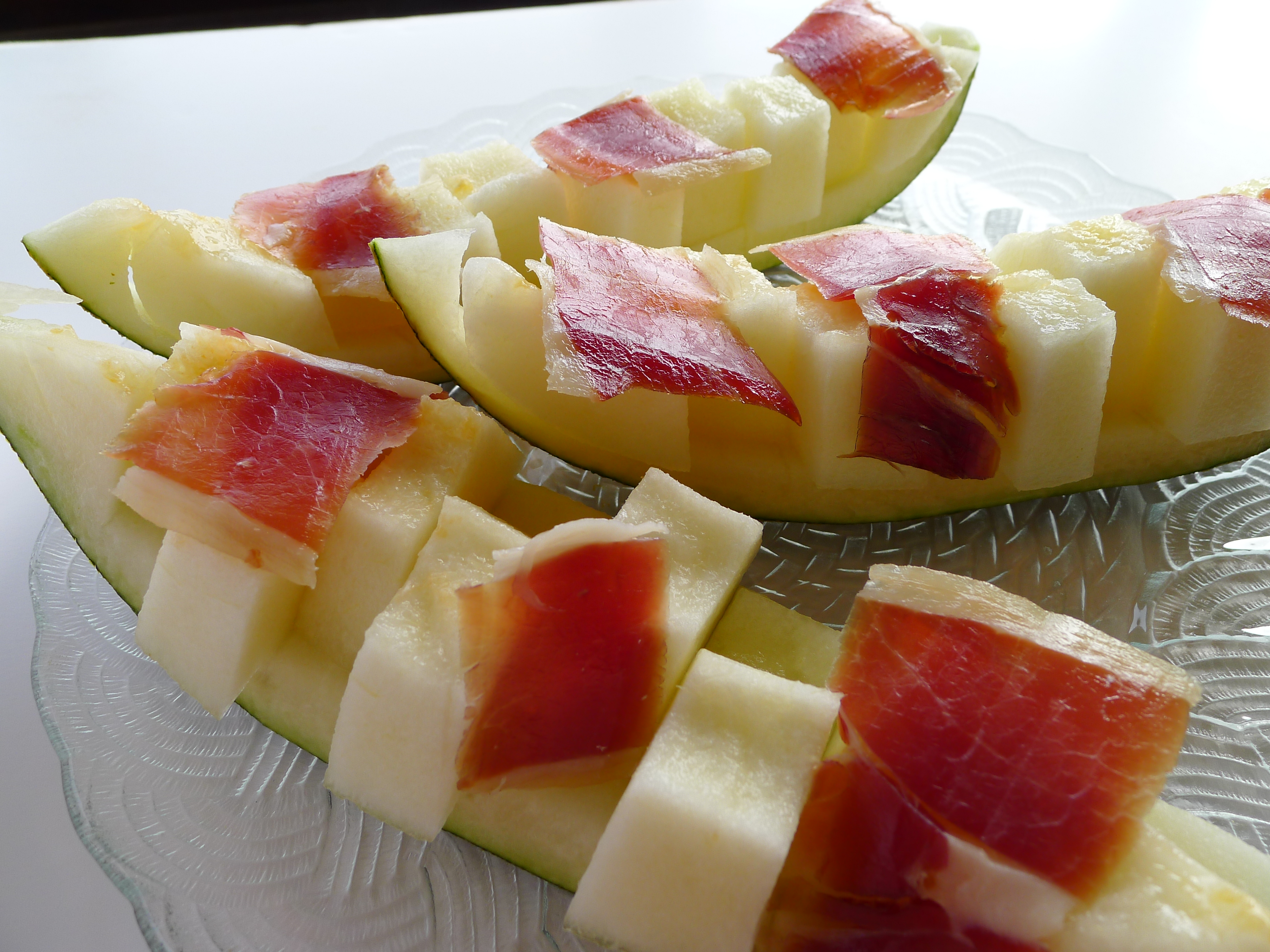

Classic: sweet melon paired with salty serrano or ibérico ham. The perfect starter for a summer dinner. 

Saturday, June 25, 2022

MINT IS SUMMER’S ANTIDOTE


Summer refresher--fresh mint. Can you smell that minty fragrance?

Mint is the antidote to summer. Its crisp, cool fragrance and refreshing green taste will perk up your spirits and cut through the mugginess when temperatures soar. 


Mint is widely used in Spanish cooking. It’s the essential final touch to sopa de picadillo, a broth with chopped ham; with Málaga-style seafood fideos, a noodle casserole; with fresh fava beans, peas and artichokes. (See at the end of this post for links to more recipes with mint.) Mint is even more prevalent in Middle Eastern and Turkish cooking. 

As recipient of a bucketful of fresh mint, I found dozens of ways to use this common herb. Mint is good in any part of the meal, from savory to sweet—in cocktails (think mojitos, mint juleps), in soups, salads, sauces, desserts, beverages (essential for ice tea). 

I gave up trying to identify the various mint varieties to be found, in my garden, in the market and in recipes. “Garden mint,” “mojito mint,” spearmint and hierba buena seem to be interchangeable. Peppermint, menta, is different, stronger, but would still work in most of these recipes. 

Crisp, fresh summer salad with zucchini curls, chopped fresh mint and a hint of mint in the lemony dressing.


Cool as a cucumber and mint. This chilled soup with yogurt is a refreshing summer starter.


A piquant salsa verde with mint is perfect with grilled foods. 


Add fresh mint to your breakfast smoothie.


Summer's wonderful stone fruits embellished with a light mint syrup and chopped fresh mint.


Moroccan mint tea turned into a sprightly sorbet, or maybe it's more of a granita.


Once cut, fresh mint will keep a day or two if the stems are submerged in water. But, the best way to keep it fresh is to pick sprigs off the stems,  wash the sprigs or leaves (sluice in cold water and dry in a salad spinner) then store in plastic bags in the crisper of the fridge . Mint leaves can be dried for using when the fresh is not available. Spread on a tray in a well-ventilated (but not windy) location until they are completely dried. Crumble and keep in air-tight jars.

Summer Salad with Zucchini and Mint
Ensalada con Calabacín y Hierba Buena


The salad ingredients can be prepped in advance. Refrigerate them until ready to assemble the salad shortly before serving. Add diced goat cheese to the salad, if desired. If fresh goat cheese is not available, try using feta.

Serves 4-6.

For the salad:
4 ounces zucchini (about ½ zucchini)
1 head romaine lettuce
1 cup cherry tomatoes
Sliced radishes
¼ cup thinly sliced onions
¼ cup chopped parsley
¼ cup chopped mint
1 tablespoon chopped chives
1 tablespoon chopped celery leaves
Lemon-mint dressing (recipe below)
Salt flakes to serve
Freshly ground black pepper
Fresh white goat cheese, diced (optional)

Use a vegetable peeler to cut long thin slices from the zucchini. Wash and spin dry the romaine. Tear it into bite-sized pieces and spread on a platter or place in a large salad bowl. Scatter the tomatoes, radishes and onions on top. Fold or curl the zucchini slices and place them on the salad. Sprinkle parsley, mint, chives and celery over all. Drizzle with the dressing. Add salt flakes and pepper. Scatter diced cheese on the top, if using.

For the lemon-mint dressing:
1 clove garlic, minced
1 teaspoon finely chopped mint
½ teaspoon grated lemon zest
3 tablespoons fresh lemon juice
1/3 cup extra virgin olive oil
½ teaspoon salt
Freshly ground black pepper

Combine the garlic, mint, zest and lemon juice in a small bowl. Whisk in the oil. Season with salt and pepper. Stir or shake the dressing before adding to salad.


Persian Chilled Cucumber-Yogurt Soup with Mint
Sopa Fría de Pepino y Yogur con Hierba Buena


This recipe is adapted from one I use frequently from the cookbook by Maideh Mazda, In a Persian Kitchen (Tuttle; 1969). Iranian cooks use both fresh mint and dried in recipes. 

Persian cucumbers, if you can get them, are short and thin-skinned. They do not have to be peeled. Peel other cucumbers and discard center seeds if they are very developed. Cut the cucumber into small (3/8 inch-) dice. 

I used Greek yogurt to make an exceptionally creamy soup. If the soup seems very thick, thin it with cold water. Serve with a little cracked ice, if desired. Sumac is a sour spice that can be sprinkled on top. Rose petals, too, are optional.  

Serves 6.

¼ cup sultanas
2 ½ cup Greek yogurt
2 cups diced cucumber
¼ cup chopped scallions
3 tablespoons chopped fresh mint
2 tablespoons chopped parsley
2 teaspoons salt
Freshly ground black pepper
½ cup cold water, as needed
Cracked ice, to serve
Mint leaves, to garnish
Sumac (optional)
Rose petals (optional)

Place the sultanas in a small bowl and cover with cold water. Soak them 5 minutes and drain.

Place the yogurt in a mixing bowl and stir until it is smooth. Add the cucumber, scallions, mint, parsley and sultanas. Season with salt and pepper. Cover and chill the soup.

When ready to serve, stir the soup to mix well and thin with cold water, if necessary. Serve the soup into shallow bowls. Add a little cracked ice to each. Garnish with mint leaves, sumac and rose petals, if using.

Mint Salsa
Salsa con Hierba Buena

This sauce is between a salsa verde and a chimichurri, a mojo verde or chermoula with mint instead of cilantro. Try it with lamb chops or chicken breast, salmon burgers or tuna, or, for vegetarians, grilled eggplant. 

1 cup lightly packed mint leaves
1 cup parsley
1 shallot
5 cloves garlic
1 jalapeño
1 teaspoon oregano
1/3 cup extra virgin olive oil
2 tablespoons Sherry vinegar
½ teaspoon salt
2 tablespoons water

In a food processor finely chop the parsley, shallot and garlic. Add the jalapeño, oregano, oil, vinegar and salt and process. Add water and blend again. 

Serve immediately or cover and refrigerate up to 2 days.

Minted Melon Smoothie
Batido de Melón con Menta

The perfect summer breakfast, made with non-fat, probiotic yogurt, or a luscious dessert if whirled instead with rich Greek yogurt. Freeze the diced melon a few hours before making the smoothie. Substitute raspberries for the blueberries for a pink smoothie.

For one smoothie:
1 cup diced melon
½ cup blueberries
3 tablespoons chopped fresh mint
½ cup plain yogurt
Blueberries and mint to garnish

Place the diced melon in a freezer container and freeze at least 3 hours.

Place the frozen melon, blueberries, mint and yogurt in a blender or food processor and blend until smooth. Serve immediately in a tall glass garnished with a few blueberries and a mint sprig.

Minted Fruit Salad
Macedonia de Frutas 


This is a ravishing way to enjoy summer fruits. I’ve used all stone fruit—nectarines, apricots and cherries that are at their peak right now. But you can mix it up with berries, figs, melon, grapes. A little mint simple syrup adds sweetness and fresh mint fragrance. Serve the fruit salad in bowls, cups or martini glasses with sprigs of fresh mint. 

Lemon juice keeps the fruit from turning dark and adds a nice tang. Ginger is optional, but seems so good with the mint.

Serves 4 to 6.

4 cups sliced or diced fruits
1 ½ tablespoons lemon juice
Grated fresh ginger (optional)
2 tablespoons Mint Simple Syrup (recipe follows)
Sprigs of fresh mint to garnish

Combine the fruits in a bowl with lemon juice and ginger, if using. Gently stir in the simple syrup. Refrigerate, covered, until ready to serve, up to 8 hours.

To serve, spoon the fruit and some of the juice into individual bowls. Garnish them with sprigs of fresh mint.


Mint Simple Syrup
Almíbar Ligero de Hierba Buena

This light sugar syrup infused with mint flavor is perfect for mojito making, for adding to sauces, fruits, ice cream. Keep it in a covered jar in the refrigerator. 


Makes about 2 1/3 cups syrup. 

2 cups water
¾ cup sugar
1 cup lightly-packed mint leaves

Combine the water and sugar in a pan. Bring to a boil. Boil gently for 5 minutes. Reduce heat and add the mint. Simmer 1 minute. Remove the pan from the heat and allow the mint to steep 20 minutes. Strain.

Store the syrup in a covered jar and refrigerated for up to 2 weeks.


Sorbet of Moroccan Mint Tea
Sorbete de Té Marroquí


Authentic Moroccan mint tea is made with Chinese gunpowder green tea, lots of sugar and fresh mint, steeped in a silver-plate pot and poured from on high into decorative glasses. 

For this version, I’ve used tea bags of green tea and somewhat reduced the sugar. I intended to serve it as ice tea, but decided to freeze it instead. The alcohol in the liqueur keeps it from freezing rock-hard. Freeze the mixture in an ice cream churn, if you have one. Otherwise, beat it smooth with an immersion blender. The texture is more of a granita than sorbet.

Note that the tea sorbet is not green. Both the green tea and the infused mint make an amber-colored brew. It turns almost white when whipped with a blender or churn.

Serves 6.

4 cups water
3 green tea bags
¼ cup sugar
1 cup packed fresh mint sprigs
1 tablespoon lemon juice
¼ teaspoon orange blossom water (optional)
2 tablespoons Cointreau (optional)
Fresh mint to serve

Bring the water to a rolling boil and add the tea bags. Boil 1 minute and add the sugar. Simmer 2 to 3 minutes to dissolve the sugar completely. Add the mint and bring to a boil once more. Remove the pot from the heat and allow the tea to steep 15 minutes.  

Pour the tea through a strainer. Discard tea bags and mint. Cool the tea, then chill in the refrigerator. 


Add lemon juice, orange blossom water and Cointreau, if using, to the tea. Pour it into an ice cream churn and freeze according to directions. Otherwise, place the tea in a deep metal bowl and freeze for 2 hours. Use an immersion blender to break up the clumps of frozen tea. Return to the freezer. Repeat, beating the ice every two hours until it is smooth and frozen solid. Cover tightly to keep.

Use a large spoon dipped in water to scoop sorbet to serve. Garnish with fresh mint. 


Sunday, June 19, 2022

HOW NOT TO COOK YOUR FISH

 Eat it raw! But, freeze it first.


Ready to eat raw--tuna has been frozen.


Many cuisines feature raw fish in one form or another. In Spain, we have that tapa bar favorite, fresh anchovies in vinegar (boquerones en vinagre). In Peru, Chile and elsewhere in Latin America, ceviche, raw fish “cooked” in lime juice is famous. The Scandinavians have salmon cured with salt and dill, such as gravad laks, and the Germans have pickled herring. And, of course, there’s Japanese sashimi and world-popular sushi. 

I love raw fish. Sashimi used to be one of my favorite dishes to serve to guests. I bought exquisitely fresh, almadraba-caught tuna, from the fish market on the coast near where I live. The vendor would cut me a sliver to taste from the slab of tuna loin on the slab. At home I occasionally prepared vinegar-marinated raw anchovies and ate them frequently in tapa bars. 

But, freeze it first? 

Tapa bars and restaurants can no longer serve raw, marinated boquerones. According to European Union and Spanish governmental regulations, fish to be served raw or partially cooked must be frozen before being served to the public. That is because raw fish might harbor a parasite, anisakis. If ingested, the live anisakis can cause a pretty bad bellyache. Freezing destroys the anisakis. Cooking destroys the anisakis. Your favorite sushi bar uses tuna that has been frozen. Health guidelines recommend that, at home, you freeze fish that you intend to eat raw.

The U.S. FDA (Food and Drug Administration) stipulates the following directions, but leaves enforcement to local health officials.

Freeze at -4ºF (-20ºC) for 7 days  or
               -31ºF (-35ºC) until solid + 15 hours  or
     -31ºF (-35ºC) until solid + 24 hours at -4ºF (-20ºC)


The European Union and Spanish health rulings vary slightly (5 days instead of 7), but are basically the same. The freezer compartment of most home refrigerators doesn't usually freeze below -4ºF (-20ºC), therefore the freezing time is longer than if frozen in industrial freezers at lower temperatures.

Fish that is to be cooked does not have to be frozen. Cooked fish (internal temperature of 145ºF (60ºC) is safe to eat as parasites are destroyed in cooking. (However, preparations such as tataki, with seared exterior and raw or very rare interior flesh, should be treated as for raw fish.)

It should also be noted that fish is highly perishable. Keep it chilled, handle as little as possible and wash hands, knives and cutting boards frequently. Defrost frozen fish in the refrigerator rather than at room temperature.

Here’s how I didn’t cook my fish—Fresh Anchovies Marinated in Vinegar, Tuna Tartare, Corvina Ceviche and Sashimi of Bonito and Bream.

A classic Spanish tapa--boquerones en vinagre, fresh, raw anchovies marinated in vinegar. But, these have been frozen after marinating and before being finished with olive oil, garlic and parsley.


Tuna is the red meat of the fish world. Here it is prepared like steak tartare--chopped raw tuna that has been frozen is mixed with capers, anchovies and mustard. The ribbon garnish at the top of the plates is seaweed spaghetti. Alongside is pickled melon.


Ceviche is a cold dish typical of Latin America made with raw fish marinated in lime juice. In this case, the fish is corvina that has been frozen before being cut into strips and marinated.


Two kinds of sashimi--bonito on the rectangular plates and gilt-head bream arranged in shallow bowls. The bonito was perfect after freezing; the delicate bream tasted fine but the texture had deteriorated.


Fresh Anchovies Marinated in Vinegar
Boquerones en Vinagre


Soaking the filleted anchovies in ice water helps to whiten them before they are marinated in vinegar. 

As an experiment, I froze one batch of filleted fish before marinating, another batch after draining off the vinegar and a third, after marinating and dressing with olive oil. I didn’t notice a great difference in texture—all three batches seemed softer than the way I remembered boquerones that had never been frozen. Adding the oil is not a good idea because the frozen oil congeals.  

Without thinking, after marinating and before freezing the anchovies, I picked one up to taste it. Hopefully, it did not have anisakis larva!

"Unzip" the anchovy spines.
1 pound fresh anchovies
Ice
½ teaspoon salt
1 cup white wine vinegar
Shredded lettuce, to serve (optional)
Chopped parsley
1 clove garlic, minced
Flaky salt
Extra virgin olive oil
Bread or toasts to serve

Remove head, guts and spines from the fish. Wash them well and place in a bowl with ice water. Cover and refrigerate 40 minutes. Drain and rinse the anchovies again.

Lay the anchovies, opened flat, skin side down, in a single layer in a shallow, non-reactive bowl or tray. Sprinkle with the salt. Carefully pour over enough vinegar to completely cover the anchovies. Cover the bowl tightly and refrigerate at least 45 minutes or until the anchovies appear “cooked”—firm and opaque. 

Drain off the vinegar. Pat the anchovies dry. Place them in a clean container. Press a sheet of plastic wrap between layers. Cover tightly and place the container in the freezer. Freeze according to the temperature instructions given above.

Thaw the anchovies in the refrigerator.

To serve, place shredded lettuce on a serving plate. Arrange the anchovies in a single layer, skin-side down. Sprinkle them with parsley, minced garlic and flaky salt. Drizzle generously with oil. If the anchovies are not to be served immediately, cover them with plastic wrap and refrigerate until serving time. Serve with bread or toasts.
Variation on the classic--boquerones with black garlic, red chile and chives.


Tuna Tartare
Tártara de Atún


I asked the fish vendor (at a large hypermarket), “which fish can I serve raw?” The only one he recommended was the tuna, which was fresh frozen tuna that had been thawed. 

There are no official standards for “sushi-grade tuna” and, in Spanish markets, the term is not used. Generally, it means that the retailer vouches for the safety of eating it raw. I surmise after a little researching that tuna is less susceptible to anisakis than other fish, meaning less risk, as long as the fresh fish has been inspected.

The tuna I bought was frozen fish that had already been defrosted. There was no question of refreezing it. If I wanted to serve it raw, it had to be immediate. 

Raw egg yolk or not?
Tuna tartare has many renditions. I’ve chosen to make the one most like tartare made with raw beef—capers, salt-cured anchovies, shallots, mustard. Oddly, I felt a little squeamish about the traditional raw egg yolk! Actually, it’s fine if, instead of plopping it on top of the minced tuna, you blend it into a smooth sauce. If you prefer not to consume raw egg, serve the tartare garnished with a quartered soft-boiled egg.   

To serve 4 as a starter. 

12 ounces sushi-grade tuna 
2 tablespoons minced shallot
2 tablespoons finely chopped parsley
3 canned anchovy fillets, drained of oil
2 tablespoons chopped capers
2 teaspoons minced piquillo peppers
Salt
Freshly ground black pepper
2 tablespoons extra virgin olive oil
2 teaspoons Dijon mustard
2 teaspoons lemon juice
1 teaspoon Sherry vinegar
1 raw egg yolk (optional)
Salad greens to serve
Optional garnishes:
Seaweed spaghetti
Sprouts or edible flowers
Soft-boiled egg, quartered 
Pickled melon or sweet pickles

Thaw the tuna if it is frozen. Before it is completely thawed, use a very sharp knife to cut it into very small dice (approximately ¼ inch). Place in a bowl. (If not ready to serve the tartare, cover and refrigerate the tuna.)

Place the tuna in a bowl. Add the parsley. Chop the anchovies and add to the tuna with the capers, peppers, 1 teaspoon of salt and black pepper. Stir in 1 tablespoon of the oil.

In a small bowl mix the mustard, lemon juice and vinegar. Whisk in the remaining 1 tablespoon of oil. Whisk in the raw egg yolk, if using. Stir 2 tablespoons of this sauce into the chopped tuna. Serve the remainder on the side.

Place salad greens on individual plates. Mound the tuna tartare mixture on the plates or press it into round molds and unmold onto the plates. Garnish, as desired.


Corvina Ceviche
Ceviche de Corvina

Cherry tomatoes, crunchy corn and black olives add pop to citrus-marinated fish.


For this and other marinades with acidic ingredients such as lemon, lime or vinegar, use a non-reactive container. Those are containers of glass, ceramic, stainless steel or enamelled. If possible, use a bowl with a cover, otherwise cover with tightly with plastic wrap so that the marinade and fish odors don’t permeate other items in the fridge. 

Acid marinades slow bacterial contamination, but do not halt it. Keep the fish and other ingredients chilled at all times.

In South America, lime juice is traditionally used to marinate the fish, but lemon juice or sour orange can also be used. I’ve got plenty of lemons, so I made this variation.

How long to marinate the fish? Long enough for the surface of the pieces to “cook” in the acid. They should turn opaque-white, but may stay soft and pink in the center. Over-long marinating results in fish that is hard, chewy and dry. Timing depends on size of the pieces of fish. Mine, cut in strips about ¼-inch thick, were “done” in 15 minutes.

Other ingredients to incorporate in the ceviche vary by country and individual preferences. Some usual ones to try—avocado, sweet potato, olives, mango, jícama, cucumber, corn kernels, toasted corn kernels, fried plantains. Serve with tortilla chips or crackers.

Serves 4 as a starter.

12 ounces corvina fillets, skinned
½ cup shredded red onion
1 cup fresh lemon or lime juice
1 teaspoon salt
2 tablespoons extra virgin olive oil
1 cup cherry tomatoes, halved or quartered
Fresh green chile, chopped (to taste)
½ cup diced, cooked sweet potato
¼ cup chopped cilantro leaves
2 tablespoons sliced olives
1 avocado, diced
Toasted corn kernels
Tortilla chips to serve

Pat the fish dry and wrap the fillets in plastic wrap. Place in a freezer bag and freeze for the length of time shown above.

Partially defrost the fish in the refrigerator. While still firm, use a sharp knife to cut the corvina into bite-size strips or cubes. Place them in a non-reactive bowl. Add the shredded onion. Pour over the lemon juice and mix well. Cover the bowl and refrigerate, stirring once, until the pieces of fish lose their translucency, about 15 minutes.


Drain the fish, saving the liquid. Place the fish in a bowl and add the salt and oil. (If not to be served immediately, cover and refrigerate. Chill the reserved liquid as well.) Shortly before serving, add the tomatoes, chile, sweet potato, cilantro, olives and avocado. Stir in some of the reserved liquid. Mix well. 

Serve the ceviche on plates, in bowls or cups with a scattering of corn kernels and tortilla chips alongside.


Sashimi of Bonito and Bream
Sashimi de Bonito y Dorada

The texture of delicate bream doesn't stand up to freezing so well. However, it tastes just fine.


Sashimi is the Japanese art of serving sliced raw fish with accompanying dipping sauces and garnishes. It is a lovely starter for a summer meal. (Adding nori seaweed and cooked rice dressed with vinegar turns it into sushi.)
 
Bonito (Sarda sarda) is a meaty, dark-fleshed fish wild-caught in southern waters. (It’s not to be confused with bonito del norte, which is albacore tuna. Japanese bonito, katsuo, is actually skipjack (Katsuwonus pelamis, listado in Spanish.) Melva, frigate mackerel, is similar to bonito.

Bonito--a fine fish for preparing as sashimi.

The bonito, with its firm texture and mild flavor, is fine for sashimi or, lightly grilled, as tataki. I bought a whole one, weighing about 2 ½ pounds and had it filleted. Once home, I finished the job, removing the line of small bones down the center of the two fillets and separating them into four fillets. I removed the skin. The fillets went into the freezer for the prescribed length of time. I used only one fillet for the sashimi; the remainder went into a cooked dish (marmitako).  

Dorada is gilt-head bream, a firm-fleshed, succulent white fish. It is both wild-caught and produced by aquaculture. Supposedly, farmed fish is parasite-free, because it doesn’t feed on wild fish that may carry the larva. However, after skinning and removing pin bones from my farm-raised bream, I chose to freeze it. Served as sashimi, it tasted great but the texture was no longer as firm as for fresh, never-frozen fish. Next time, I will risk not freezing it. 

It is easier to slice the fish while it is still partially frozen. Keep knives very sharp. 

Serve the sliced fish with a dipping sauce, such as ponzu (recipe for a Spanish variant is here) or simply soy sauce mixed with grated ginger and with wasabi green horseradish. Grated carrot, micro-greens, shredded white radish, cucumber curls can be used as garnishes. 

Bonito, skinned and bone-free, thawed, about 1 ½ ounces per person
Bream, such as gilt-head, skinned and pin bones removed, thawed about 1 ½ ounces per person
Dipping sauce
Garnishes

Use a very sharp knife to slice the bonito into rectangular 3/8-inch slices. Cover tightly and refrigerate until ready to assemble the plates. 

Use a very sharp knife, held at an angle, to slice the bream into paper-thin slices. Cover tightly and refrigerate until ready to assemble.

Arrange the sliced bonito on a plate in a row, like dominoes. Arrange the sliced bream in small, shallow bowls or on a small plate in a rosette. Use shredded carrot and radish as garnishes. Place a dab of wasabi on each plate. Serve with the dipping sauce. 

More about the anisakis parasite and how to avoid it from the Spanish government consumer ministry: https://www.aesan.gob.es/AECOSAN/docs/documentos/publicaciones/seguridad_alimentaria/cartel_anisakis.pdf