Saturday, June 4, 2022

ASPARAGUS FINALE

It’s not officially summer yet, but where I live, the temperatures already have reached torrid degrees. The last rainfall was weeks ago. We’ll probably not have another drop until September or October. The roses are finished. 


Now in the market is the very last of locally-grown spring asparagus. Sure, asparagus is available year-round, but, starting about now, it will be imported, mostly from Peru. I’ve got nothing against Peru, in fact, its excellent asparagus is often cheaper than that produced in Spain. But, I am seriously trying to cut down on imported produce. 

I’m serving the asparagus very simply, cold, accompanied by two sauces. This is an old-fashioned preparation that used to turn up on restaurant menus, where it was usually canned white asparagus con dos salsas, one, a creamy, olive oil mayonnaise and the other, a vinaigrette with chopped scallions and peppers. Here's my interpretation.

Green asparagus is topped with a creamy egg yolk vinaigrette and a sauce with chopped scallions and peppers.


A dish that used to appear on restaurant menus, canned white asparagus with two sauces.  


Add chopped smoked ham to the asparagus with sauces and turn it into a substantial lunch dish or starter.

Asparagus with Two Sauces
Esparragos con Dos Salsas

Done when spear bends slightly.

The asparagus can be boiled, steamed, grilled (on a plancha or under the broiler), or microwaved. I like to cook them, simply, in barely boiling water. When are they done? Depends on their thickness. A good test: lift a spear and balance it across a fork. If the spear is still rigid, it’s probably not done. If it bends limply across the fork, it’s already overcooked. If it just slightly bends, probably perfect.


If you are using fresh white asparagus, use a vegetable peeler to peel away a thin outer layer, making the spear less fibrous.


To serve 4

24 spears of asparagus, green or white
Salt
Olive oil
3 ounces diced smoked ham or smoked salmon (optional)
Garnishes: hard-boiled egg, salad greens, cherry tomatoes, sliced radishes, sliced lemon
Sauces (recipes follow)

Snap off and discard the fibrous butt ends of the asparagus stalks. Place the stalks in boiling salted water and cook until they are tender (to taste). Drain well and rinse in cold water. Drizzle just a little olive oil over the asparagus spears to keep them from drying out if they are going to wait a while before serving.

To serve, arrange six spears per person on individual plates. Scatter diced ham over them. Garnish the plate, as desired. Serve a spoonful of each sauce beside the asparagus or in bowls to accompany.


Vinaigrette with Cooked Egg Yolk
Vinagreta con Yema de Huevo

Vinaigrette made with cooked egg yolks.

If you’re making both sauces, hard-boil two large eggs; use the yolks for this sauce and the chopped egg whites in the following chopped vinaigrette sauce. 

2 (large) hard-cooked egg yolks
½ teaspoon Dijon mustard
½ teaspoon salt
2 tablespoons Sherry vinegar
½ cup extra virgin olive oil

Mash or blend the yolks with the mustard, salt and vinegar. Beat in the oil until the sauce is smooth. Refrigerate until ready to serve. Stir the sauce before serving. 

Chopped Vinaigrette Sauce
Vinagreta con Picadillo

Scallions and red and green peppers add piquancy to this vinaigrette.

Chop the vegetables finely—use a food processor if you like, but take care not to turn them into mush. Combine the chopped vegetables and mix them with the salt, oil and vinegar shortly before serving. 
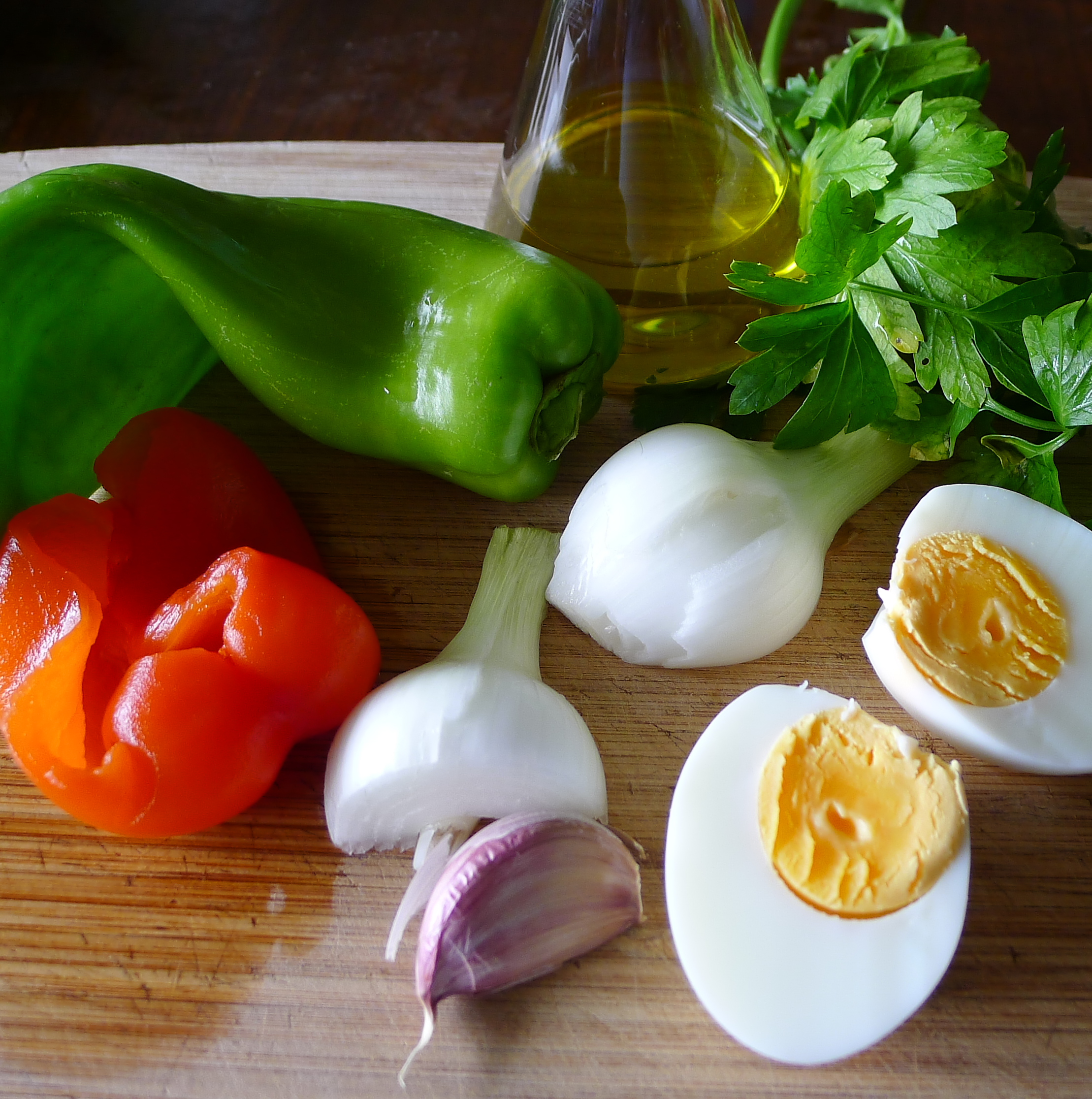

1/3 cup finely chopped spring onions or scallions
1/3 cup finely chopped green peppers
¼ cup diced pimiento (canned red pepper)
1 clove garlic, minced
2 tablespoons chopped parsley
1-2 cooked egg whites, chopped 
2 tablespoons extra virgin olive oil
2 teaspoons Sherry vinegar
½ teaspoon salt

Combine the onions, green peppers, pimiento, garlic, parsley and egg white in a small bowl. Add the oil, vinegar and salt. Use a slotted spoon to transfer to a serving bowl or directly on to the asparagus.


More asparagus recipes:


Saturday, May 28, 2022

FLAMENCO AND POTATO SALAD

 The sound and rhythm of flamenco music have been the soundtrack of my life in Spain. But, in truth, it’s an art I never got to know very well. I can’t even do palmas, the rhythmic hand clapping that accompanies flamenco. Anything I ever knew about flamenco I learned from a book, The Art of Flamenco, by Donn Pohren. 


Thanks to a posting by a Facebook friend, I learned that that book, published in 1962, is marking its 60th anniversary. Though written by an American, the book remains a respected study of this art form. (More about The Art of Flamenco here.) Donn Pohren also had a flamenco center in Morón de la Frontera (Sevilla), where serious aficionados were forged. 

The one time I met Donn, we talked, not about flamenco, but about potaje. As someone who delved deeply into folk culture, he also explored culinary lore and, in 1972—50 years ago!—published Adventures in Taste: The Wines and Folk Food of Spain. 

As I said, flamenco has been a constant background to life in Spain. In the bars, I remember, singing would spontaneously burst forth. In the narrow village streets where radios tuned to the same station created a sort of quadraphonic sound, flamenco music played all day. At fiestas guitarist and singer kept the rhythms going for hours. 

The most exciting juerga (flamenco performance) I ever experienced was at a venta in San Fernando (Cádiz). Wine flowed (Sherry, of course), spirits rose and tapas appeared. It was nearly midnight before the music and dancing began. There was no stage. Guitarists, singers and dancers simply sat on chairs at one end of the room. A few strums, the sound of staccato clapping, a voice rising over the guitar, then a dancer stood and began moving to the complicated flamenco rhythms. The juerga went on until the early hours of the morning, building in intensity, until the whole place seemed to crackle with electricity. 

Papas aliñás, potato salad, was one of the tapas served at that night of flamenco. It’s a dish famous in all of Cádiz, from Jerez to El Puerto, from San Fernando to Tarifa. It’s also a favorite in tapa bars of Sevilla. 

It was in Sevilla tapa bars that I learned the secret to great papas aliñás (the name is Andaluz-speak for patatas aliñadas, or “potatoes with dressing”): make a fresh batch every day and never, ever, put the potatoes in the fridge.

The other secret is that you need a lot more olive oil than you think. Use your best extra virgin oil because the flavor really matters.

The basic: cooked potatoes  dressed with extra virgin olive oil, vinegar, salt and parsley. Marinate the potatoes at room temperature. Add even more oil before serving so that the potatoes glisten. 


Additions to the basic dressed potatoes: clockwise from the top, extra virgin olive oil, hard-boiled eggs, canned tuna or melva, tomatoes, herbs (chives and parsley shown), chopped green onions, chopped green pepper, olives, green or black.


Is this the perfect side dish for your Memorial Day picnic or backyard grill?


Serve the potato salad as tapa, starter or side. It's perfect with burgers or brats. 


Basic dressed potatoes (room temperature) are a great side with salmon fillet. Add a few capers. (The salmon pictured  was cooked on a ridged grill pan.) 


Flamenco Potato Salad (Potatoes with Olive Oil Dressing)
Papas Aliñás (Patatas Aliñadas)


Use new potatoes for this recipe. “New” doesn’t mean tiny ones, but potatoes that have been recently harvested. Mature potatoes, the kind you want for baking, would disintegrate too easily and waxy potato varieties don’t absorb the dressing very well. The potatoes, large or small, should be of uniform size, so they all cook in the same time. Cook them, unpeeled, in boiling salted water. 

Peel and cut up the potatoes while they are still warm. Add the salt and vinegar first, then the oil. Allow the potatoes to marinate at room temperature at least an hour before serving. 

Use “new” onions, too, cebolletas—spring onions, green onions or scallions. Any onion that makes you cry is too strong. 

Following is the basic, traditional recipe for papas aliñadas. You can get creative, if you like—mint instead of parsley, caviar instead of hard-boiled egg, capers in place of olives, grilled tuna instead of canned.

2 pounds new potatoes
Salt
2 tablespoons Sherry vinegar
½ cup extra virgin olive oil + more for drizzling on top
1 tablespoon chopped parsley

Additions to the potatoes:
Spring onions or scallions, chopped or slivered
Olives
Canned tuna, bonito or melva (frigate mackerel)
Hard-boiled egg, quartered or chopped
Chopped green pepper
Cherry tomatoes

Put the whole, unpeeled potatoes to cook in boiling, salted water until tender when pierced with a skewer, 20 to 30 minutes, depending on size. Drain the potatoes and rinse in cold water.

As soon as the potatoes are cool enough to handle, peel them. Cut into chunks or thick slices and place in a shallow bowl or spread on a platter. Sprinkle the potatoes with 1 teaspoon salt, the vinegar and ½ cup of the oil. Add the parsley and very gently turn the potatoes so the dressing is distributed throughout. 

Cover with plastic wrap and leave at room temperature until cooled, at least one hour and up to six hours.

Immediately before serving, sprinkle with some or all of the additions--onions, olives, chunks of tuna, quartered eggs, chopped green pepper and tomatoes. Drizzle more olive oil on the potatoes. Serve room temperature.

Refrigerate leftovers. Bring the potatoes to room temperature before serving.


More potato salads:


Saturday, May 21, 2022

ESCABECHE—A VERSATILE HOT-WEATHER DISH

 With temperatures about to hit 40ºC (104ºF) in some parts of Andalusia, it’s time to plan meals that are lighter, quicker, fresher and cooler than the soups and roasts of recent days. Chicken cooked in tangy escabeche fills the bill.


Escabeche is a very ancient way of preserving foods in a spiced vinegar and olive oil marinade. Traditionally, wild partridge or rabbit, trout or sardines would be cooked, packed in crocks and pickled in escabeche to be kept without refrigeration. Nowadays, the cooking method isn’t about preserving food, it’s about adding flavor. It's a versatile dish that can be prepared in advance and served hot or cold.

Chicken thighs cooked and marinated in tangy escabeche. Great served hot, cold or room temperature.


Strip the chicken off the bone and serve it cold with salad greens, sliced potatoes and the carrots that cooked in the escabeche. Spoon the escabeche marinade over all and garnish with fresh herbs. Sure to beat the heat.


Serve it hot: Reheat the chicken in the cooking liquid and serve with patatas fritas--fries. They are delicious doused with the escabeche marinade.


Create a rice bowl with chunks of escabeche chicken on top of brown rice and raw and cooked vegetables. Make the dressing with the garlic that cooked with the chicken (recipe below).


Chicken in Escabeche
Pollo en Escabeche

You’ll need enough cooking liquid—vinegar and water plus olive oil—to almost cover the pieces of chicken. Turn them part way through the cooking time so that top and bottom get submerged. Allow the chicken to cool in the cooking liquid, then transfer the pieces to a non-reactive container—glass or earthenware—just large enough to hold them, so they are completely submerged. As the liquid cools, the oil will rise to the top and create an air-tight “seal”. 

This can be made with a whole, cut-up chicken, but I like using meaty thighs, so all the pieces are more or less the same size. (If using chicken breasts, cook the vinegar, oil, herbs and carrots for 20 minutes before adding the chicken. Breasts need to poach only 10 minutes, then cool in the escabeche.) Remove skin from the chicken pieces before cooking. Dust them with flour to brown lightly in oil before simmering in the escabeche.

Pimentón just means "paprika." I used ½ teaspoon ordinary sweet pimentón (dulce) and ½ teaspoon smoked sweet pimentón (dulce, ahumado). If you like, use a little pimentón picante, hot pimentón, as well. 

Ideally, the chicken is cooked one day (in the cool of the morning, for instance) and marinated, refrigerated, at least 24 hours before being served. It can be served chilled or reheated. Use the flavor-packed escabeche cooking liquid, hot or cold, to sauce the chicken or as a salad dressing. It can be used again to escabeche another food if it is first strained and brought to a full boil, cooled and chilled or frozen.

Aromatics to flavor the escabeche.
6-8 bone-in chicken thighs (2 ½ -2 ¾ pounds)
Salt
Freshly ground black pepper
Flour for dredging
1 cup olive oil
1 teaspoon pimentón (paprika)
2 carrots
1 large onion
Sprigs of thyme
Sprigs of rosemary
Celery leaves
Parsley
2 slices lemon
1 head of garlic
3 bay leaves
½ teaspoon black peppercorns
1 ½ teaspoons salt
1 cup white wine vinegar
2 ½ cups water
Greens, fresh herbs, lemon, etc., to garnish
Extra virgin olive oil to drizzle on the chicken

Remove and discard skin and excess fat from the chicken. Sprinkle with salt and pepper. Dust the chicken pieces with flour, patting off excess.

Heat 1/3 cup of the oil in a heavy skillet. Fry the chicken thighs, turning them once, until lightly browned on both sides. Remove the chicken and reserve. Remove the skillet from the heat and stir in the pimentón.

Spread carrots, onions and herbs in pan.

Pour 1/3 cup of the remaining oil into a cazuela or pan large enough to hold the chicken pieces. Peel and slice the carrots crosswise and spread them in the pan. Cut the onion into lengthwise julienne slices and add to the pan. Lay sprigs of thyme, rosemary, celery and parsley on top with the lemon slices. Slice off the stem end of the head of garlic and remove any loose outer leaves. Tuck the garlic into the center of the pan. 

Place the chicken pieces on top of the vegetables and herbs. Tuck the bay leaves between them. Sprinkle with peppercorns and salt. Strain the oil with pimentón left in the skillet through a sieve onto the chicken. Pour on the remaining 1/3 cup of oil. Pour over the vinegar and water. Place on medium-high heat and bring the liquid to a boil. Reduce heat so the liquid bubbles gently. Cover the pan and cook, turning the chicken pieces once, until they are tender, 30 to 40 minutes.

Submerge chicken in marinade.
Discard the cooked herbs and lemon slices. Place the chicken pieces in a non-reactive container (glass or earthenware). Pour the escabeche liquid and vegetables over the chicken. Cover the container.

If the chicken is to be served within three hours, leave it at room temperature.  Otherwise, refrigerate up to three days. 

Serve the chicken cold or room temperature or reheat it in its cooking liquid. Garnish with greens, fresh herbs, sliced lemon, etc. Finish by drizzling a little extra virgin olive oil over the chicken. 
Garnish chicken with pickled carrots, greens, fresh herbs.


Rice Bowl with Escabeche Chicken
Bol de Arroz con Pollo en Escabeche

This is a little like a poké bowl, but with Mediterranean rather than Asian flavors. The dressing is made by blending the escabeche-cooked garlic cloves with some of the escabeche liquid. Use the pickled carrots that cooked with the chicken in the bowl with a variety of cooked and raw vegetables. 

For the dressing:
1 head escabeche-cooked garlic
1 cup escabeche liquid
Salt
1 tablespoon chopped parsley

For 1 serving of rice bowl:
1 escabeche chicken thigh 
1 cup cooked brown rice 
1 tablespoon escabeche liquid 
Escabeche-cooked carrots
Sliced cucumber
Cherry tomatoes
Cooked green beans or asparagus
Hard-boiled quail or hen’s egg
½ avocado, sliced
Thinly sliced onion
Black olives
Lemon slices
Chopped parsley 

For the dressing: Pinch the cooked garlic cloves from the whole head and place them in a blender with the escabeche liquid. Blend until emulsified and smooth. Add salt to taste. Stir in chopped parsley.

Top rice with chicken, beans, avocado, cuke, tomatoes.


For the rice bowl: Remove and discard the chicken bone. Dice the meat. Combine the rice with 1 tablespoon of the escabeche liquid and fluff with a fork. Spread the rice in a bowl. Heap the diced chicken in the center. Surround the chicken with the carrots, cucumber, tomatoes, beans, eggs cut in half and avocado. Top with onion and olives. Tuck lemon slices around the edge. Sprinkle with parsley. Serve the dressing alongside the bowl.  
Serve dressing with the rice-chicken bowl.